
SGCI News
[NAMIBIA] African countries must strengthen collaboration, invest in research and scientists, and take greater ownership of science, technology and innovation if research is to deliver lasting development impact, participants at…
[NAMIBIA] African countries must strengthen collaboration, invest in research and scientists, and take greater ownership of science, technology and innovation if research is to deliver lasting development impact, participants at the 2026 Science Granting Councils Initiative (SGCI) All Partners Forum have said.
The call came during the final two days of the Forum in Windhoek, where policymakers, science granting councils, researchers and development partners focused on how African countries can move from policy commitments and individual projects to stronger, sustainable research systems.
Namibian Prime Minister Tjitunga Ngurare told delegates that Africa does not lack ideas, scientific capacity or expertise, but needs stronger systems to translate these assets into development outcomes.
“Research, Science, Technology and Innovation must not be abstract concepts. They are instruments through which we can improve lives, create opportunities for our young people, strengthen our economies and build a more resilient Africa,” Ngurare said.
He urged African countries to ask how research systems could be made to last, how individual projects could be transformed into sustainable programmes and how research could become more directly relevant to policy and society.
He said Africa’s shared challenges, including food security, health, energy, climate change, water and digital transformation, could not be tackled by countries working in isolation.
“If another African country is good at making progress in one of the aspects, we do not have to reinvent the wheel. We can go to that country,” he said.
From commitment to ownership
The discussions reflected the Forum’s theme, “From Commitment to Action”, as participants considered what greater African ownership of the SGCI should look like in practice.
Anicia Peters, chief executive officer of Namibia’s National Commission on Research, Science and Technology (NCRST), said the third phase of the Initiative, SGCI-3, is moving towards a model in which African science granting councils take greater responsibility for both leadership and financing.
The SGCI, together with the African Union and AUDA-NEPAD, has developed strategies around five priority areas: agriculture, health, energy, information and communication technologies and artificial intelligence, and the environment.
Peters said African councils should not only benefit from the Initiative but also contribute to its financing, enabling them to have greater control over research outcomes.
“With our technical and funding partners, we want to see shared ownership. That creates a more equitable partnership,” she said.
“In SGCI 3, councils are not only saying that they want to take on a greater leadership role, but they are also saying that they want to contribute some of their own funding.”
The shift towards greater ownership was also highlighted by Cephas Adjei Mensah, director of Research, Statistics and Information Management and outgoing Chair of the SGCI Alliance in Ghana.
He said the Alliance emerged from consultations among participating councils and partners and represented a move towards deeper collaboration.
Mensah said the focus should now move beyond pilot activities towards sustained action, scaling what works and ensuring African institutions remain at the centre of shaping research and innovation on the continent.
Learning as a driver of action
The final formal day of the Forum turned attention to monitoring, evaluation and learning (MEL), with participants arguing that evidence generated through the Initiative should inform decisions rather than simply document activities.
Ellie Osir, senior program specialist at the International Development Research Centre (IDRC), described MEL as a thread connecting SGCI activities.
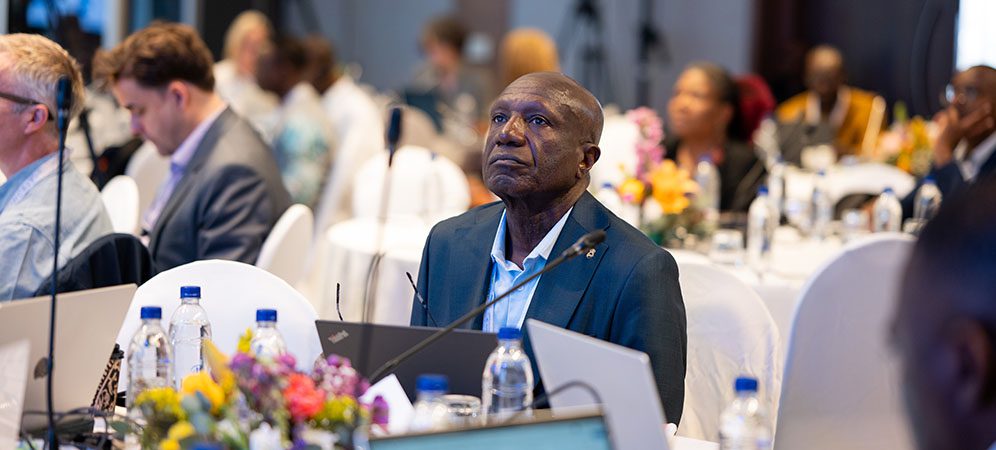
“MEL is critical because it helps us to understand what is working well and what is not working well and why. MEL transforms activities into knowledge and knowledge into action,” she said.
Lessons from previous phases have informed SGCI-3’s stronger emphasis on council ownership, impact, capacity strengthening, learning and adaptation, as well as more streamlined reporting and accountability.
Rebecca Hanlin of the University of Johannesburg, SGCI’s technical partner for MEL, said the Initiative now has a substantial body of experience to draw on.
“We have 11 years of knowledge and understanding about what works and what doesn’t work,” she said.
Participants called for greater attention to what happens after individual grants and projects end, including following up funded research, conducting impact assessments and documenting evidence of research impact.
The emphasis on learning also reflected a wider change within SGCI, with councils increasingly taking the lead in generating and sharing knowledge.
Examples highlighted during the Forum included Botswana’s experience with policy dialogue and Uganda’s work on gender inclusion, which participants identified as practices that could be adapted and shared across the network.
A growing African-led network
The changing role of councils comes as the SGCI continues to expand.
Peters said 20 African countries are currently part of the Initiative, while five additional countries have expressed interest in joining. The Windhoek Forum attracted more than 200 participants from 39 countries, including 27 African countries.
Jonathan Underwood, Equitable Research Ecosystems Lead at Wellcome, described the scale of the network as remarkable.
He pointed to more than 1,300 expressions of interest in the STISA research funding call, 20 established councils, five aspiring council members and a growing group of international partners.
Naser Faruqui, programme director for Education and Science at IDRC, said the Initiative’s strength lies in the fact that it was built around priorities identified by African institutions.
Since its beginnings in 2014, he said, SGCI has contributed to stronger councils and research systems, new funding agencies, improved grants management, greater policy influence and increased support for women in science and innovation.
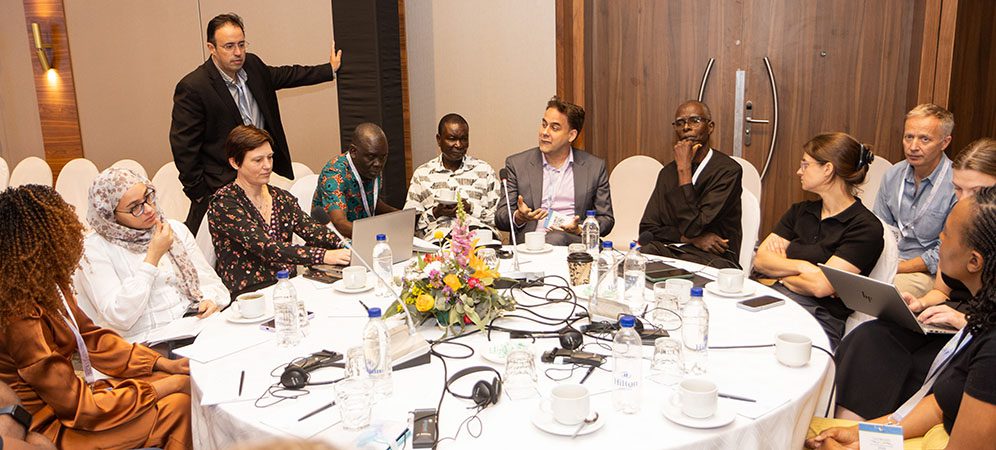
The Initiative has also supported hundreds of projects addressing challenges in areas such as agriculture, health and energy.
Faruqui said more than 1,300 expressions of interest and proposals involving more than 5,000 institutions demonstrated the scale of talent and ambition in Africa’s research and innovation sector.
He said SGCI partners had contributed about US$10 million, while African science granting councils had committed US$7 million, reflecting an increasingly African-led and African-funded agenda.
Infrastructure and the next phase
As delegates looked ahead, research infrastructure emerged as a continuing priority.
Peters said inadequate infrastructure remains a factor contributing to the loss of scientific talent from Africa and called for greater attention to strengthening existing infrastructure and establishing new facilities across the continent.
The issue linked the final day’s reflections on learning and ownership with the broader discussions on African research systems throughout the Forum.
Greater African leadership, participants said, will require more than changes in governance. It will also depend on stronger research infrastructure, skills, funding, evidence and partnerships that can translate research into impact.
The adoption of the Windhoek Declaration provided a formal marker of the commitments made during the Forum.
For SGCI, the next phase will test whether those commitments translate into changes in how research priorities are set, partnerships are structured, evidence is generated and used, capacity is strengthened, and resources are mobilised.
After 11 years of the Initiative, the central question is increasingly shifting from what activities are being delivered to what lasting change they produce.
For the councils, partners and funders gathered in Windhoek, the answer will depend on whether SGCI can convert the lessons it generates into stronger institutions, greater African ownership and research systems capable of addressing the continent’s priorities.
As Osir put it, the value of monitoring, evaluation and learning ultimately lies in its ability to turn knowledge into action.
Please check out the stories and let us know what you think. We would love to hear from you!
Let’s continue the conversation on our social media
Published on 5 October 2026
By Jackie Opara-Fatoye and Charlotte Nambadja, reporting from the SGCI All Partners Forum in Windhoek, Namibia
Related News
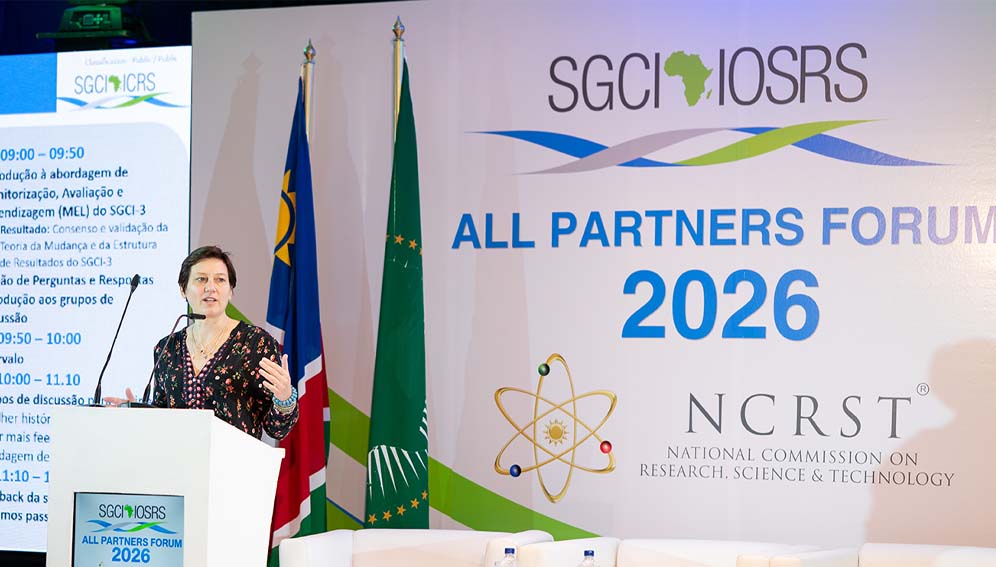
Africa’s science councils urged to turn pledges into real impact
[NAMIBIA] African countries must strengthen collaboration, invest in research and scientists, and take greater ownership of science, technology and innovation if research is to deliver lasting development impact, participants at the 2026 Science Granting Councils Initiative (SGCI) All Partners Forum have said. The call came…
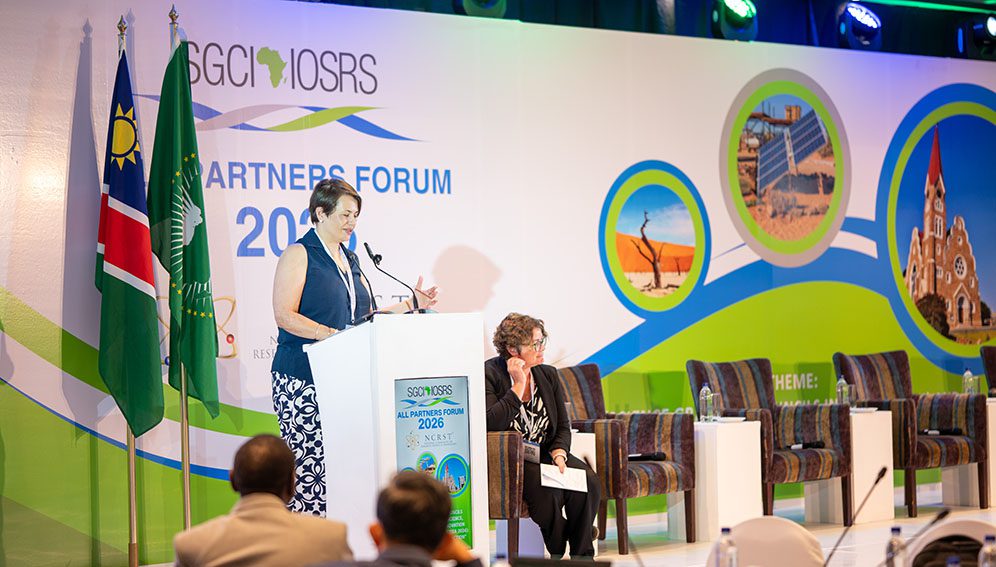
Councils urged to take ownership of SGCI-3 as forum turns to systems
[NAMIBIA]Science Granting Councils have been urged to take greater ownership of the third phase of the Science Granting Councils Initiative (SGCI-3), as partners turned their attention to the institutional systems and partnerships needed to translate the initiative’s ambitions into results. The call came during Day…
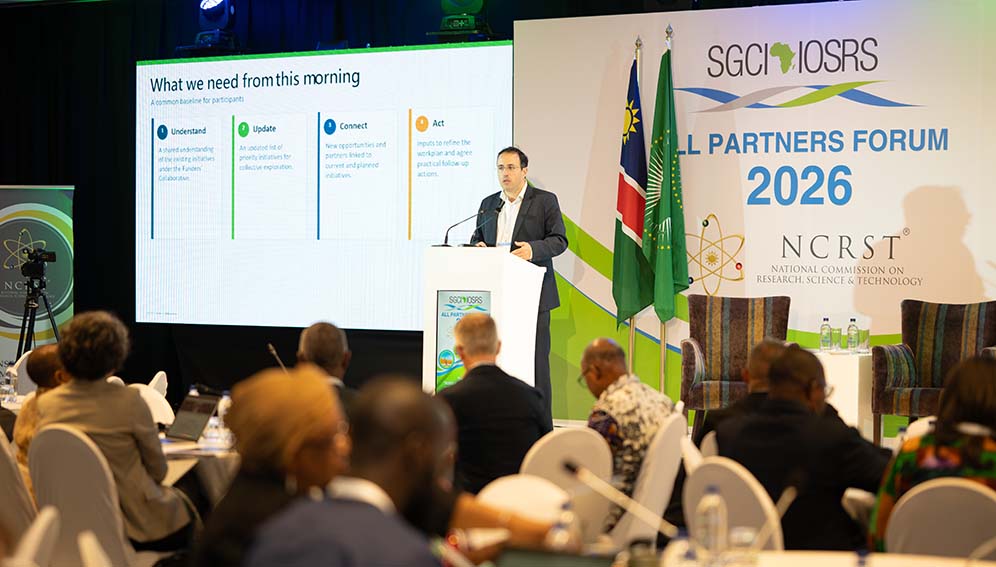
SGCI All Partners Forum highlights Africa’s research funding needs
[NAMIBIA] African science granting councils are examining their reliance on international research funding as a new dashboard reveals the flow of science, technology and innovation (STI) funding into Africa. More than 170 delegates from across the world are attending the 2026 Science Granting Councils Initiative…
Research and Resources

SGCI funded projects

Rwanda’s integrated approach to sustainable agriculture and nutrition
Project Titles & Institution Areas of Research Number of Projects being funded Project Duration Grant Amount In-Kind Distribution Council Collaboration with other councils