
SGCI News
African Union ministers have recognised Science Granting Councils Initiative (SGCI) member institutions as primary vehicles for implementing Africa’s new science, technology and innovation strategy, strengthening the role of national research…
African Union ministers have recognised Science Granting Councils Initiative (SGCI) member institutions as primary vehicles for implementing Africa’s new science, technology and innovation strategy, strengthening the role of national research funding agencies in driving the continent’s development priorities.
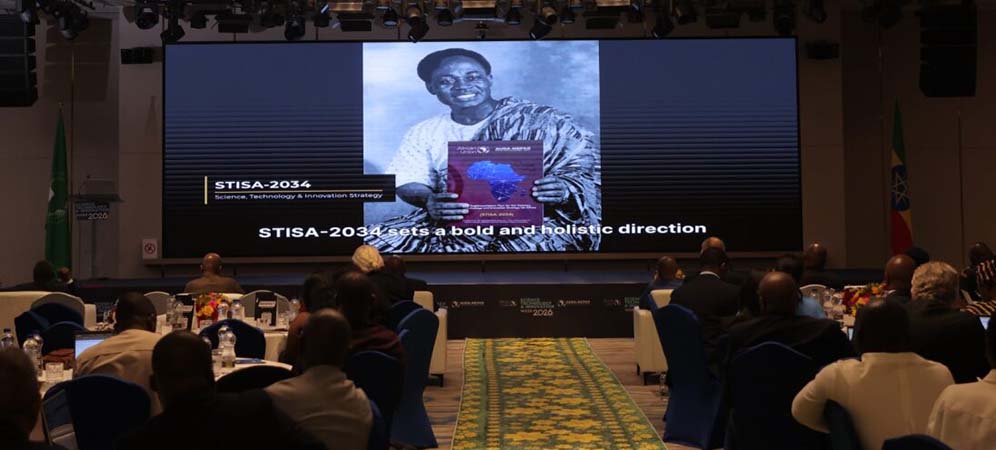
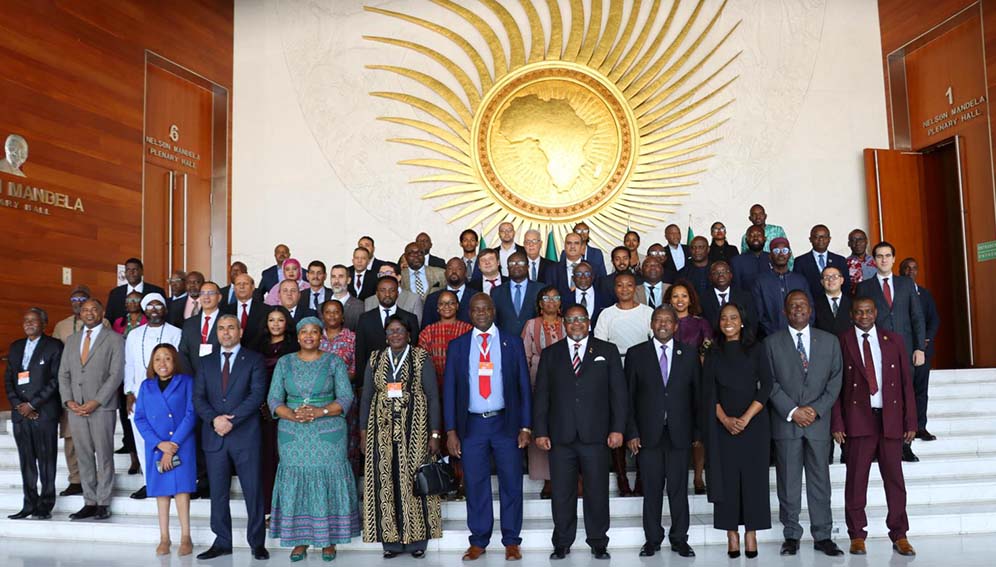
The recognition was made during the 6th Ordinary Session of the African Union Specialized Technical Committee on Education, Science and Technology (STC-EST 6), held in Addis Ababa, Ethiopia, on 6 November 2026.
In its decisions, the ministerial session welcomed the implementation plan for the Science, Technology and Innovation Strategy for Africa (STISA-2034) and urged African Union Member States to allocate at least one per cent of their gross domestic product (GDP) to research and development (R&D).
The endorsement marks an important step in positioning national science granting councils as key institutions for translating continental science policy into funded research and innovation programmes.
The Science Granting Councils Initiative, supported by the International Development Research Centre (IDRC) and other development partners, works with national research funding agencies across Africa to strengthen their capacity to manage research funding, set priorities and support research that responds to development challenges.
Reacting to the decision, IDRC described the recognition as a major continental milestone for the initiative, highlighting its evolution into an increasingly African-led platform.
They noted that SGCI member councils were playing a growing collective role in setting research priorities, mobilising and managing funding, convening partners and translating African science policy into research and innovation action.
The recognition reflects SGCI’s broader ambition to strengthen African ownership of research and innovation systems.
Speaking at the initiative’s 2026 All Partners Forum in Windhoek, Namibia, Anicia Peters, chief executive officer of Namibia’s National Commission on Research, Science and Technology (NCRST), stressed the importance of building equitable partnerships that give African institutions greater ownership.
“With our technical and funding partners, we want to see shared ownership. That creates a more equitable partnership,” she said.
Peters also highlighted the growing responsibility of national science granting councils under SGCI’s third phase, noting that stronger leadership must be matched by financial commitment.
“In SGCI 3, councils are not only saying that they want to take on a greater leadership role, but they are also saying that they want to contribute some of their own funding,” she said.
The decision comes as African countries seek to strengthen their research systems, improve domestic financing for science and build greater capacity to address development challenges through home-grown research and innovation.
Beyond the recognition of SGCI, ministers endorsed a series of measures intended to strengthen Africa’s research sovereignty and technological capabilities under STISA-2034.
These include a recommendation to adopt the African Declaration on Transformative Research Collaboration, which seeks to promote equitable, African-led research partnerships aligned with the continent’s priorities.
Ministers also called for the development of a continental semiconductor strategy and implementation roadmap to 2034, while requesting the African Union Scientific, Technical and Research Commission (AU-STRC) and the African Scientific Research and Innovation Council (ASRIC) to advance efforts to establish an African Union science, technology and innovation-focused entity accredited by the Green Climate Fund.
The meeting further endorsed a strategy for developing an African-owned synchrotron light source facility, alongside an African beamline at the Synchrotron-light for Experimental Science and Applications in the Middle East (SESAME), with a proposed training programme for more than 200 scientists annually.
The ministerial session brought together representatives from 32 African Union Member States, including ministers, senior government officials, technical experts, regional economic communities and international development partners. It followed an experts’ meeting held from 2 to 4 November.
Opening the session, the African Union Commissioner for Education, Science, Technology and Innovation, Gaspard Banyankimbona, stressed the need to translate continental commitments into adequately financed national actions.
He identified promoting African scientific leadership and sustainable domestic financing as two priority areas for advancing the continent’s education and innovation systems.
The meeting also endorsed implementation plans for the Continental Education Strategy for Africa (CESA 2026–2035) and the Continental Technical and Vocational Education and Training Strategy (CTVET 2025–2034), along with other measures to strengthen education and skills development.
The recognition provides an important continental policy mandate for SGCI member councils to deepen their contribution to national and regional research and innovation priorities as African countries begin implementing STISA-2034.
See more on STISA 2034 here.
Please check out the stories and let us know what you think. We would love to hear from you!
Let’s continue the conversation on our social media
Published on 16 November 2026By Jackie Opara-Fatoye
Related News
African Union backs science councils to drive STISA-2034 agenda
African Union ministers have recognised Science Granting Councils Initiative (SGCI) member institutions as primary vehicles for implementing Africa’s new science, technology and innovation strategy, strengthening the role of national research funding agencies in driving the continent’s development priorities. The recognition was made during the 6th…
Ghana strengthens safeguards for emerging malaria gene-drive research
As Ghana explores gene-drive technology as a potential tool for malaria control, stronger regulatory oversight and collaboration between research institutions and government will be essential to ensuring that scientific innovation does not compromise public health or environmental safety. Ghana is considering the scientific and regulatory…
Ivorian researchers develop solutions to illegal gold mining damage
Locally developed technologies for detecting heavy metals in water and restoring contaminated farmland could help Côte d’Ivoire address the environmental and public health consequences of illegal gold mining. Illegal gold mining has affected 29 of Côte d’Ivoire’s 31 regions, threatening water resources, agricultural land and…


SGCI funded projects
Rwanda’s integrated approach to sustainable agriculture and nutrition
Project Titles & Institution Areas of Research Number of Projects being funded Project Duration Grant Amount In-Kind Distribution Council Collaboration with other councils