
SGCI News
Rose Omari was one of two girls in a class of forty. Decades later, the imbalance remains When she first chose to study science, she did not yet have the…
Rose Omari was one of two girls in a class of forty. Decades later, the imbalance remains
When she first chose to study science, she did not yet have the language for gender disparity, but she could see it clearly. In a secondary school classroom of about forty students, only two were girls. She was one of them.
Years later, now a chief research scientist at the Science and Technology Policy Research Institute of Ghana’s Council for Scientific and Industrial Research (CSIR), that early experience has come full circle.
She has spent years turning that formative experience into rigorous evidence, examining why women remain underrepresented in science, technology, and innovation (STI), and what institutions and governments can do about it.
Her SGCI-funded research, conducted across three major public research institutions in Ghana, offers some of the clearest data yet on where progress is happening and where it is quietly stalling.
“More women are entering STEM fields, but many are not advancing, and too many are quietly leaving”, she said.
Progress at the margins
The data shows a gradual increase in the number of women entering STEM research roles over time. But the growth is marginal, she explains.
At the CSIR, advancing beyond the entry grade requires a PhD. But for many women arriving in their early careers, often coinciding with marriage, childbearing, and the cultural expectations that follow, completing a doctorate on schedule is a formidable challenge.
Limited funding opportunities and persistent societal expectations make it difficult for women to pursue further academic advancement.
The barriers beneath the surface
Among the study’s most significant contributions is its documentation of what women face beyond the visible obstacles of funding and workload.
Across the institutions surveyed, 60 to 69 per cent of staff, men and women, reported dissatisfaction with their jobs, citing low pay and inadequate facilities. But women faced an additional layer of difficulty unique to their experience.
Limited leadership opportunities, exclusion from high-impact projects, lack of recognition, and the absence of family-supportive policies all featured prominently. Workplace rights violations, including bullying, inappropriate comments, and deliberate sidelining by superiors, were identified as persistent problems.
“Being excluded from projects means you may not be working, and hence cannot publish papers from your work for promotion. It affects them emotionally. I know a few people who resigned because of this,” Omari explains.
According to her, there are no clear institutional policies addressing these forms of gender-based violence. These departures, often unnoticed at institutional levels, represent a significant loss, not just for the individuals but for the broader scientific community.
What the research says works
The picture is not entirely bleak. The study also identified conditions that meaningfully support women in STI careers, such as job stability and flexibility, strong peer collaboration, and access to capacity development.
Notably, 25 per cent of respondents across the four institutions studied were on study leave at the time of the research, a sign that structured support, where it exists, is being used.
Mentorship, though only 31 per cent of respondents had experienced it, yielded significant reported benefits, from improved confidence and technical skills to broader professional networks.
The programmes that worked best shared common features such as adequate funding, supportive mentors, and genuine backing from institutional leadership.
Beyond research – a call to act
For Omari, the implications of the study go far beyond academic insight.

She argues that while research initiatives like SGCI have played a critical role in generating evidence, the next step is crucial – turning that evidence into action.
“It is not enough to understand the problem,” she suggests. “The findings must inform interventions that are implemented, tested, and scaled.”
This includes ensuring that gender policies are not only developed, but actively applied, and that funding mechanisms support tangible change.
Her recommendations include building gender-disaggregated data systems so governments can track real progress; institutionalising gender equity within STI policy frameworks; creating dedicated funding streams for women in research and strengthening legal mechanisms to address gender-based violence and pay inequity.
Targets, policies, and reasons for hope
Some institutions are already moving.
The CSIR has developed a gender policy, established a gender office, and appointed gender focal persons across all thirteen of its institutes. The CSIR is aiming for a 40 per cent increase in women in STEM by 2027.
“I would say there is good progress even if we achieve just 20 per cent of these targets,” she says.
Donor interest is growing. Ghana’s Ministry of Environment, Science, Technology, and Innovation has signalled commitment to gender issues. And the evidence base generated by this research can now feed directly into revisions of existing gender policies, closing the loop between knowledge and change.
For a scientist who once sat as one of two girls in a room of forty, the numbers, at last, are starting to mean something different.
Please check out the stories and let us know what you think. We would love to hear from you!
Let’s continue the conversation on our social media
Published on 27 April 2026Written by Jackie Opara-Fatoye
Related News
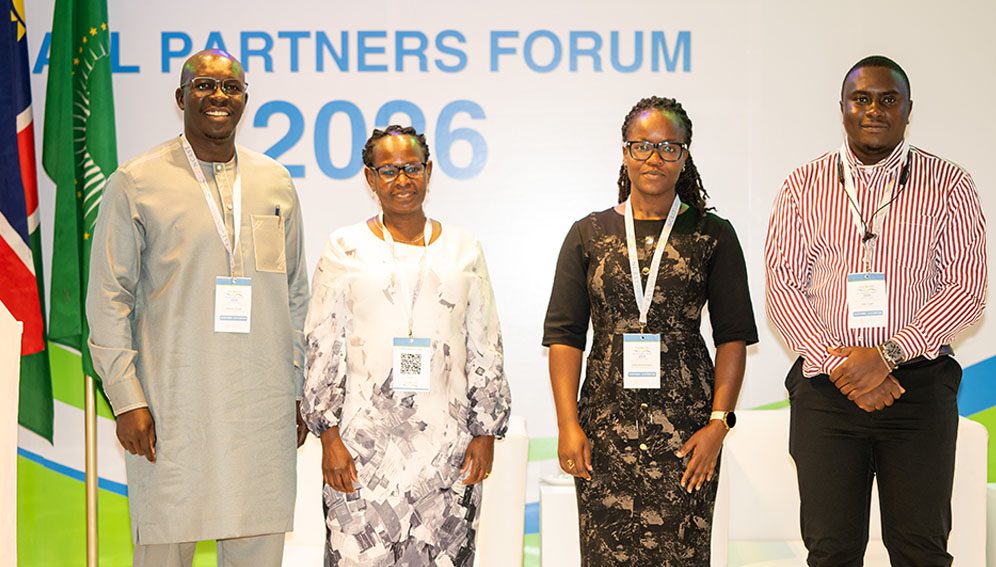
Voices from the SGCI Forum: Building an African-led science system
From calls for African-led research funding to stronger engagement with communities and governments, participants at the 2026 Science Granting Councils Initiative (SGCI) All Partners Forum left Windhoek with a shared sense that Africa’s science and innovation systems are entering a new phase. Held from 28…

NRF champions science, climate action and youth empowerment
Kenya’s National Research Fund (NRF) is strengthening efforts to connect scientific research, innovation and youth participation with practical responses to climate and environmental challenges. NRF chief executive officer Dickson Andala represented the fund at the launch of the Climate Policy and Advocacy Training – Cohort…
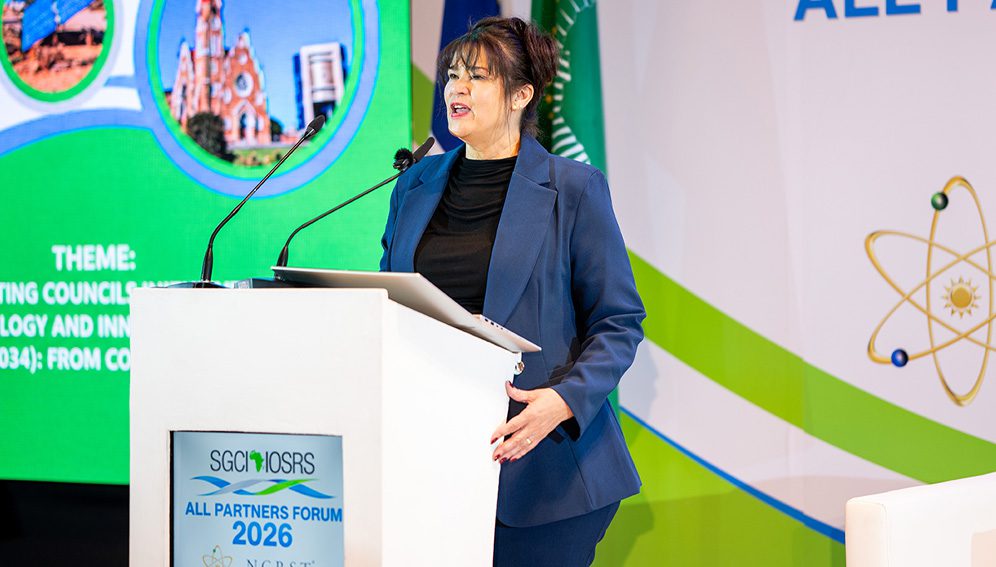
Windhoek Declaration: African science funders pledge to act as one
Science granting councils say Africa’s research systems need African ownership, steadier funding and less fragmentation. Here is what they agreed in Windhoek. African science granting councils adopted a collective declaration in Windhoek, Namibia, on 1 October 2026, as part of the Science Granting Councils Initiative…


SGCI funded projects

Rwanda’s integrated approach to sustainable agriculture and nutrition
Project Titles & Institution Areas of Research Number of Projects being funded Project Duration Grant Amount In-Kind Distribution Council Collaboration with other councils