SGCI News
From calls for African-led research funding to stronger engagement with communities and governments, participants at the 2026 Science Granting Councils Initiative (SGCI) All Partners Forum left Windhoek with a shared…
From calls for African-led research funding to stronger engagement with communities and governments, participants at the 2026 Science Granting Councils Initiative (SGCI) All Partners Forum left Windhoek with a shared sense that Africa’s science and innovation systems are entering a new phase.
Held from 28 September to 2 October, the Forum brought together science granting councils, research institutions, governments, development partners and funders to reflect on the progress of SGCI, discuss priorities for its third phase and consider how African countries can work more closely to strengthen research and innovation.
Across the discussions, the key message was that African countries need greater ownership of their research agendas, funding systems and partnerships, but that ownership must translate into research that delivers tangible benefits for society.
Some of the participants at the forum aired their views on what that transition could mean.
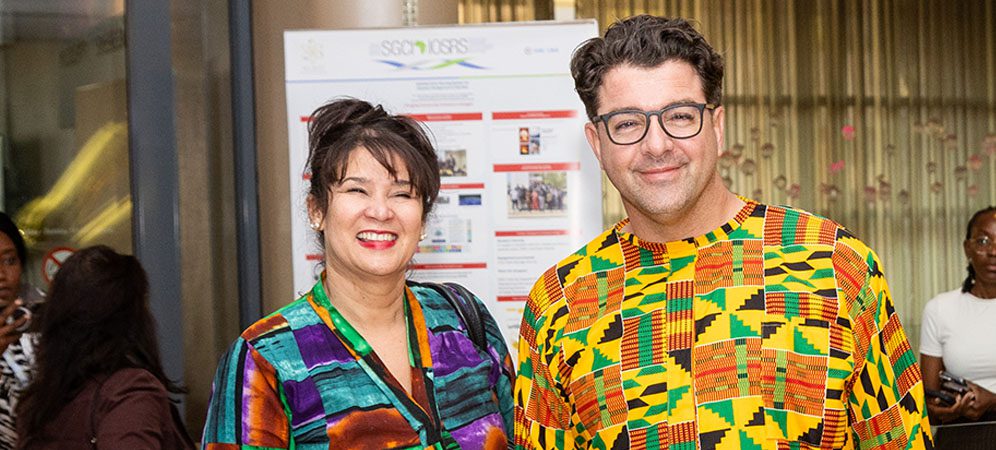
For Laurent Bochereau, Minister Counsellor for Science, Technology and Innovation at the European Union Delegation to the African Union, the Forum represented an important step towards greater continental integration in science, technology and innovation.
“I think this week’s Forum was a major milestone towards African integration when it comes to science, technology and innovation, and towards developing a real continental fund, which has been missing.”
Bochereau said an African funding framework could also strengthen the continent’s ability to attract and leverage international resources.
“Once Africa has its own funding framework, it will be much easier to leverage funding from other partners in a more sustainable and ambitious way.”
His comments reflected one of the Forum’s broader discussions around the need to mobilise more resources for African research while building stronger mechanisms for coordination and co-investment.
Making the case for research investment
The question of funding is becoming increasingly urgent as the global research financing landscape changes.
Jonathan Underwood, Equitable Research Ecosystems Lead at Wellcome in the United Kingdom, said international research funding is becoming more constrained, increasing the importance of domestic investment and stronger evidence of research impact.
“There is less international research funding available than before,” Underwood said.
While national governments have an opportunity to take a greater lead in funding research, he noted that research competes with many other government priorities.
For science granting councils, demonstrating what research achieves therefore becomes critical.
“Telling stories of the impact of your research can demonstrate the returns on investment in research,” he said.
The point echoed discussions on monitoring, evaluation and learning during the Forum’s final formal day, where participants stressed the need to move beyond counting activities and grants towards understanding what changes research investments produce.
For councils, stronger evidence of impact could help make the case for sustained public investment while also showing citizens why research matters.
From funding universities to improving lives
That connection between research and society was central to the reflections of Nokuthula Mchunu, manager of International Collaborative Research Grants at South Africa’s National Research Foundation.
She challenged science granting councils to reconsider the purpose of research funding.
“As councils, we think we have funding to give to universities, and that’s our job. That’s not our job,” Mchunu said.
“Our job is to fund science to improve the lives of people.”
She argued that shift in perspective should influence how councils support researchers and how research projects are designed.
Mchunu called for stronger relationships between researchers and communities, noting that scientific work should respond to the needs of the people it is ultimately intended to serve.
“So, we should encourage our scientists to work with communities because the science they do is for communities.”
Her comments reinforced a recurring theme throughout the Forum: strengthening African science systems is about ensuring that research contributes to development priorities, informs policy, supports innovation and improves people’s lives.
Engagement as a condition for influence
For Amos Nungu, director general of Tanzania’s Commission for Science and Technology, engagement is essential if science is to remain relevant and influential.
“Engagement is key,” Nungu said.
He stressed that councils need to engage not only with communities but also with government if they want research to influence national decision-making.
“To be relevant locally, we need to engage with our communities but also with the government.”
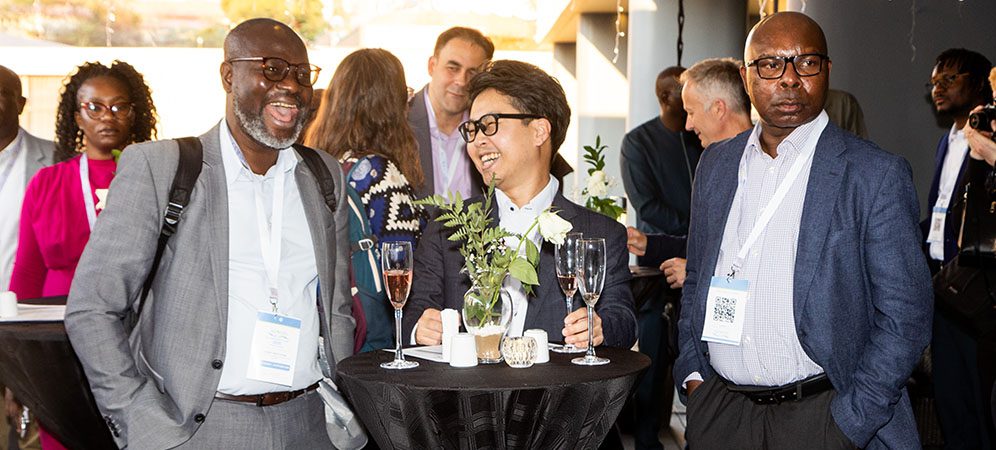
This means that science granting councils have a role beyond allocating research funds. They must also help create an environment in which research evidence is understood and used by policymakers and other decision-makers.
“We are looking for funding, but if the government does not understand what we are doing, they won’t listen to us,” Nungu said.
His comments connect directly to the Forum’s discussions around research-to-policy pathways and the need for councils to strengthen their role within national science, technology and innovation systems.
Turning policy into practice
The Forum also highlighted the importance of the policy environment in which councils operate.
Cephas Mensah, outgoing President of the SGCI Alliance, pointed participants towards the newly established Policy Hub and urged councils to familiarise themselves with the framework and documentation underpinning it.
“We are clear that the Policy Hub has been established,” Mensah said.
“My appeal to colleagues is that take time to go through the relevant documentation. Once you read the relevant documentation, implementation can be smooth.”
The emphasis on implementation reflected the wider direction of SGCI-3. After more than a decade of strengthening the capacity of science granting councils, the focus is increasingly on how that capacity is translated into effective policies, stronger institutions, coordinated research investment and measurable outcomes.
An opportunity for inclusive science
For Jacqueline Owigo, Research and Innovation Adviser at FCDO Kenya, the Forum demonstrated the opportunity that exists to build more inclusive science and innovation systems across the continent.
“We heard from the Prime Minister that science has to translate into opportunities for people,” she said.
That message was reflected in discussions throughout the week about moving research towards innovation, strengthening links between research and society, and ensuring that scientific knowledge contributes to policy.
“And this week we talked about how to move research to innovation and how research will impact society and inform policy,” Owigo said.
She sees this as an opportunity to build systems in which the benefits of science are more widely shared.
“So, we really have an opportunity to create inclusive science and innovation systems.”
Learning across borders
The Forum’s value was not limited to formal commitments or institutional discussions. For Antonie Lysholm Kraemer, senior adviser at Norad, one of its greatest strengths was the opportunity for participants from different countries to learn from one another.
“There are so many countries represented here and so much knowledge being shared,” she said.
Kraemer said the exchanges had provided insights that she would take back to Norway, particularly around the approaches being developed and the progress being made by African science granting councils.
“I have been learning a lot over the past three days from these very rich exchanges,” she said. “I will be taking a lot of information back to Norway about what is being done and what is improving.”
That peer learning is becoming increasingly important as SGCI enters its third phase and the network of councils grows.
Rather than relying solely on external technical expertise, councils are increasingly sharing experiences developed within their own national contexts, from policy engagement and gender inclusion to research funding, monitoring and evaluation and research-to-impact approaches.
A new phase for African science leadership
Taken together, the voices from the Forum point to an SGCI that is evolving.
The Initiative began with a focus on strengthening the capacity of science granting councils. More than a decade later, the conversation has expanded to questions of African leadership, sustainable financing, continental collaboration, policy influence, research impact and inclusive innovation.
The emergence of the SGCI Alliance, the alignment with STISA-2034 and discussions around multinational research funding all point towards a more connected African research ecosystem.
But the Forum also made clear that stronger systems will require more than new structures.
They will require governments to invest in research, councils to demonstrate impact, researchers to engage communities, institutions to work across borders and international partners to build more equitable relationships.
The adoption of the Windhoek Declaration at the Forum provided a formal expression of the commitments emerging from the discussions.
The challenge now is implementation.
As Africa seeks to strengthen its position in global science and innovation, the voices from Windhoek suggest that the next phase of SGCI will be judged not only by how much funding is mobilised or how many institutions participate, but by whether stronger African leadership produces research systems that are better connected to communities, governments and the continent’s development priorities.
Please check out the stories and let us know what you think. We would love to hear from you!
Let’s continue the conversation on our social media
Published on 21 October 2026
By Jackie Opara-Fatoye
Related News
Voices from the SGCI Forum: Building an African-led science system
From calls for African-led research funding to stronger engagement with communities and governments, participants at the 2026 Science Granting Councils Initiative (SGCI) All Partners Forum left Windhoek with a shared sense that Africa’s science and innovation systems are entering a new phase. Held from 28…
NRF champions science, climate action and youth empowerment
Kenya’s National Research Fund (NRF) is strengthening efforts to connect scientific research, innovation and youth participation with practical responses to climate and environmental challenges. NRF chief executive officer Dickson Andala represented the fund at the launch of the Climate Policy and Advocacy Training – Cohort…
Windhoek Declaration: African science funders pledge to act as one
Science granting councils say Africa’s research systems need African ownership, steadier funding and less fragmentation. Here is what they agreed in Windhoek. African science granting councils adopted a collective declaration in Windhoek, Namibia, on 1 October 2026, as part of the Science Granting Councils Initiative…


SGCI funded projects

Rwanda’s integrated approach to sustainable agriculture and nutrition
Project Titles & Institution Areas of Research Number of Projects being funded Project Duration Grant Amount In-Kind Distribution Council Collaboration with other councils