
SGCI News
In Namibia, having water nearby does not always mean having reliable water at home. In Rundu, a growing urban centre on the perennial Okavango River, households reported the highest level…
In Namibia, having water nearby does not always mean having reliable water at home.
In Rundu, a growing urban centre on the perennial Okavango River, households reported the highest level of water insecurity among three towns studied by researchers.
The finding illustrates a wider challenge facing Namibia’s urban water systems, namely that improving water security requires more than finding additional sources of water.
It also depends on how water is distributed, how infrastructure is maintained, how municipalities respond to problems and whether households can afford and reliably access the service.
These challenges are at the centre of Innovate4Water, an interdisciplinary research project led by Fungai Bhunu-Shava, principal investigator and project management lead, and Attlee Gamundani, co-principal investigator, both of the Namibia University of Science and Technology (NUST).
The Science Granting Councils Initiative supported the project, which the African Centre for Technology Studies led in collaboration with Namibia’s National Commission on Research, Science and Technology.
The grant contract was signed in August 2024. Field-intensive research followed in 2025, including household data collection, municipal co-design, infrastructure inspections and technology pilots.
Bhunu-Shava coordinates the project’s interdisciplinary work across governance and benchmarking, urban infrastructure redesign, artificial intelligence and the Internet of Things, and socio-economic impact and research uptake.
Gamundani, an associate professor of cybersecurity, contributes expertise in artificial intelligence, IoT, cybersecurity and digital transformation, including the project’s smart-water monitoring architecture.
The wider project brings together engineers, urban planners, hydrologists, water-quality experts, social scientists, municipal practitioners and communities.
The approach reflects the researchers’ view that technology alone cannot improve urban water security. It requires reliable infrastructure, accountable institutions, usable data and equitable service outcomes.
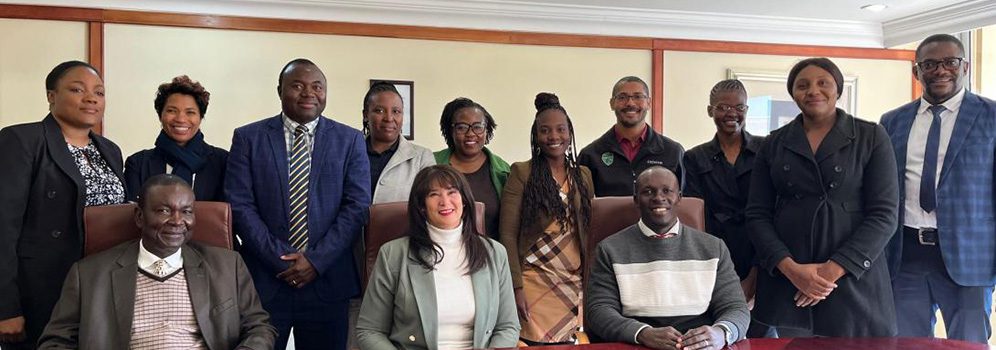
Water insecurity
The researchers surveyed households in Windhoek, Rundu and Ongwediva to understand how residents experience water insecurity.
They collected 696 interviews, with 692 retained for quality-controlled analysis. Only 25 per cent of respondents reported uninterrupted water supply, while 43.1 per cent experienced interruptions sometimes or almost every month.
Rundu recorded the highest mean Household Water Insecurity Experiences score at 17.92, compared with 9.96 in Ongwediva and 8.53 in Windhoek.
For the researchers, the results show why urban water planning needs to consider people’s experiences alongside technical measures of water supply.
“Urban water security is not only about hydrology; it is also about distribution reliability, governance, maintenance, affordability and spatial equity,” Gamundani said.
The three towns were deliberately selected because they represent different urban water challenges.
Windhoek, Namibia’s arid capital, has developed measures including demand management, managed aquifer recharge and direct potable reuse, but continues to face population growth, ageing infrastructure and unequal access.
Rundu presents a different challenge. Despite being situated beside the perennial Okavango River, its infrastructure, treatment, storage and distribution systems can still result in unreliable household services.
Ongwediva, meanwhile, is a smaller town that depends on a long-distance water-transfer system linked to the Kunene River, making it vulnerable to power interruptions, pressure instability and underground leaks.
Meters to data
One of the project’s approaches is to use Internet of Things (IoT) technology and artificial intelligence to give municipalities better information about water use and possible losses.
In Ongwediva’s Extension 11, researchers installed 69 pulse readers on household water meters.
The readers convert meter movement into time-stamped consumption data. A planned bulk smart meter will measure the total volume entering the district, allowing the municipality to compare this with authorised household consumption.
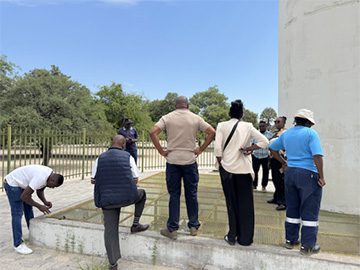
Persistent differences could indicate leakage, unauthorised use, meter errors or other forms of non-revenue water requiring investigation.
The AI component is intended to help interpret these data by identifying unusual patterns, such as continuous flow during normally quiet periods, sudden changes in consumption or persistent imbalances.
But the researchers stress that technology is not intended to replace human decision-making.
“The model supports judgement; it does not automatically accuse a household or close a valve,” Gamundani said.
According to Gamundani, the project has also developed an AI-based analytical approach using six years of monthly water-consumption data from 1,375 Windhoek households.
The researchers say the analysis demonstrates the feasibility of using machine-learning techniques to identify unusual consumption patterns, although they caution that this does not yet demonstrate an operational reduction in water losses.
Designing with municipalities
The researchers say technology alone cannot solve the problems facing urban water systems.
In Rundu, field visits with municipal staff identified unpressurised areas, limited instrumentation, broken or absent gauges and a lack of active leakage detection.
These observations changed the proposed technical design.
Rather than simply replicating the Ongwediva smart-meter model, the researchers proposed a phased approach incorporating acoustic sensing at strategic points around water towers and other parts of the network.
In Ongwediva, municipal engineers and water, sewerage and IT staff helped select Extension 11 as the pilot area. Their input influenced equipment placement, the planned district-metered area, dashboard and billing applications, as well as measures to protect outdoor meters from tampering.
For Bhunu-Shava, this co-design process is important because innovations can fail when maintenance, communications, financing and institutional responsibilities are not considered from the beginning.
“Replication begins with diagnosis, not procurement,” she said.
Beyond smart meters
Innovate4Water also examines how existing urban infrastructure could contribute to water security.
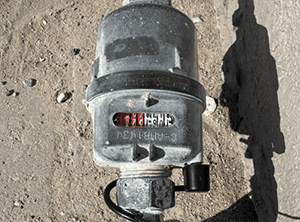
In Windhoek, researchers are assessing how roads, stormwater drains and public open spaces could potentially support water retention, harvesting or recharge where technically and environmentally appropriate.
The project has developed an Urban Water Service Delivery Benchmarking Framework that brings together technical, financial, climate and household indicators.
These include continuity of supply, pressure stability, affordability, customer satisfaction, non-revenue water, pipe bursts, repair times, source diversification, drought preparedness, complaint response and the distribution of household water insecurity across neighbourhoods.
Bhunu-Shava say the framework has already improved planning discussions by giving municipal stakeholders a shared language for measuring water-service performance.
Engagement with the City of Windhoek’s Roads and Stormwater Department also contributed to a stronger focus on upgrading stormwater data systems.
The challenge of lasting impact
While the project has produced tangible research and technical outputs, the researchers caution against claiming impacts that have not yet been demonstrated.
Sixty-nine pulse readers have been installed in Ongwediva, but the bulk meter and communications system still need to be fully commissioned.
A stable baseline is also required before researchers can determine whether the intervention has reduced non-revenue water or water-service disruptions.
“The available evidence does not yet support a verified percentage reduction in Non-Revenue Water or a causal decrease in reported disruptions attributable to the pilot,” Gamundani said.
Instead, they say the project has built and tested the measurement and decision infrastructure needed to quantify such impacts over time.
For municipal authorities, another challenge is ensuring that innovations remain functional after the research project ends.
The researchers identify recurrent financing, maintenance, technical skills, data governance and clear institutional ownership as critical requirements for long-term adoption.
In Rundu, municipal stakeholders expressed interest in real-time monitoring and decision-support tools, but also identified sustainable financing, technical skills, reliable infrastructure and maintenance as conditions for wider adoption.
In Ongwediva, where equipment has already been installed, practical barriers include antenna reliability, bulk-meter commissioning, physical protection of meters, financing and recurrent maintenance.
From research to resilient cities
The researchers say the longer-term goal is not to create a single technological solution that can simply be transferred from one city to another.
Instead, they want to develop a systems approach that can be adapted to different urban contexts.
A new city would first need to establish a baseline covering household water insecurity, service continuity, affordability, infrastructure condition, water losses, institutional responsibilities, and data availability.
It would then identify the most appropriate technical tools and develop a clear workflow linking data and alerts to municipal action.
For Innovate4Water, the ultimate test will be whether research can become part of routine municipal water management.
“The single biggest obstacle is not whether the technology can work. The obstacle is converting a successful, time-bound research pilot into a municipal operating capability with clear ownership, recurrent financing, maintained infrastructure, skilled staff, data governance and political commitment”, Gamundani explains.
The project team believes the research has already reduced some of the technical and design uncertainty.
The next step, they say, is to build the partnerships and financing needed to move from pilot projects to sustained urban water services that are more reliable, equitable and resilient.
Please check out the stories and let us know what you think. We would love to hear from you!
Let’s continue the conversation on our social media:
Published on 21 September 2026
By Jackie Opara-Fatoye
Related News
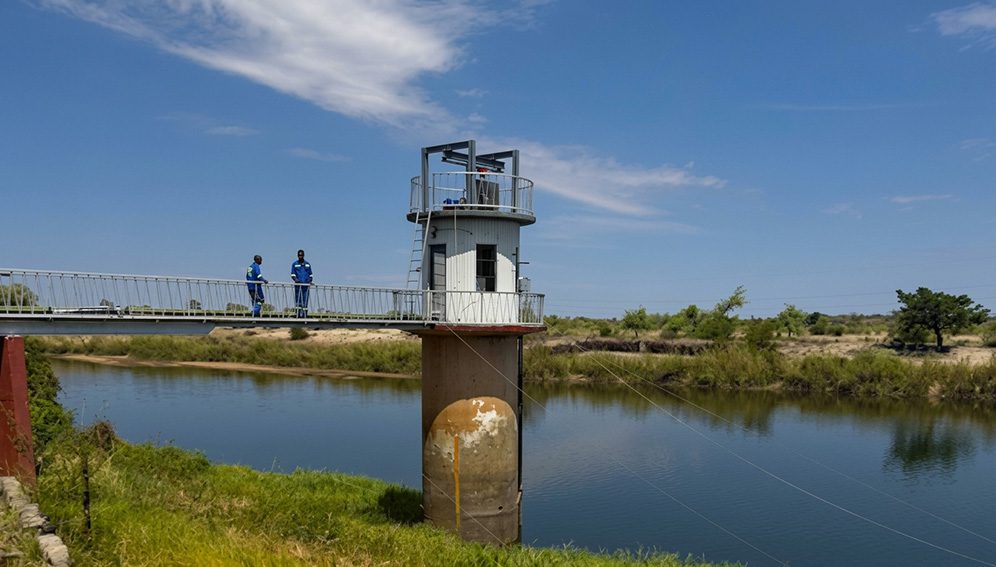
Namibia project uses household data, smart meters to rethink water
In Namibia, having water nearby does not always mean having reliable water at home. In Rundu, a growing urban centre on the perennial Okavango River, households reported the highest level of water insecurity among three towns studied by researchers. The finding illustrates a wider challenge…
From commitment to action: why the 2026 All Partners Forum matters
When partners gather in Windhoek, Namibia, for the 2026 Science Granting Councils Initiative (SGCI) All Partners Forum, they will meet at an important point in the evolution of Africa’s science, technology and innovation landscape. The Forum will be held from 28 September to 1 October…
STISA-2034:Turning research into policy through knowledge uptake
Africa produces a growing body of research on the challenges shaping everyday life, yet a persistent gap remains between generating evidence and putting it to use. Research findings may be published in journals, presented at conferences and archived in institutional repositories, but too often they…
Research and Resources

SGCI funded projects

Rwanda’s integrated approach to sustainable agriculture and nutrition
Project Titles & Institution Areas of Research Number of Projects being funded Project Duration Grant Amount In-Kind Distribution Council Collaboration with other councils