
SGCI News
For the first time in the Global Research Council’s history, a dedicated space was carved out for the Global South, and the conversation it produced is already shaping what comes…
For the first time in the Global Research Council’s history, a dedicated space was carved out for the Global South, and the conversation it produced is already shaping what comes next.
The inaugural GRC South Day, held on the sidelines of the GRC Annual Meeting in Bangkok, Thailand, from 18 to 22 May, brought together research councils, funders, and global partners.
The event marked a significant shift in global research dialogue by placing the priorities, experiences, and leadership of countries in the Global South at the centre of conversations about international cooperation, funding, and scientific development.
The Global South Day created a dedicated forum for exploring how South–South collaboration can play a transformative role in addressing shared priorities, from climate change and food security to health and energy.
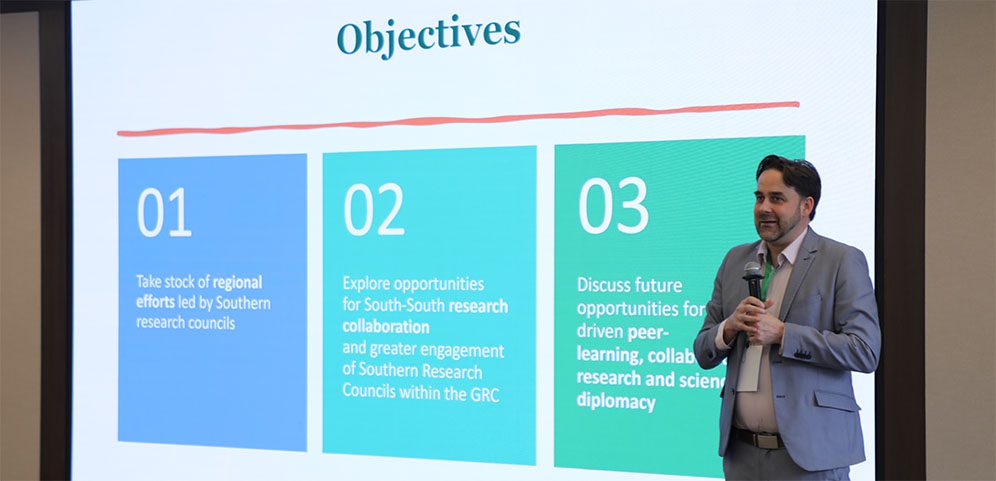
Participants drew on experiences across Latin America, the Arab region, and Sub-Saharan Africa, with strong consensus emerging around the need to move from fragmented bilateral efforts toward coordinated, multilateral programming.
A parallel dialogue hosted by the International Development Research Centre (IDRC) brought together senior leadership from Global South research councils for the first time in that setting, as conversations initiated during the South Day workshop continued.
The dialogue highlighted the need for stronger coordination, greater visibility for Southern-produced knowledge, and more inclusive approaches to defining scientific excellence.
Participants also identified a series of priority actions aimed at translating discussion into long-term collaboration.
These included building South–South research networks for early-career researchers, developing platforms for knowledge exchange, strengthening links between researchers and policymakers, improving transparency in research funding flows, and designing inclusion frameworks that reflect regional realities rather than relying solely on Northern models.
Among the models cited as a benchmark for what coordinated South–South collaboration can achieve was the Science Granting Councils Initiative.
SGCI was presented as a leading example of how research funding agencies can move beyond institutional capacity-building toward broader systems transformation, through joint funding mechanisms, regional governance structures, peer learning platforms, and thematic working groups.
The engagements also included an SGCI Funders Collaborative Breakfast, which brought together African councils, funders, and partners to reflect on SGCI’s role in strengthening African research funding systems and cultivating more coordinated partnerships with funders from beyond the continent.
Speaking at the breakfast, Angus Paterson, acting chief executive officer of the National Research Foundation, said African councils are being asked to do more than fund research. They are expected to help shape national priorities, support regional collaboration, strengthen institutional systems, and connect African research more effectively to global opportunities.
Paterson added that African councils should not only be participants in global partnerships but also active contributors to how these partnerships are shaped.
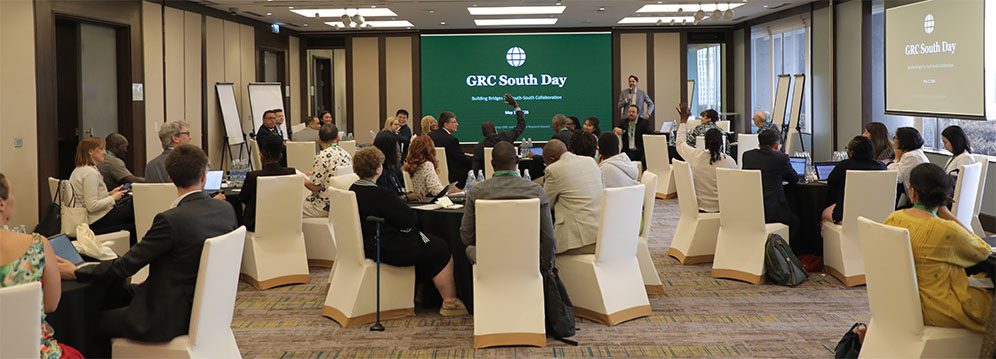
Anicia Peters, chief executive officer of Namibia’s National Commission on Research, Science and Technology and incoming Chair of the SGCI Alliance, was also central to the Bangkok discussions, drawing on eleven years of SGCI achievements to chart a path toward greater coordination with partners beyond the continent.
“We are grateful to the GRC for providing a platform to test new approaches grounded in mutual accountability and shared ownership. There is an urgent need to deepen South–South collaboration while rethinking North–South partnerships to be more equitable, demand‑driven, and responsive to context,” IDRC stated
The Bangkok meeting closed with a concrete commitment to convene Global South Day again in Cape Town in 2027.
The decision was widely viewed as a sign that the momentum generated in Bangkok is expected to continue beyond a single meeting and evolve into a sustained platform for South–South engagement and cooperation.
Please check out the stories and let us know what you think. We would love to hear from you!
Let’s continue the conversation on our social media
Published on 22 May 2026
By Jackie Opara-Fatoye
Related News
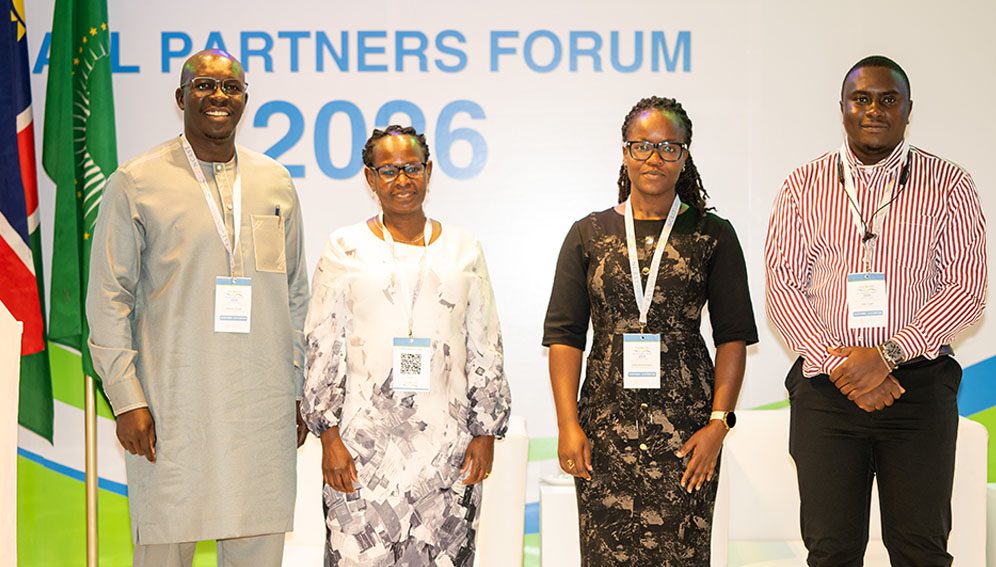
Voices from the SGCI Forum: Building an African-led science system
From calls for African-led research funding to stronger engagement with communities and governments, participants at the 2026 Science Granting Councils Initiative (SGCI) All Partners Forum left Windhoek with a shared sense that Africa’s science and innovation systems are entering a new phase. Held from 28…
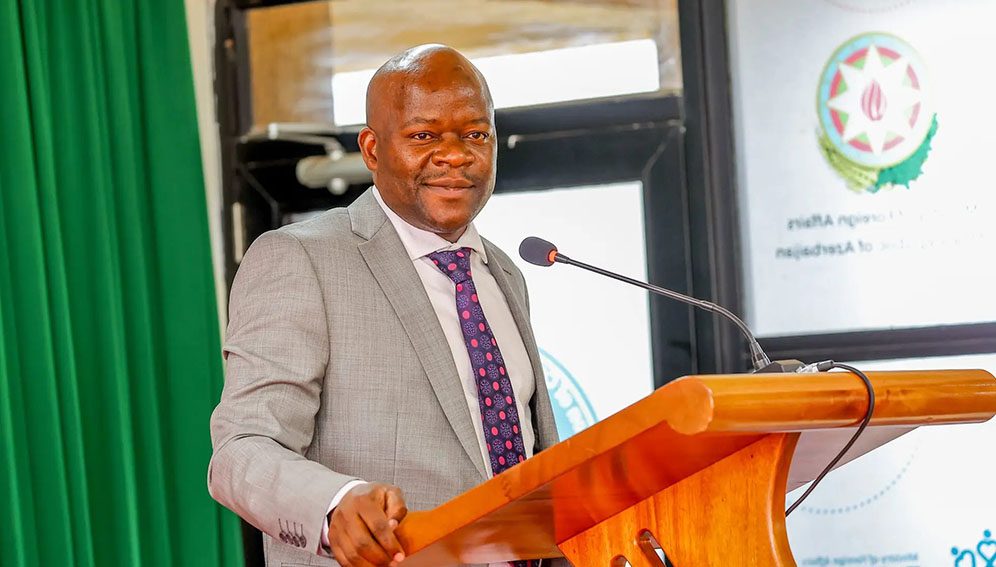
NRF champions science, climate action and youth empowerment
Kenya’s National Research Fund (NRF) is strengthening efforts to connect scientific research, innovation and youth participation with practical responses to climate and environmental challenges. NRF chief executive officer Dickson Andala represented the fund at the launch of the Climate Policy and Advocacy Training – Cohort…
Windhoek Declaration: African science funders pledge to act as one
Science granting councils say Africa’s research systems need African ownership, steadier funding and less fragmentation. Here is what they agreed in Windhoek. African science granting councils adopted a collective declaration in Windhoek, Namibia, on 1 October 2026, as part of the Science Granting Councils Initiative…


SGCI funded projects
Rwanda’s integrated approach to sustainable agriculture and nutrition
Project Titles & Institution Areas of Research Number of Projects being funded Project Duration Grant Amount In-Kind Distribution Council Collaboration with other councils