
SGCI News
Locally developed vermicompost and biochar show promise for improving crop yields and soil health, but researchers say further testing is needed before wider adoption. The vermicompost process uses tiger worms…
Locally developed vermicompost and biochar show promise for improving crop yields and soil health, but researchers say further testing is needed before wider adoption.
The vermicompost process uses tiger worms to break down prepared organic materials into a dark, crumb-like product, while the biochar is made by heating crop residues under restricted oxygen.
For Beata Kubwimana, a farmer in Rwanda, taking part in a research project has offered a practical way to improve her farm and reduce the cost of growing crops.
“Participating in the project and applying the research recommendations on my farm has made a real difference. I have seen improvements in soil health and crop yields while reducing my fertiliser costs,” she said.
Kubwimana said the experience had also improved her family’s access to food and strengthened her confidence in sustaining her household.
Her experience reflects the ambition of a research initiative in Rwanda that is exploring how agricultural residues and other locally available organic materials can be converted into soil amendments to tackle declining soil fertility.
The research project named, ‘The National Programme for Sustainable Usage of Organic Fertilisers (NAPROSUOF)’ was implemented by the University of Rwanda with Agro Behavior Change Ltd. It developed and tested three products: Tithonia-based vermicompost, banana-residue-based vermicompost and biochar made from crop residues.
The research was funded in October 2023 through Rwanda’s National Council for Science and Technology under the Science Granting Councils Initiative (SGCI), in partnership with the International Development Research Centre.
The findings presented in August 2026, offer early evidence that locally produced soil amendments could improve crop performance in areas affected by soil acidity and low organic matter. But researchers caution that the products need further refinement and testing before they can be recommended for widespread commercial use.
A soil problem
More than 60 per cent of Rwanda’s arable land is reported to have acidic soils, which can limit the availability of nutrients that crops need to grow.
Soil samples from five districts – Karongi, Ngororero, Rutsiro, Nyamagabe and Nyaruguru – showed high acidity, with pH levels ranging from 4.40 to 4.90. The analysis also found low levels of soil organic carbon and nitrogen, nutrients important for healthy crop growth.
For smallholder farmers, the challenge is not simply finding a fertiliser. Expensive mineral fertilisers may deliver less benefit when soil acidity and poor soil health remain unaddressed, while access to lime and suitable organic inputs can be limited by cost and transport.
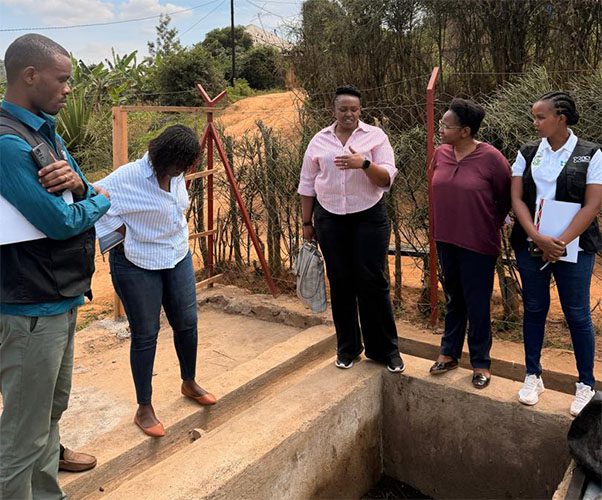
One approach being explored is vermicompost, a natural fertiliser made when earthworms help turn plant waste into nutrient-rich material that helps plants grow. Another is biochar, a charcoal-like material produced by heating plant material under limited oxygen, which can be used to improve soil properties. Such approaches could be particularly relevant in communities where farmers struggle to access or afford agricultural inputs.
A survey of 180 farmers found that 95.42 per cent were willing to adopt or pay for improved organic fertilisers. However, only 41.11 per cent knew how to produce compost, and just 16.11 per cent considered it readily accessible. A quarter said they had received training in the 12 months preceding the survey.
These findings point to a gap between farmers’ interest in organic fertilisers and their ability to produce or obtain them.
From organic waste to crop production
For principal investigator Olive Tuyishime, a soil scientist at the University of Rwanda, the challenge is to bridge the gap between farmers’ demand for better soil inputs and their ability to access and use them.
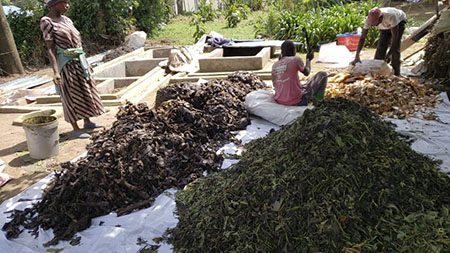
She said NAPROSUOF is seeking to do this by moving beyond variable, traditional composting towards formulated products whose composition and performance can be tested.
According to Tuyishime, the team developed vermicompost using Tithonia diversifolia, a leafy plant with nutrient potential, and banana residues combined with other materials, including manure, eggshells and ash. A third amendment was produced by converting maize stalks and other crop residues into biochar.
The approach puts materials that might otherwise be discarded to agricultural use while developing local alternatives to conventional soil inputs.
In field and controlled trials involving maize, beans and Irish potatoes, the Tithonia-based prototype recorded a reported maize yield of 10 tonnes per hectare and an Irish potato yield of 22.22 tonnes per hectare. The banana-based prototype produced 9.78 tonnes per hectare of maize and 3.70 tonnes per hectare of beans.
Farmyard manure also performed well in the potato trials, Tuyishime said, producing 19.26 tonnes per hectare.
In a separate trial in Karongi in 2026, the Tithonia-based treatment recorded an Irish potato yield of 22.76 tonnes per hectare, Tuyishime said.
The findings suggest that the locally developed amendments could provide useful options for farmers, although the available consolidated research records do not establish that all observed yield differences were statistically significant.
Tuyishime said the team also recorded improvements in soil pH, nutrient availability and organic matter under several treatments. The organic matter result below comes from greenhouse experiments. “In Karongi, biochar increased soil organic matter from a reported baseline of 1.95 per cent to 4.32 per cent.”
These results are encouraging, but they are not yet proof of sustained yield gains across Rwanda’s different farming conditions.
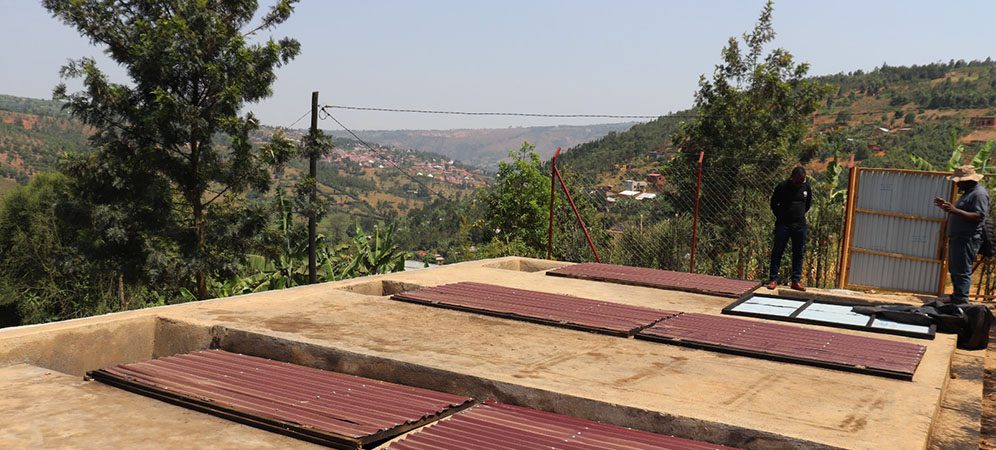
The project’s activities extended beyond field trials. “A production facility was established in Fumbwe Sector, Rwamagana District, with 60 local farmers involved in its construction and establishment,” she said. The project also trained 144 extension personnel, who can help communicate agricultural research and practices to farmers.
Interest in the products was reported at Agrishow 2026, although Tuyishime said market validation remains preliminary.
Promising results, but more testing needed
One of the main challenges is ensuring that the prototypes are safe and consistent enough for wider use.
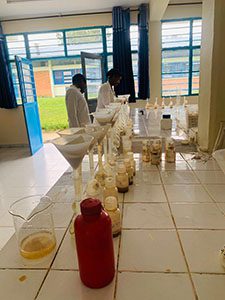
Laboratory tests found high moisture content and elevated electrical conductivity in the vermicompost products, indicating excessive soluble salts that could harm germinating seeds and young plants if the formulations are used without appropriate refinement.
The researchers say drying, curing, blending, feedstock control and repeated quality testing are needed before commercial release. Further trials across multiple seasons and locations will also be required to establish reliable application rates, confirm crop responses and assess the economics of production and use.
The project report recommends completing product certification and intellectual-property processes, and exploring decentralised production through cooperatives and local enterprises. Women and youth groups could participate in collecting raw materials, processing, packaging and distributing the products.
Discussions with Rwanda’s Ministry of Agriculture and Animal Resources, the Food and Agriculture Organization and other institutions have also contributed to a proposed approach for testing and scaling the products through national Food Basket Sites.
Tuyishime said the broader lesson is that locally available organic materials can become valuable agricultural inputs when production is linked to soil testing, appropriate formulations and practical advice for farmers.
Supported by SGCI and Rwanda’s National Council for Science and Technology, the project illustrates how research into local materials could help address soil degradation and farmers’ input challenges.
For farmers such as Kubwimana, the ultimate test will be whether the innovation can consistently improve harvests, reduce costs and help households maintain reliable access to food.
Please check out the stories and let us know what you think. We would love to hear from you!
Let’s continue the conversation on our social media
Published on 27 October 2026
By Jackie Opara-Fatoye
Related News
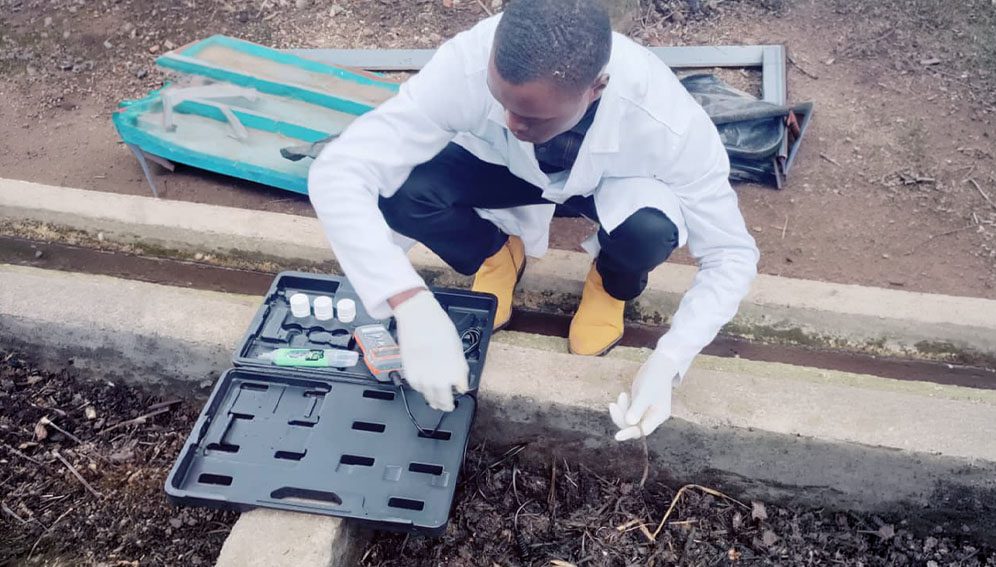
Can Rwanda’s farm waste help restore its depleted soils?
Locally developed vermicompost and biochar show promise for improving crop yields and soil health, but researchers say further testing is needed before wider adoption. The vermicompost process uses tiger worms to break down prepared organic materials into a dark, crumb-like product, while the biochar is…
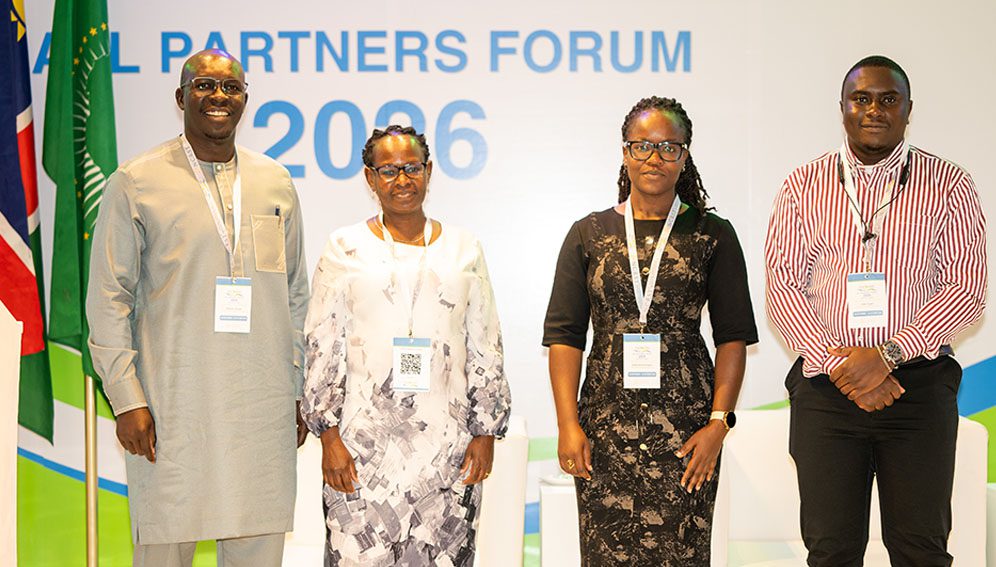
Voices from the SGCI Forum: Building an African-led science system
From calls for African-led research funding to stronger engagement with communities and governments, participants at the 2026 Science Granting Councils Initiative (SGCI) All Partners Forum left Windhoek with a shared sense that Africa’s science and innovation systems are entering a new phase. Held from 28…

NRF champions science, climate action and youth empowerment
Kenya’s National Research Fund (NRF) is strengthening efforts to connect scientific research, innovation and youth participation with practical responses to climate and environmental challenges. NRF chief executive officer Dickson Andala represented the fund at the launch of the Climate Policy and Advocacy Training – Cohort…


SGCI funded projects
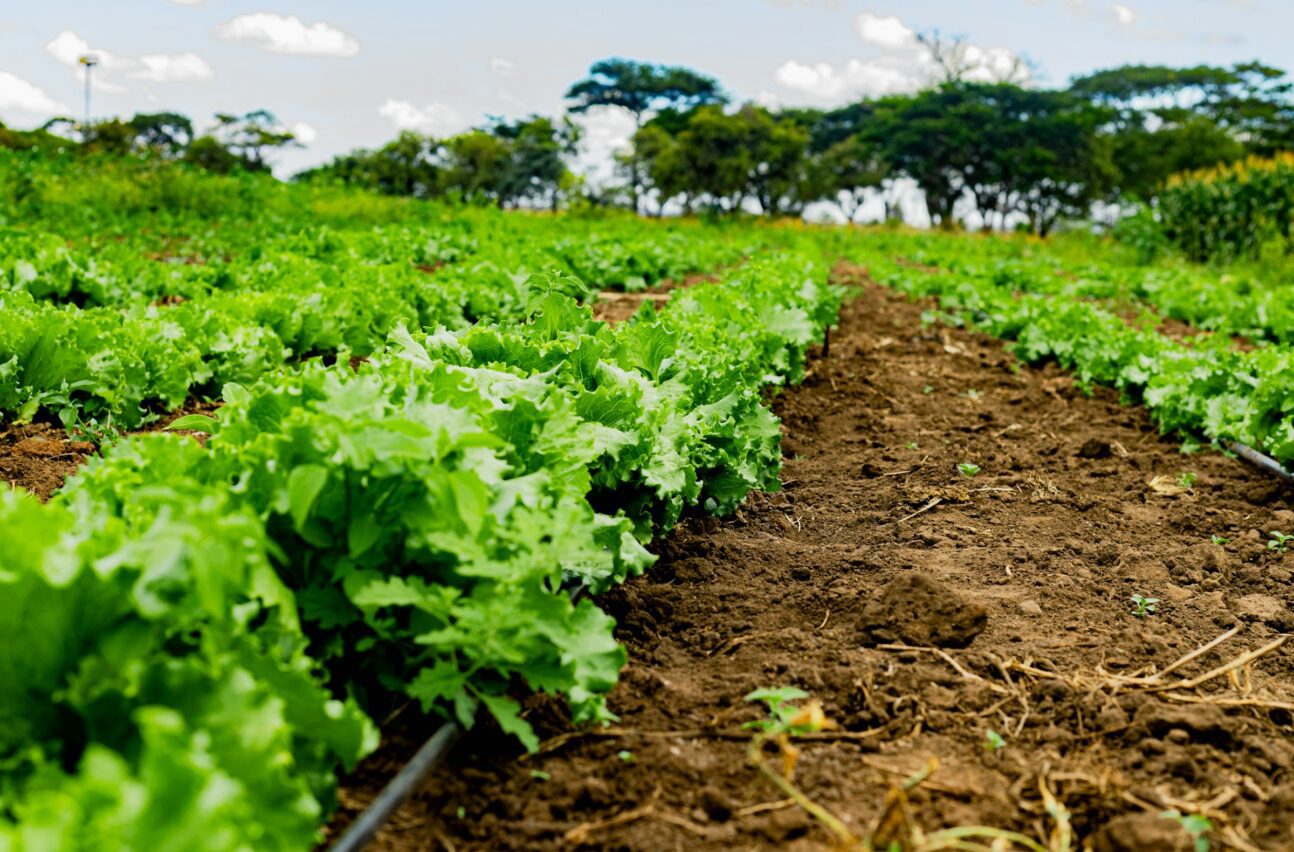
Rwanda’s integrated approach to sustainable agriculture and nutrition
Project Titles & Institution Areas of Research Number of Projects being funded Project Duration Grant Amount In-Kind Distribution Council Collaboration with other councils