
SGCI News
African research leaders are calling for community-engaged and curiosity-driven research to strengthen the continent’s scientific ecosystem and ensure that research better serves local needs. This call to action took centre…
African research leaders are calling for community-engaged and curiosity-driven research to strengthen the continent’s scientific ecosystem and ensure that research better serves local needs.
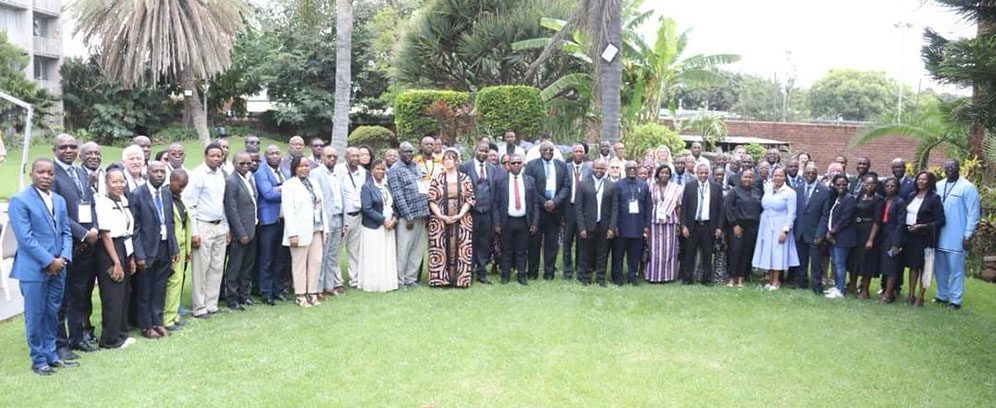
This call to action took centre stage at the 2025 Global Research Council (GRC) Sub-Saharan Africa Regional Meeting and Science Granting Councils Initiative (SGCI) Academic Symposium, held in Bulawayo, Zimbabwe, from 10–14 November.
Co-hosted by the Research Council of Zimbabwe (RCZ) and South Africa’s National Research Foundation (NRF), the event brought together research funding leaders, policymakers, and scholars to advance African priorities under the theme “From Regional Dialogue to Global Impact.”
It also served as an opportunity to launch a new cohort of SGCI-funded bilateral research projects across the region.
This year’s GRC discussions centered on “Reimagining Inclusive Open Science for Equity, Justice and Sustainability” and “Research for Sustainable Communities.”
Developed by the co-hosts of the 2026 GRC Annual Meeting, the Natural Sciences and Engineering Research Council of Canada (NSERC) and Thailand Science Research and Innovation (TSRI), the themes encourage African funders to reflect on how science can equitably benefit people and the planet.
The dual platform of the GRC Regional Meeting and the SGCI Academic Symposium enabled both policy-level exchanges and researcher engagement, strengthening links between funding mechanisms and practical research outcomes.
Participants convened in leadership roundtables and synthesis sessions designed to shape Africa’s voice toward the 2027 GRC annual meeting.
Fulufhelo Nelwamondo, chief executive officer of the NRF and member of the GRC Sub-Saharan Africa Governing Board, reflected on Africa’s growing role in global research collaboration.
He called for the continent to champion Curiosity-Driven Research (CDR) as a cornerstone of scientific progress.
“The road to GRC 2027 begins here in Africa,” he said. “Curiosity-driven research is essential for unlocking transformative discoveries and innovation, and our collective challenge is to create enabling environments that allow curiosity to flourish.”
He added that a new multilateral CDR programme is being shaped collaboratively by African funders and the German Research Foundation (DFG), as part of efforts to promote investment in fundamental research.
The longstanding partnership between the NRF and DFG, including joint contributions to the GRC, was highlighted as a model for such collaboration.
“The NRF is dedicated to fostering a more connected and collaborative research ecosystem. Through partnership, inclusivity, and curiosity, we are building the foundations for a global research future that benefits all,” Nelwamondo said.
Delivering the keynote address, Obert Jiri, Zimbabwe’s permanent secretary for Lands, Agriculture, Fisheries, Water, and Rural Development, emphasised the need for research that responds directly to community realities.
“The ultimate measure of research lies in its impact on the ground, in the resilience and well-being of communities,” he said.
Drawing on examples such as drought research with smallholder farmers, he urged funders to incentivise proposals with strong community linkages and support cross-border collaborations.
Please check out the stories and let us know what you think. We would love to hear from you!
Let’s continue the conversation on our social media
Published on 18 November 2025
Related News
Ghana strengthens safeguards for emerging malaria gene-drive research
As Ghana explores gene-drive technology as a potential tool for malaria control, stronger regulatory oversight and collaboration between research institutions and government will be essential to ensuring that scientific innovation does not compromise public health or environmental safety. Ghana is considering the scientific and regulatory…
Ivorian researchers develop solutions to illegal gold mining damage
Locally developed technologies for detecting heavy metals in water and restoring contaminated farmland could help Côte d’Ivoire address the environmental and public health consequences of illegal gold mining. Illegal gold mining has affected 29 of Côte d’Ivoire’s 31 regions, threatening water resources, agricultural land and…
How research management is changing Africa’s science funders
A new grant appeals procedure in Zimbabwe, improved digital grant management in Namibia, and stronger gender inclusion leadership in Zambia are among the institutional changes emerging from efforts to strengthen research management across Sub-Saharan Africa. Theme one of the Science Granting Councils Initiative Phase II…


SGCI funded projects
Rwanda’s integrated approach to sustainable agriculture and nutrition
Project Titles & Institution Areas of Research Number of Projects being funded Project Duration Grant Amount In-Kind Distribution Council Collaboration with other councils