SGCI News
When Gideon Kye-Duodu began work on what would become the MedScale Schisto App, he was not only building a digital tool but confronting a stubborn public health problem, such as…
When Gideon Kye-Duodu began work on what would become the MedScale Schisto App, he was not only building a digital tool but confronting a stubborn public health problem, such as schistosomiasis, that refused to yield, despite years of intervention.
Schistosomiasis, a parasitic disease spread through contaminated freshwater, remained common in riverine and hard-to-reach communities across Ghana’s Volta and Oti regions.
Mass drug administration (MDA) campaigns were falling short. Coverage was incomplete, households were missed, and records were scattered across paper forms.
Reporting was slow, often arriving too late to inform real-time decisions.
Then came COVID-19, and the fragile system cracked further. “COVID-19 led to the postponement of many MDA campaigns, especially in endemic areas,” Kye-Duodu said.
Turning disruption into opportunity
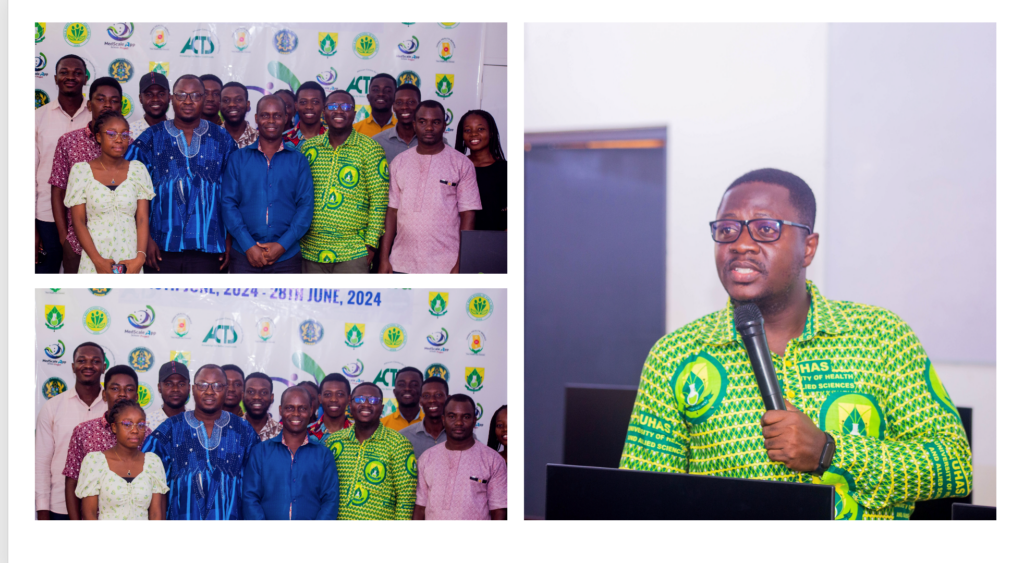
For Kye-Duodu, the lead researcher for this project, a public health researcher and lecturer at the Fred N. Binka School of Public Health, University of Health and Allied Sciences in Ghana, this moment of disruption became a turning point.
What if health workers could see, in real time, who had received treatment and who had been left behind?
What if data could move as quickly as the diseases they were trying to control?
If he could see precisely where the system was failing, he could design something to fill those gaps.
That thinking led to the development of MedScaleApp, a mobile and web-based platform developed with funding from the Science Granting Councils Initiative (SGCI). The platform equips frontline health workers with tools to plan, execute, and monitor drug distribution campaigns in real time.
From Paper to Real-Time Action
Instead of juggling paper records, frontline health workers, from district directors and disease control officers to community drug distributors, can now register households digitally, track drug distribution as it happens, and instantly identify individuals who have been missed.
The app flags gaps, records adverse events, and generates real-time reports through GPS-enabled dashboards.
“It replaces paper-based systems with a simpler, real-time workflow,” Kye-Duodu said. “It improves accuracy, saves time, and strengthens accountability.”
The app also includes offline functionality, which proved critical in communities with limited internet access or unreliable electricity, precisely the communities most vulnerable to being overlooked by conventional systems.
The women who were repeatedly missed
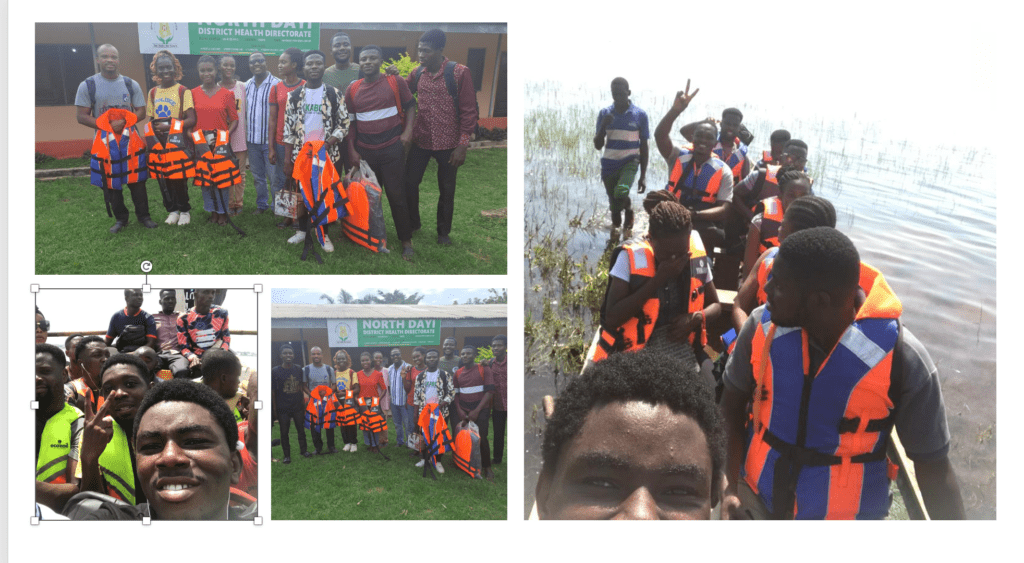
In many communities such as Awate, Aveme and Botoku in the North Dayi District (intervention site) market women who travelled frequently had missed several drug campaigns in the past for their children.
With MedScaleApp, health workers identified them and followed up at their homes to ensure their children were treated, and they better understood why it was important.
In another case, a child refused treatment because his parents had warned him not to take it. The team visited the home, spoke with the parents, addressed their concerns, and eventually gained their trust. The child was then treated.
In Chantai, a remote community in Krachi West, especially among most out-of-school and mobile children, there was initial resistance. Some were suspicious and refused treatment. With time, education and engagement, many eventually accepted the drugs.
These follow-ups, Kye-Duodu noted, were only possible because the app made it visible who had been missed and who needed to be reached.
Without that visibility, those families might never have been found.
The numbers behind the impact
In North Dayi, where the project’s main intervention took place, MDA coverage climbed from approximately 69 per cent to around 80 per cent, a meaningful gain in a context where every percentage point represents real people protected from disease.
Beyond the numbers, Kye-Duodu said tracking improved significantly and communities became more engaged with treatment schedules, partly because the follow-up process made people feel seen rather than overlooked.
The project started in 2024 with initial assessments and stakeholder engagement. Field implementation ran through 2024 and 2025 and is now in its dissemination and publication phase. The field work is largely complete, but the project continues.
Challenges on the ground
The journey has not been without obstacles.
Funding delays slowed early implementation. Administrative bottlenecks created setbacks. Limited internet connectivity and unreliable electricity in remote areas posed persistent challenges. At one point, even the original study site had to be changed.
Yet, through close collaboration with stakeholders, careful field planning, and the integration of offline capabilities, the team adapted.
The role of SGCI support
SGCI’s role in making MedScaleApp possible was more than financial.
Kye-Duodu recalled that when he first applied for the grant, he believed the funding was coming from Ghana’s Ministry of Environment, Science, Technology and Innovation. It was only after his application was successful and he attended the inception meeting that he encountered SGCI and came to understand its broader mandate.
“SGCI provided not just financing but a platform to showcase and refine our solution within a pan-African ecosystem,” he said.
The funding supported the app’s design and development, pilot and post-intervention fieldwork, equipment, training, and participation in knowledge-sharing events, including the RIM Annual Symposium in Uganda.
Scaling for the future
Now in its dissemination phase, the MedScaleApp project stands at a pivotal moment.
Scaling it will require more than technology. It will depend on integration into the Ghana Health Service system, sustained investment in digital tools, continuous training for health workers, and strong policy engagement backed by evidence.
The longer-term vision extends beyond schistosomiasis.
If successfully embedded into Ghana’s health infrastructure and adapted for other neglected tropical diseases, MedScaleApp could become a standard tool for managing community-level health campaigns.
“Success would mean the app is used across all endemic districts in Ghana and expanded to other diseases,” Kye-Duodu said. “Ultimately, it should become part of routine public health practice.”
Please check out the stories and let us know what you think. We would love to hear from you!
Let’s continue the conversation on our social media
Published on 16 April 2026
Written by Jackie Opara-Fatoye.
Related News
Namibia project uses household data, smart meters to rethink water
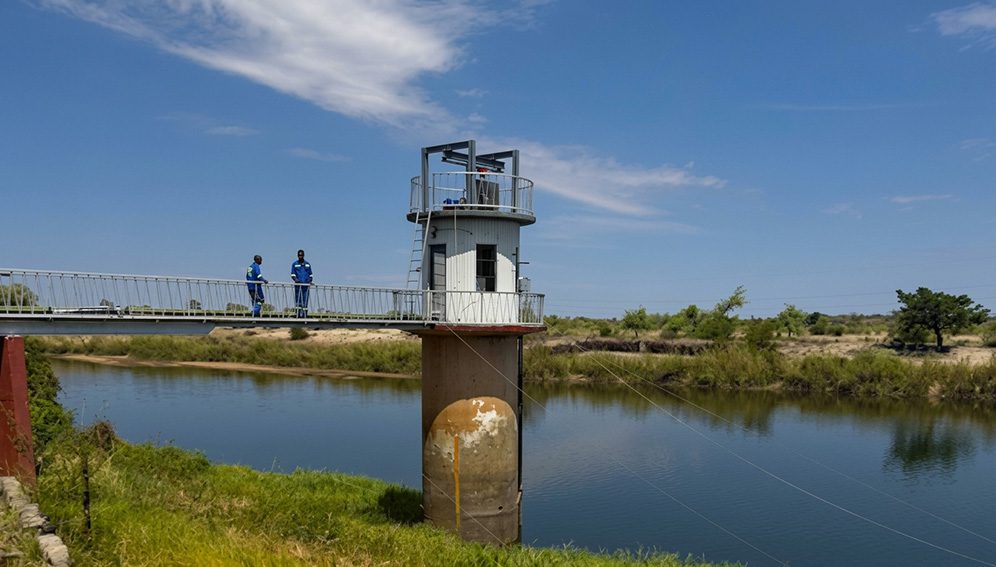
In Namibia, having water nearby does not always mean having reliable water at home. In Rundu, a growing urban centre on the perennial Okavango River, households reported the highest level of water insecurity among three towns studied by researchers. The finding illustrates a wider challenge…
From commitment to action: why the 2026 All Partners Forum matters
When partners gather in Windhoek, Namibia, for the 2026 Science Granting Councils Initiative (SGCI) All Partners Forum, they will meet at an important point in the evolution of Africa’s science, technology and innovation landscape. The Forum will be held from 28 September to 1 October…
STISA-2034:Turning research into policy through knowledge uptake
Africa produces a growing body of research on the challenges shaping everyday life, yet a persistent gap remains between generating evidence and putting it to use. Research findings may be published in journals, presented at conferences and archived in institutional repositories, but too often they…
Research and Resources

SGCI funded projects
Rwanda’s integrated approach to sustainable agriculture and nutrition
Project Titles & Institution Areas of Research Number of Projects being funded Project Duration Grant Amount In-Kind Distribution Council Collaboration with other councils