SGCI News
Africa has made significant progress in improving health outcomes over the past two decades. Yet the continent continues to face complex and interconnected health challenges, from infectious disease outbreaks and…
Africa has made significant progress in improving health outcomes over the past two decades. Yet the continent continues to face complex and interconnected health challenges, from infectious disease outbreaks and the growing burden of non-communicable diseases to the health impacts of climate change, rapid urbanisation and emerging public health emergencies.
Addressing these challenges requires stronger healthcare systems. It demands research that generates practical solutions, informs policy and equips countries to respond quickly to evolving health threats.
African researchers are already proving what’s possible when science meets urgent health needs through projects supported by the Science Granting Councils Initiative (SGCI).
In Namibia, Ester Angula’s work at the Namibia University of Science and Technology uses artificial intelligence to improve breast cancer detection. In Ghana, Gideon Kye-Duodu’s MedScaleApp is helping health workers deliver more effective schistosomiasis treatment. Both are examples of the kind of African-led innovation the SGCI/STISA-2034 Multilateral Research Call wants to scale up.
The Health Research stream is one of five priority areas under the call, providing an opportunity for researchers to work together across borders to develop innovative solutions that improve health outcomes while strengthening Africa’s scientific and innovation capacity.
Advancing resilient health systems
Strong health systems are the foundation of healthy societies. They ensure that communities can prevent, detect, and respond to disease outbreaks while continuing to provide essential healthcare services.
The Health Research stream seeks proposals that contribute to resilient health systems by generating evidence that improves healthcare delivery, strengthens preparedness and supports better decision-making.
The call places particular emphasis on research that can address the needs of vulnerable and underserved populations, ensuring that scientific innovation contributes to more equitable access to quality healthcare across Africa.
Strengthening One Health preparedness
Human health is closely connected to the health of animals and the environment. Disease outbreaks such as Ebola, COVID-19 and other zoonotic diseases have demonstrated the importance of coordinated approaches that recognise these links.
The Health Research stream encourages proposals that advance One Health preparedness by bringing together expertise from multiple disciplines to improve surveillance, prevention and response to emerging health threats.
Through collaborative research, African institutions can generate evidence that helps governments anticipate risks, strengthen public health systems and improve regional preparedness for future emergencies.
Driving innovation in healthcare delivery
Innovation is transforming healthcare worldwide, creating new opportunities to improve diagnosis, treatment, and access to essential services.
The Call encourages researchers to explore innovative approaches that strengthen care delivery, improve health services and support better health outcomes.
Whether through new technologies, improved service models, digital health solutions or community-based interventions, the focus is on developing practical innovations that can be translated into policies and programmes that benefit people across Africa.
An opportunity for African researchers
As SGCI continues to promote collaborative research across the continent, researchers and eligible institutions can now participate in the SGCI-STISA 2034 Multilateral Research Call, which seeks to build on this momentum by supporting Africa-led, multi-country research consortia working across health, agriculture and food systems, artificial intelligence and digital technologies, energy, and environment and climate resilience.
The Call is supported through a partnership of African Science Granting Councils, the International Development Research Centre (IDRC), the Government of Norway, the UK’s Foreign, Commonwealth & Development Office (FCDO), and Wellcome.
Researchers and eligible institutions are invited to explore the call, identify potential consortium partners and submit expressions of interest before the deadline of 25 September 2026 (23:59 EDT).
Learn more about the call, access the Research Matchmaking platform, and begin your application at https://call.sgci.africa/
Please check out the stories and let us know what you think. We would love to hear from you!
Let’s continue the conversation on our social media
Published on 13 July 2026
By Jackie Opara-Fatoye
Related News
Windhoek Declaration: African science funders pledge to act as one
Science granting councils say Africa’s research systems need African ownership, steadier funding and less fragmentation. Here is what they agreed in Windhoek. African science granting councils adopted a collective declaration in Windhoek, Namibia, on 1 October 2026, as part of the Science Granting Councils Initiative…
Africa’s science councils urged to turn pledges into real impact
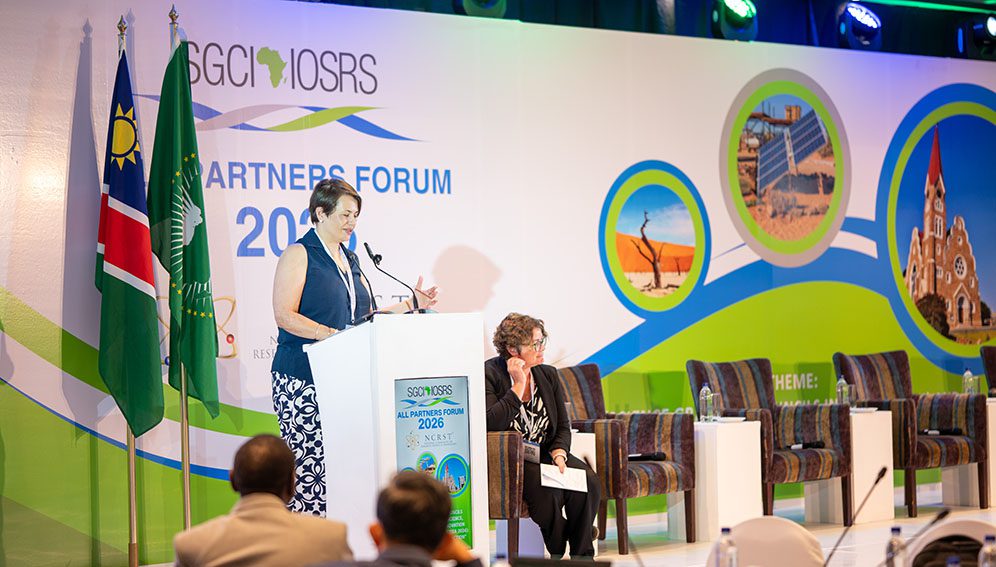
[NAMIBIA] African countries must strengthen collaboration, invest in research and scientists, and take greater ownership of science, technology and innovation if research is to deliver lasting development impact, participants at the 2026 Science Granting Councils Initiative (SGCI) All Partners Forum have said. The call came…
Councils urged to take ownership of SGCI-3 as forum turns to systems
[NAMIBIA]Science Granting Councils have been urged to take greater ownership of the third phase of the Science Granting Councils Initiative (SGCI-3), as partners turned their attention to the institutional systems and partnerships needed to translate the initiative’s ambitions into results. The call came during Day…
Research and Resources

SGCI funded projects
Rwanda’s integrated approach to sustainable agriculture and nutrition
Project Titles & Institution Areas of Research Number of Projects being funded Project Duration Grant Amount In-Kind Distribution Council Collaboration with other councils