
SGCI News
Malawian researchers are using crop residues to help farmers cure tobacco while saving trees, cutting costs, and easing the nation’s deforestation crisis. The crop’s reliance on firewood for curing is…
Malawian researchers are using crop residues to help farmers cure tobacco while saving trees, cutting costs, and easing the nation’s deforestation crisis.
The crop’s reliance on firewood for curing is driving deforestation, putting both forests and livelihoods at risk.
Tobacco is Malawi’s economic backbone, accounting for two-thirds of foreign exchange earnings and employing thousands of farmers. Yet, its future is under threat.
For decades, government and development projects have encouraged tree planting through the provision of free or subsidised seedlings, but deforestation remains high.
The pressure on forests continues to worsen, threatening the very fabric of Malawi’s economy.
Faced with this challenge, a team led by Judith Kamoto, associate professor of Forestry and rural development at the Lilongwe University of Agriculture and Natural Resources, Malawi, has been exploring biomass briquettes as an alternative fuel for tobacco curing.
In this interview, Kamoto gives an insight into their study and some policy recommendations necessary to sustain the findings of their research.
The research is titled ‘Alternative sustainable renewable biomass for tobacco curing in Malawi: An assessment of fuel quality and performance.’
Supported by the Science Granting Councils Initiative (SGCI), the research assessed whether briquettes made from compressed agricultural residues such as rice husks and maize stalks could offer a renewable solution.
Testing an alternative
The study compared briquettes with firewood in terms of fuel quality, performance, emissions, and impact on tobacco leaf quality.
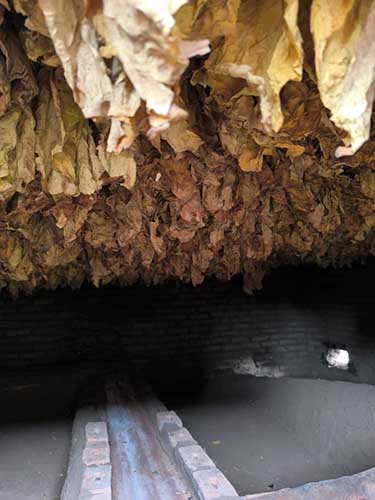
Fuel analysis showed briquettes have comparable energy content and combustion efficiency to firewood.
In curing trials, briquettes were used during the first six days before switching to firewood for the high heat required in final drying.
This hybrid system reduced firewood use by 57 per cent, saving over half of the wood otherwise required.
“Briquettes proved effective in the early curing stages,” Kamoto said.
“We reduced fuel use while maintaining similar cured leaf quality.”
“What surprised us most was their stable temperature control, especially during the yellowing phase. Unlike firewood, which needs constant tending, briquettes kept temperatures within ±2°C, improving consistency and reducing labor.”
The study also revealed that briquette curing produced fewer discarded leaves compared to firewood, suggesting potential for better yield quality.
Environmental stakes
Malawi has one of the highest deforestation rates in the Southern African Development Community region, with heavy reliance on firewood for tobacco curing a major driver.
The consequences are severe. Silted water bodies, reduced biodiversity, and worsening climate impacts.
“A 57 per cent reduction in firewood use could save about 7,500 hectares of forest annually,” Kamoto explained. “That’s equivalent to 12 per cent of Malawi’s reforestation targets under the AFR100 initiative.”
By turning agricultural waste into fuel, briquettes also provide dual benefits, which are reducing forest loss while repurposing residues that would otherwise go unused.
Barriers and opportunities
Despite their promise, briquettes face hurdles. Limited access and low awareness remain the biggest barriers.
“Many farmers simply don’t know briquettes are available or how they can save costs,” Kamoto said.
“We need awareness campaigns, demonstrations, and investment in barn designs that can better accommodate briquettes.”
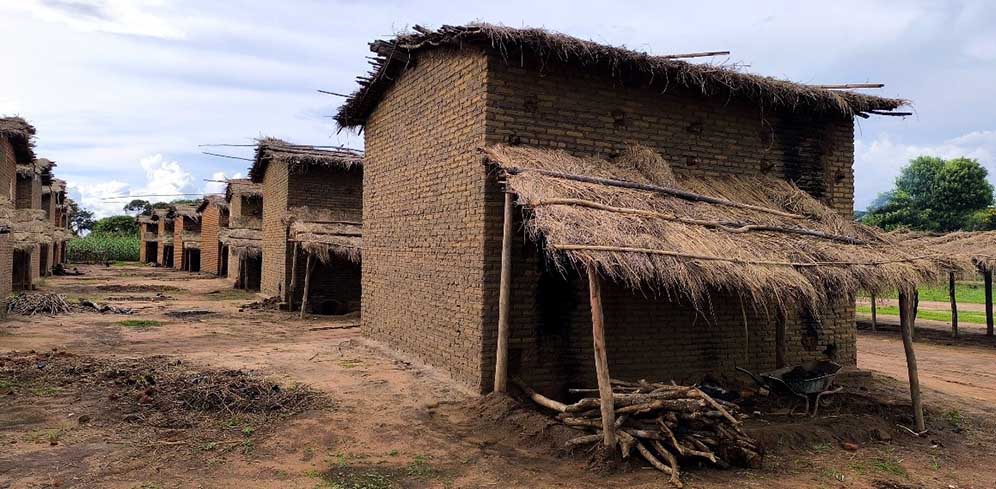
Conventional kilns were designed for firewood and present challenges for briquette-only use. High furnace temperatures sometimes caused briquettes to melt, restricting oxygen flow and leading to incomplete combustion.
The research team plans further work on small design modifications to optimise fuel performance.
Policy directions
The study highlights clear policy priorities.
Promotion of sustainable biomass fuels to reduce firewood use and conserve forests, investing in briquette research and development to improve density and efficiency.
Integrating alternative fuels into national energy, forestry, and tobacco policies with clear reduction targets, and strengthening evidence with long-term trials to guide large-scale adoption.
For Kamoto, policymakers must act quickly.
According to her, the study shows that briquettes can work with the right support, they can transform the tobacco sector, helping farmers, conserving forests, and aligning Malawi with global sustainability goals.
The role of SGCI
Funding from SGCI enabled the research to move forward. For Kamoto and her team, this support was vital. The funding support enabled the successful implementation of this project,” she said.
A sustainable path forward
The findings point to a clear opportunity. Briquettes can cut wood use, ease deforestation, and strengthen Malawi’s tobacco sector.
But adoption will require coordinated efforts, from policy reform, farmer training, and private sector engagement.
Kamoto says briquettes offer a practical, sustainable pathway. “If embraced, they can contribute meaningfully to environmental conservation, improved livelihoods, and a more sustainable tobacco value chain in Malawi.”
Please check out the stories and let us know what you think. We would love to hear from you!
Let’s continue the conversation on our social media Follow us on LinkedIn and X
Published on 9 September 2025
Related News

Voices from the SGCI Forum: Building an African-led science system
From calls for African-led research funding to stronger engagement with communities and governments, participants at the 2026 Science Granting Councils Initiative (SGCI) All Partners Forum left Windhoek with a shared sense that Africa’s science and innovation systems are entering a new phase. Held from 28…
NRF champions science, climate action and youth empowerment
Kenya’s National Research Fund (NRF) is strengthening efforts to connect scientific research, innovation and youth participation with practical responses to climate and environmental challenges. NRF chief executive officer Dickson Andala represented the fund at the launch of the Climate Policy and Advocacy Training – Cohort…
Windhoek Declaration: African science funders pledge to act as one
Science granting councils say Africa’s research systems need African ownership, steadier funding and less fragmentation. Here is what they agreed in Windhoek. African science granting councils adopted a collective declaration in Windhoek, Namibia, on 1 October 2026, as part of the Science Granting Councils Initiative…


SGCI funded projects
Rwanda’s integrated approach to sustainable agriculture and nutrition
Project Titles & Institution Areas of Research Number of Projects being funded Project Duration Grant Amount In-Kind Distribution Council Collaboration with other councils