SGCI News
Namibia’s National Commission on Research, Science and Technology (NCRST) took centre stage at Metascience 2025, the world’s largest gathering of metascientists. The event was hosted by the Research on Research…
Namibia’s National Commission on Research, Science and Technology (NCRST) took centre stage at Metascience 2025, the world’s largest gathering of metascientists.
The event was hosted by the Research on Research Institute (RoRI) and the Centre for Open Science in London from 30 June to 2 July.
The conference convened more than 830 delegates from 65 countries, including researchers, funders, policymakers, and institutions, to examine how science systems can become more transparent, inclusive, reproducible, and impactful.
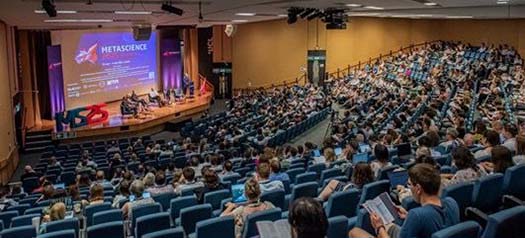
The conference opened with a strong message from the UK Minister of State for Science, Research and Innovation, Lord Patrick Vallance: “We must protect and grow funding for curiosity-driven research. It is the foundation of everything else.”
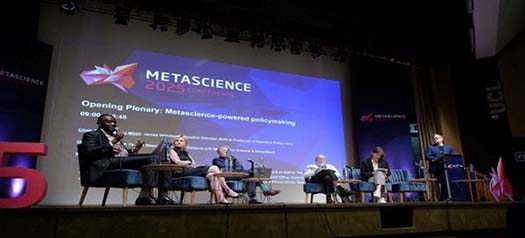
Kelvin Mubiana Katukula, the manager for resource mobilisation and grants management, represented NCRST.
Katukula featured on a keynote panel alongside prominent global science leaders.
In his remarks, he made a compelling case for African perspectives to shape the future of global science systems.
“Metascience is not a Western preoccupation, but a global necessity,” he said.
“For Africa, its relevance is even greater, given the finite nature of our research resources and the urgency of our development needs.”
He called for greater recognition of context in how research systems are evaluated and supported.
His contributions highlighted the need for models that reflect African realities, from researcher assessment to funding allocation, and he introduced innovative ideas such as a public impact-rating platform for research inspired by models like Rotten Tomatoes.
The conference reinforced the importance of building evaluation frameworks that integrate metascientific evidence, strengthening inclusive pathways for early-career researchers.
SGCI’s support for research system transformation in Namibia
The Science Granting Councils Initiative (SGCI) has been a key partner in strengthening Namibia’s research systems.
Through targeted capacity-building programmes, policy dialogues, and peer learning.
SGCI has supported NCRST in developing transparent funding mechanisms, promoting research excellence, and improving evidence-based policymaking.
SGCI’s ongoing collaboration with NCRST is helping to shape a more responsive, equitable, and effective research landscape.
Learn more about SGCI’s work in Namibia
Please check out the stories and let us know what you think. We would love to hear from you!
Let’s continue the conversation on our social media
Published on 24 July 2025
Written by Jackie Opara
Related News
Voices from the SGCI Forum: Building an African-led science system
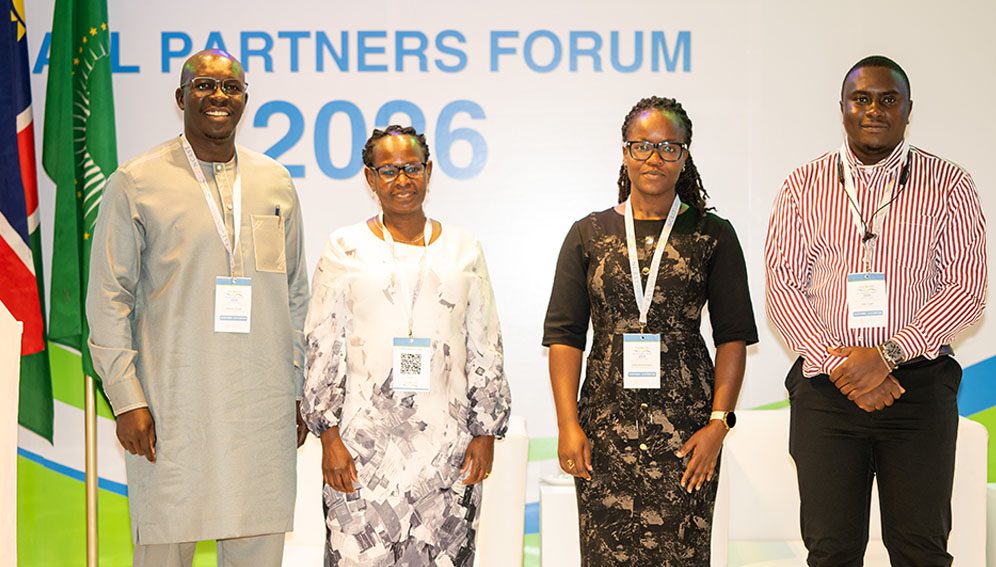
From calls for African-led research funding to stronger engagement with communities and governments, participants at the 2026 Science Granting Councils Initiative (SGCI) All Partners Forum left Windhoek with a shared sense that Africa’s science and innovation systems are entering a new phase. Held from 28…
NRF champions science, climate action and youth empowerment
Kenya’s National Research Fund (NRF) is strengthening efforts to connect scientific research, innovation and youth participation with practical responses to climate and environmental challenges. NRF chief executive officer Dickson Andala represented the fund at the launch of the Climate Policy and Advocacy Training – Cohort…
Windhoek Declaration: African science funders pledge to act as one
Science granting councils say Africa’s research systems need African ownership, steadier funding and less fragmentation. Here is what they agreed in Windhoek. African science granting councils adopted a collective declaration in Windhoek, Namibia, on 1 October 2026, as part of the Science Granting Councils Initiative…


SGCI funded projects

Rwanda’s integrated approach to sustainable agriculture and nutrition
Project Titles & Institution Areas of Research Number of Projects being funded Project Duration Grant Amount In-Kind Distribution Council Collaboration with other councils