
SGCI News
Locally developed technologies for detecting heavy metals in water and restoring contaminated farmland could help Côte d’Ivoire address the environmental and public health consequences of illegal gold mining. Illegal gold…
Locally developed technologies for detecting heavy metals in water and restoring contaminated farmland could help Côte d’Ivoire address the environmental and public health consequences of illegal gold mining.
Illegal gold mining has affected 29 of Côte d’Ivoire’s 31 regions, threatening water resources, agricultural land and public health, while costing the country billions of CFA francs in lost revenue.
sBernard Ossey Yapo, director of the Ivorian Anti-Pollution Center (CIAPOL), highlighted the environmental and health consequences of uncontrolled mining activities.
“With annual tax losses estimated at 744 billion FCFA and gold extracted outside official channels valued at 4,600 billion FCFA, the scale of the problem is prompting calls for solutions that go beyond closing illegal mining sites and prosecuting offenders, he said.
Mining operations, particularly dredging and washing, have increased sediment levels in rivers, with suspended solids reaching 12,030 milligrams per litre in the N’Zi River. Heavy metals, including lead, chromium and arsenic, have also been found at concerning levels in some locations, including Daoukro.
The illegal use of cyanide and continued reliance on mercury in gold extraction further compound the problem. Mercury is particularly dangerous because it can accumulate in living organisms and move through the food chain, exposing communities that depend on contaminated fish and water.
Ossey Yapo said prolonged exposure to these pollutants can cause chronic poisoning, serious skin conditions and neurological damage, particularly affecting the development of children living near contaminated river systems.
Researchers supported by the Fund for Science, Technology and Innovation (FONSTI) are developing technologies to detect and remove toxic substances from water and rehabilitate land damaged by mining.
The innovations were presented at an Innovation Breakfast meeting organised by FONSTI on 8 October 2026 at the Azalaï Hotel in Abidjan.
The meeting, themed Illegal and Clandestine Gold Mining in Côte d’Ivoire: From Environmental Emergency to Innovative and Sustainable Solutions, brought together policymakers, researchers, traditional authorities, mining representatives and development partners to explore practical responses to the crisis.
Local technologies target water contamination
One of the FONSTI-supported initiatives, led by N’Dri Seiny Roger and his research team, focuses on developing affordable technologies for monitoring and treating contaminated water.
The researchers have developed electrochemical sensors using electrodes modified with Moringa oleifera seed powder or clay. The sensors can detect pollutants such as mercury, lead, and cyanide, offering a potentially accessible way to monitor water quality in mining-affected communities.
The team has also developed an ecological filtration system combining gravel, activated carbon and Moringa biomass. According to the project findings presented at the meeting, the system can remove between 80 and 99 per cent of heavy metals from contaminated water before it is discharged or reused.
The use of locally available materials could make the technology a cost-effective option for communities and institutions seeking to monitor and manage water pollution.
Restoring farmland damaged by mining
A second FONSTI-supported project is addressing the challenge of restoring agricultural land degraded by mining.
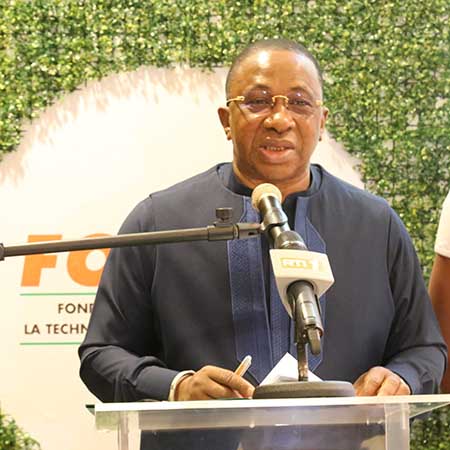
Led by Kpangui Kouassi Bruno and a team from Université Jean Lorougnon Guédé, UJLOG, the Rehabilitation of Former Gold Mining Sites for Agricultural Purposes, RASORA project is working in the Sassandra-Marahoué District, particularly in Kouassi-Périta, to rehabilitate contaminated soils and make them suitable for agricultural production.
The approach combines biochar and compost with carefully selected plants and microorganisms capable of helping to decontaminate degraded soils.
The research team is using microbial isolates, including species of Bacillus and Pseudomonas, as part of its soil rehabilitation strategy.
The project aims to restore soil quality and support the production of food crops and vegetables, including bananas, cassava, tomatoes and chilli peppers, on previously degraded land. This could help affected communities recover agricultural livelihoods while reducing potential health risks associated with contaminated soils.
Moving from enforcement to rehabilitation
Ossey Yapo, said that although the Ivorian government has intensified efforts to combat illegal gold mining, including clearing more than 8,500 sites between 2021 and the first half of 2026, arrests and tougher criminal penalties have not been sufficient to address the environmental damage.
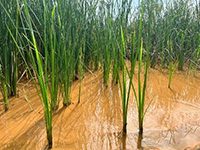
The discussions at the Innovation Breakfast meeting highlighted the need to complement law enforcement with scientific monitoring, ecosystem restoration and alternative livelihood opportunities for affected communities.
FONSTI Secretary-General Yaya Sangaré said: “The institution’s role was to translate scientific knowledge into practical solutions that address national development challenges”.
A panel moderated by Alain Toh brought together researchers, environmental experts, mining sector representatives and local authorities to discuss how scientific innovations could be deployed more widely.
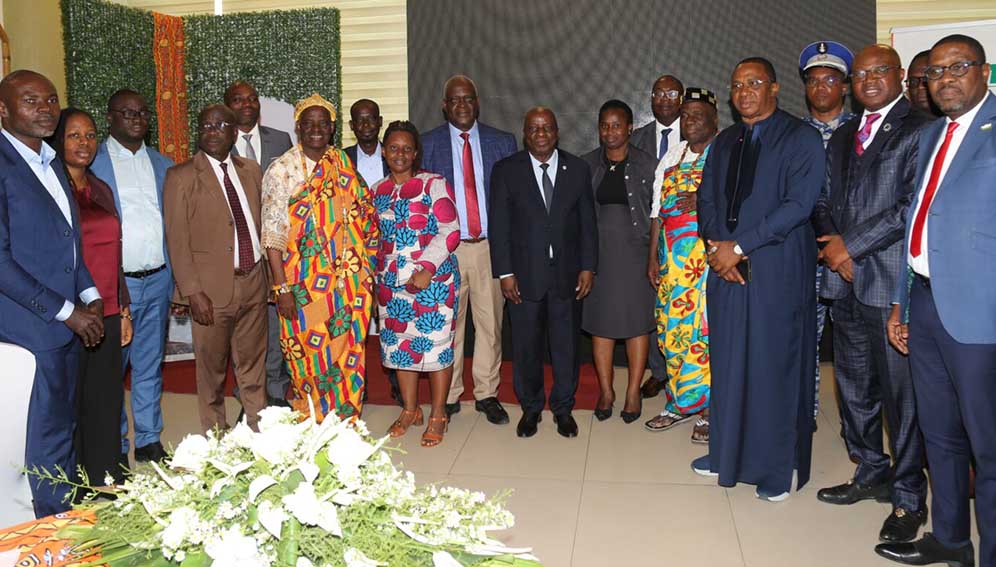
The involvement of traditional authorities, including the chief of Hiré, Moïsé Any Gbetto, illustrated the importance of community participation in addressing illegal mining and restoring affected areas.
Participants emphasised the need for a coordinated national approach, including large-scale rehabilitation programmes, continuous monitoring of major river basins such as the Bandama, Comoé, Sassandra and Cavally, and support for communities to develop sustainable economic alternatives to illegal mining.
The initiatives also highlight the role of FONSTI in strengthening Côte d’Ivoire’s research and innovation ecosystem. As a member of the Science Granting Councils Initiative (SGCI), FONSTI collaborates with other African science granting councils to strengthen research funding, exchange knowledge and build institutional capacity. Through these partnerships, including collaborations with councils in Mozambique, Uganda and South Africa, the initiative supports stronger science funding institutions and the use of research evidence to inform policies for economic and social development.
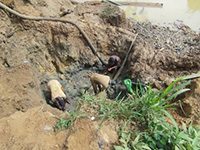
FONSTI’s efforts to connect researchers, policymakers and other stakeholders around solutions to illegal gold mining demonstrate how national science granting councils can help translate locally generated research into responses to pressing development challenges.
For FONSTI, the challenge is now to move promising research beyond laboratory development and into practical application.
Scaling up the technologies will require collaboration between researchers, government institutions, mining operators, local authorities and development partners, alongside policies that support environmental monitoring and land restoration.
The projects demonstrate how locally generated scientific knowledge can contribute to addressing complex environmental challenges. However, their wider impact will depend on sustained investment, institutional support and the ability to translate research findings into solutions that communities can access and use.
Please check out the stories and let us know what you think. We would love to hear from you!
Let’s continue the conversation on our social media
Published on 9 November 2026
By Jackie Opara-Fatoye
Related News
Ivorian researchers develop solutions to illegal gold mining damage
Locally developed technologies for detecting heavy metals in water and restoring contaminated farmland could help Côte d’Ivoire address the environmental and public health consequences of illegal gold mining. Illegal gold mining has affected 29 of Côte d’Ivoire’s 31 regions, threatening water resources, agricultural land and…
How research management is changing Africa’s science funders
A new grant appeals procedure in Zimbabwe, improved digital grant management in Namibia, and stronger gender inclusion leadership in Zambia are among the institutional changes emerging from efforts to strengthen research management across Sub-Saharan Africa. Theme one of the Science Granting Councils Initiative Phase II…
Can Rwanda’s farm waste help restore its depleted soils?
Locally developed vermicompost and biochar show promise for improving crop yields and soil health, but researchers say further testing is needed before wider adoption. The vermicompost process uses tiger worms to break down prepared organic materials into a dark, crumb-like product, while the biochar is…


SGCI funded projects
Rwanda’s integrated approach to sustainable agriculture and nutrition
Project Titles & Institution Areas of Research Number of Projects being funded Project Duration Grant Amount In-Kind Distribution Council Collaboration with other councils