SGCI News
[NAMIBIA]Science Granting Councils have been urged to take greater ownership of the third phase of the Science Granting Councils Initiative (SGCI-3), as partners turned their attention to the institutional systems…
[NAMIBIA]Science Granting Councils have been urged to take greater ownership of the third phase of the Science Granting Councils Initiative (SGCI-3), as partners turned their attention to the institutional systems and partnerships needed to translate the initiative’s ambitions into results.
The call came during Day 2 [Technical Day] of the SGCI All Partners Forum 2026 on 29 September, where councils, funders and technical support agencies examined how to strengthen research systems, make funding more inclusive and improve collaboration across African countries.
A recurring message was that councils should remain at the centre of setting national priorities.
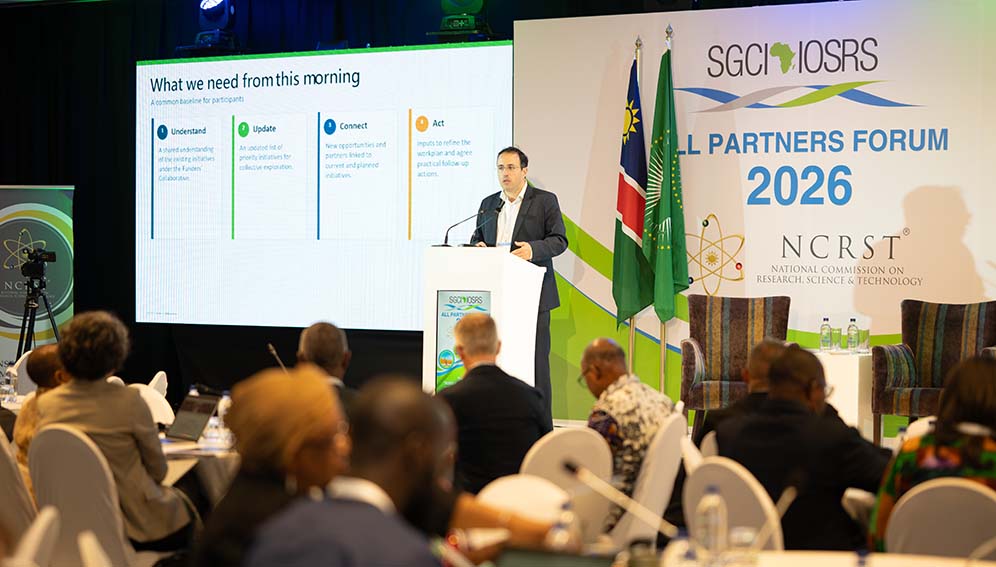
Cephas Adjei Mensah, SGCI head of research at the Ghana Ministry of Environment, Science, Technology & Innovation (MESTI), opened the day’s session, saying SGCI had grown over more than a decade and now brought together 20 participating Science Granting Councils, with additional councils in the process of joining.
He outlined five priority areas for SGCI-3: The Policy Hub, Funders Collaborative, thematic working groups, the Capacity Strengthening Hub and nationally led initiatives. The session reported combined funding of US$142 million over five years.
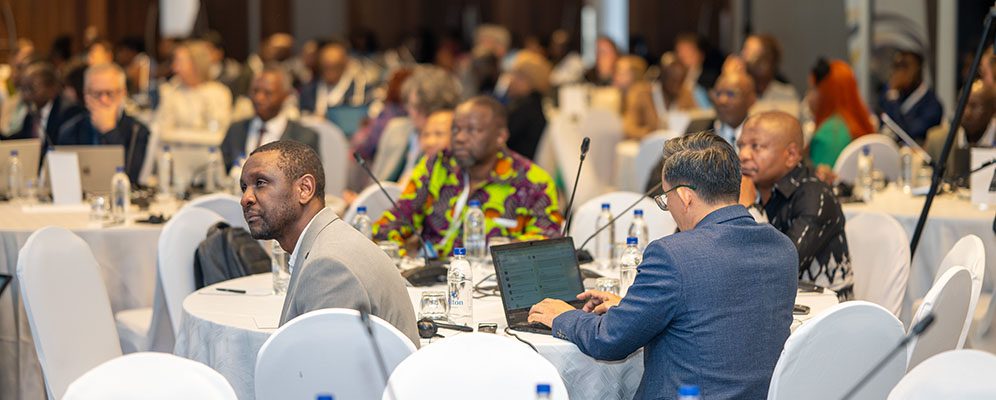
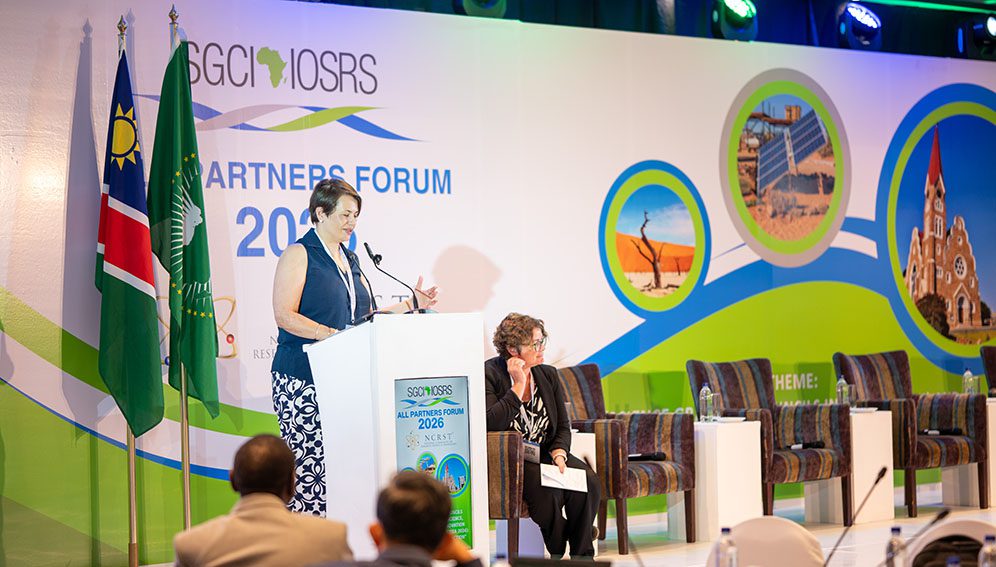
Anicia Peters, chief executive officer of the National Commission on Research, Science and Technology (NCRST), Namibia, and host of the 2026 Forum, called for greater council ownership of the initiative, including its priorities, criteria for admitting new councils and partnerships developed under SGCI-3.
She said SGCI has committed to being Africa-led and will expand its reach to new potential members, with expressions of interest already received.
She said efforts are underway to engage European partners, among others, and noted the need to strengthen research infrastructure. The Council will have three seats from 2027, instead of two. She added that a draft declaration of intent on SGCI-3 and its focus areas for next year has been prepared, which participants want to adopt on Thursday.
Dickson Andala, chief executive officer of the National Research Fund of Kenya, said the Council needs to do more lobbying and work more closely with partners. “In future, we need to do more and think outside the box on the SGCI 3,” he said.
Andala also presented the STISA-2034 Multinational Call, which involves consortia from three to five countries across agriculture, health, ICT, energy and the environment. It has attracted 1,321 expressions of interest involving close to 4,900 institutions, with 19 participating councils, approximately US$10 million in investment and a further US$7 million in matchmaking funding.
Participants identified language barriers, mobility constraints, differences in institutional governance and uneven capacity as obstacles to cross-border research. They proposed translation, shared data platforms and stronger coordination around common research themes.
Inclusion moves into research funding
Steven Ssebale, assistant executive secretary and head of the gender team at the Uganda National Council for Science and Technology (UNCST), drawing on experience from Uganda, said gender considerations were often recognised but not consistently incorporated into project design and implementation. He proposed clearer expectations at the research-call stage and gender-responsive monitoring and evaluation.
Atridah Mulonga, acting manager for programme development and implementation at Zambia’s National Science and Technology Council, said inclusion should run throughout the funding cycle, from eligibility and proposal design to assessment, ownership, benefit sharing and impact.
“Inclusion means moving it from just a principle to making it a core feature in the funding systems,” she said.
Tailored capacity support
Participants called for capacity support that reflects differences in council maturity, institutional structures, staffing and language rather than a uniform training model.
Frejus Thoto, executive director, The African Center for Equitable Development (ACED) said the proposed Capacity Strengthening Hub would assess capacity needs, connect councils with qualified providers, and revamp the SGCI digital learning platform.
“Context is key. Understanding how every SGC works in their context is useful,” he said.
Participants also backed peer learning, staff exchanges and multilingual resources.
Collaboration and partnerships
Discussions on strategic partnerships called for greater African involvement in designing international research programmes.
Marcus Wilms, German Research Foundation director of international collaboration with Africa and the Middle East, said the relationships developed among councils through SGCI had created trust and a foundation for joint action.
“Trust among the councils is an infrastructure for cooperation,” he said.
Participants also called for stronger African participation in international co-funding and science diplomacy, greater researcher mobility and stronger links between research and industry.
Next steps include further council-level consultations by the Capacity Strengthening Hub, continued coordination among Technical Support Agencies and progression of the Multinational Call through proposal development, evaluation and funding decisions.
The Technical Day reinforced a central message for SGCI-3 that delivering stronger African research and innovation systems will require capable institutions, inclusive funding, cross-border collaboration and partnerships in which African councils help shape priorities from the outset.
The 2026 All Partners Forum runs from 28 September to 2 October in Windhoek.
Please check out the stories and let us know what you think. We would love to hear from you!
Let’s continue the conversation on our social media
Published on 30 September 2026
By Jackie Opara-Fatoye and Charlotte Nambadja, reporting from the SGCI All Partners Forum in Windhoek, Namibia
Related News
Councils urged to take ownership of SGCI-3 as forum turns to systems
[NAMIBIA]Science Granting Councils have been urged to take greater ownership of the third phase of the Science Granting Councils Initiative (SGCI-3), as partners turned their attention to the institutional systems and partnerships needed to translate the initiative’s ambitions into results. The call came during Day…
SGCI All Partners Forum highlights Africa’s research funding needs
[NAMIBIA] African science granting councils are examining their reliance on international research funding as a new dashboard reveals the flow of science, technology and innovation (STI) funding into Africa. More than 170 delegates from across the world are attending the 2026 Science Granting Councils Initiative…
](https://sgciafrica.org/wp-content/uploads/2026/09/Windhoek.jpg)
Namibia’s role in advancing Africa’s science, technology, and innovation agenda
From commitment to action – Namibia and the SGCI All Partners Forum 2026 Namibia is an important player in African research, and from 28 September to 2 October 2026, the country will host the Science Granting Councils Initiative’s (SGCI) All Partners Forum in Windhoek. With…
Research and Resources

SGCI funded projects

Rwanda’s integrated approach to sustainable agriculture and nutrition
Project Titles & Institution Areas of Research Number of Projects being funded Project Duration Grant Amount In-Kind Distribution Council Collaboration with other councils