SGCI News
Namibia’s National Commission on Research, Science and Technology (NCRST) took centre stage at Metascience 2025, the world’s largest gathering of metascientists. The event was hosted by the Research on Research…
Namibia’s National Commission on Research, Science and Technology (NCRST) took centre stage at Metascience 2025, the world’s largest gathering of metascientists.
The event was hosted by the Research on Research Institute (RoRI) and the Centre for Open Science in London from 30 June to 2 July.
The conference convened more than 830 delegates from 65 countries, including researchers, funders, policymakers, and institutions, to examine how science systems can become more transparent, inclusive, reproducible, and impactful.
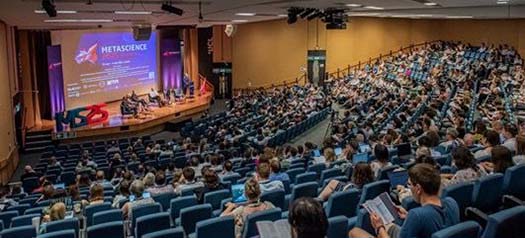
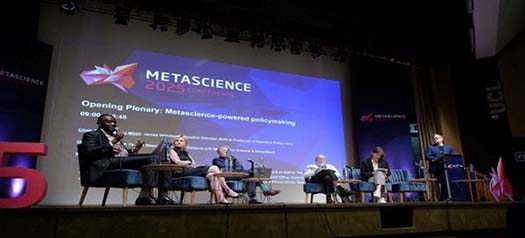
The conference opened with a strong message from the UK Minister of State for Science, Research and Innovation, Lord Patrick Vallance: “We must protect and grow funding for curiosity-driven research. It is the foundation of everything else.”
Kelvin Mubiana Katukula, the manager for resource mobilisation and grants management, represented NCRST.
Katukula featured on a keynote panel alongside prominent global science leaders.
In his remarks, he made a compelling case for African perspectives to shape the future of global science systems.
“Metascience is not a Western preoccupation, but a global necessity,” he said.
“For Africa, its relevance is even greater, given the finite nature of our research resources and the urgency of our development needs.”
He called for greater recognition of context in how research systems are evaluated and supported.
His contributions highlighted the need for models that reflect African realities, from researcher assessment to funding allocation, and he introduced innovative ideas such as a public impact-rating platform for research inspired by models like Rotten Tomatoes.
The conference reinforced the importance of building evaluation frameworks that integrate metascientific evidence, strengthening inclusive pathways for early-career researchers.
SGCI’s support for research system transformation in Namibia
The Science Granting Councils Initiative (SGCI) has been a key partner in strengthening Namibia’s research systems.
Through targeted capacity-building programmes, policy dialogues, and peer learning.
SGCI has supported NCRST in developing transparent funding mechanisms, promoting research excellence, and improving evidence-based policymaking.
SGCI’s ongoing collaboration with NCRST is helping to shape a more responsive, equitable, and effective research landscape.
Learn more about SGCI’s work in Namibia
Please check out the stories and let us know what you think. We would love to hear from you!
Let’s continue the conversation on our social media
Published on 24 July 2025
Written by Jackie Opara
Related News
STISA-2034: Councils drive access to Africa’s research opportunity
For a continental research opportunity to deliver impact, researchers need to know whether they are eligible, understand how the opportunity fits their work, find the right partners, and navigate the application process. This is where Africa’s Science Granting Councils have a critical role to play….

How Africa’s STI partnerships and co-investment drive lasting impact
Science, technology, and innovation (STI) in Africa are critical to the continent’s future development and growth. From strengthening skills and institutions to applying science in industry, research goals are interconnected and build on one another. Under STISA-2034, no single institution, funder, or country can deliver…
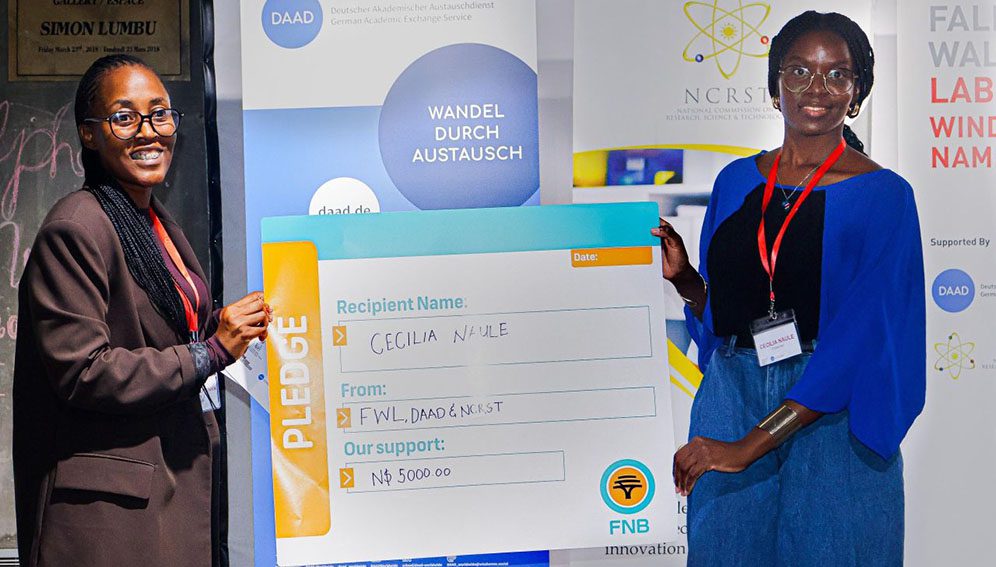
Namibia’s young innovators showcase solutions at Falling Walls Lab
Namibia’s young innovators are developing practical solutions to some of the country’s pressing challenges, from improving mobility for people with visual impairments to finding ways of storing solar energy for use when sunlight is unavailable. These ideas were showcased at the Falling Walls Lab Namibia…
Research and Resources

SGCI funded projects

Rwanda’s integrated approach to sustainable agriculture and nutrition
Project Titles & Institution Areas of Research Number of Projects being funded Project Duration Grant Amount In-Kind Distribution Council Collaboration with other councils