
SGCI News
[NAIROBI] Rose Osore has been growing cassava on her small farm in Busia County, western Kenya, for decades. Like many farmers in the region, she inherited the practice from her…
- A project is helping smallholders commercialise cassava in Kenya’s Busia County
- The project aims to cut cassava waste and enhance food security
- Researchers have developed disease-resistant varieties of the crop
[NAIROBI] Rose Osore has been growing cassava on her small farm in Busia County, western Kenya, for decades.
Like many farmers in the region, she inherited the practice from her mother but never found it to be particularly profitable.
“I have been farming for my household consumption … sometimes I donate to my neighbours when I have surplus,” said Osore.
This approach to cassava cultivation has traditionally been common throughout western Kenya, with farmers primarily growing the crop for family needs rather than commercial purposes.
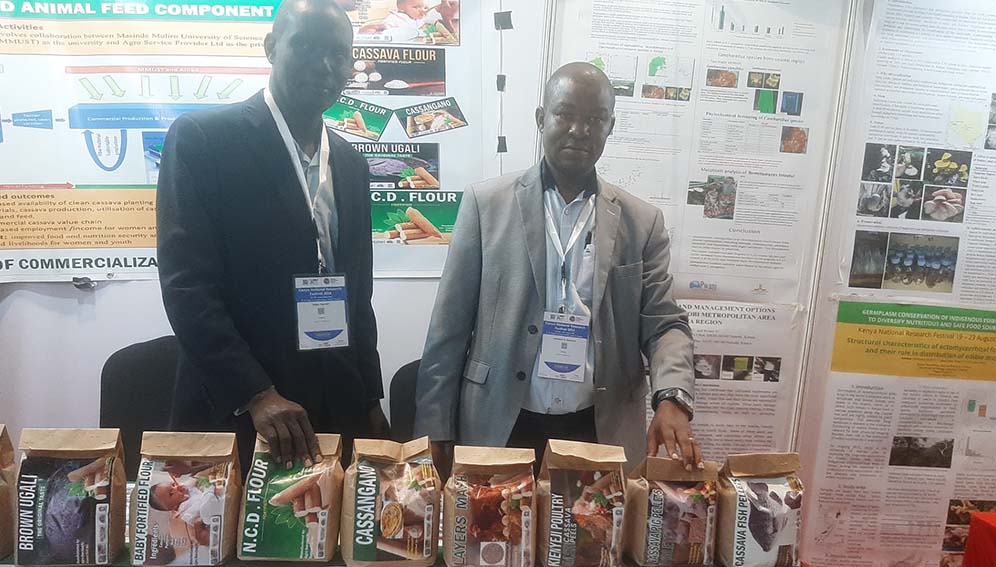
Without reliable markets, surplus harvests would often go to waste or be given away, preventing farmers from realising the crop’s economic potential.
This began to change in 2023, when Kenya’s Masinde Muliro University of Science and Technology (MMUST) established a processing plant in Busia County, as part of a pilot project funded by Kenya’s National Research Fund, which also includes research to develop resilient crop varieties.
The plant has the capacity to mill one tonne of cassava flour per day from five tonnes of fresh cassava.
For Osore, the processing plant represents a guaranteed market that has completely changed her outlook on farming.
“Now with a ready market, I am encouraged to plant and I want to increase my acreage,” Osore said.
“Many people in my neighbourhood come to my farm and are motivated to do cassava farming.”
Tom Wawire, another local farmer, says cassava, already a staple for more than 800 million people in Africa, is becoming the preferred crop in the region.
“Maize farming involves a lot of physical work that makes no returns on investment,” he said.
“Cassava just needs preparation of land and planting and it can also withstand little rain, unlike maize.”
Climate resilience
Vitalis Ogemah, the project’s principal researcher and a professor of agriculture at MMUST, says the project aimed to address the rising costs of energy-rich foods and animal feed, primarily caused by an overdependence on maize, a crop increasingly vulnerable to climate change-induced droughts.
He said the initiative seeks to diversify food sources and enhance food and nutrition security by promoting cassava cultivation and developing nutrient-rich cassava-based products for human and animal consumption.
A key component of the project was identifying and distributing disease-resistant cassava varieties, said Ogemah. Farmers are also taught how to undertake surveillance to identify isolated cases of disease as early as possible.
Researchers from MMUST and the Kenya Agricultural and Livestock Research Organization conducted molecular characterisation of cassava varieties to find those tolerant to common diseases such as cassava mosaic and cassava brown streak.
“The varieties that were identified were tested for resistance to the diseases and those that were found to have acceptable level of tolerance were recommended for multiplication,” said Ogemah.
He said the project assessed the dietary needs of various consumer groups, including infants and people with non-communicable diseases.
“Nutritionists identified the nutritional requirements of different categories of consumers and blended cassava varieties to meet the requirements,” he said.
“[They] also considered the compatibility of the products used in blending of cassava flour.”
Financial gains
Ogemah believes the economic impact for participating farmers could be substantial. It is expected to mill 320 tonnes of cassava flour in the next year with roots supplied by some 200 farmers.
“At a price of KES 15 (US$ 0.12) per kilo of fresh cassava, the farmers [collectively] will earn KES 24 million (US$185,582) in the next one year from their fresh cassava roots,” he said.
Processing cassava into flour also generates cassava peelings that can be used to produce healthy animal feed, helping bolster livestock production, Ogemah added.
Arnold Musungu, a development economist and World Bank research fellow, says commercialisation is important for strengthening the cassava value chain.
According to Musungu, it will generate a steady source of income for smallholder farmers.
“Farmers are incentivised to embrace better varieties and technologies that increase productivity when they start producing cassava for markets rather than just for their consumption,” he said.
He said it enabled farmers to add value to their produce, spurring development in rural areas.
“Local spending rises as farmers generate more consistent income, fostering the growth of complementary businesses including suppliers of agricultural inputs, processing plants, and transportation services,” added Musungu.
Richard Mulwa, professor of horticulture at Kenya’s Egerton University, says cassava is a reliable food crop for areas with high vulnerability to climate shocks.
“Cassava tolerates harsh growing conditions of drought, poor soils and high heat,” said Mulwa.
“These conditions are expected to become more rampant with increasing effects of climate change.”
Cassava also adapts well to intercropping and agroecological systems that help preserve soil cover and prevent erosion, Mulwa added. He called for a supportive policy framework that integrates cassava into Kenya’s food security strategy, including incentives such as tax breaks or infrastructure support for cassava-based industries.
This article was written by Gilbert Nakweya
Related News
Voices from the SGCI Forum: Building an African-led science system
From calls for African-led research funding to stronger engagement with communities and governments, participants at the 2026 Science Granting Councils Initiative (SGCI) All Partners Forum left Windhoek with a shared sense that Africa’s science and innovation systems are entering a new phase. Held from 28…
NRF champions science, climate action and youth empowerment
Kenya’s National Research Fund (NRF) is strengthening efforts to connect scientific research, innovation and youth participation with practical responses to climate and environmental challenges. NRF chief executive officer Dickson Andala represented the fund at the launch of the Climate Policy and Advocacy Training – Cohort…
Windhoek Declaration: African science funders pledge to act as one
Science granting councils say Africa’s research systems need African ownership, steadier funding and less fragmentation. Here is what they agreed in Windhoek. African science granting councils adopted a collective declaration in Windhoek, Namibia, on 1 October 2026, as part of the Science Granting Councils Initiative…


SGCI funded projects
Rwanda’s integrated approach to sustainable agriculture and nutrition
Project Titles & Institution Areas of Research Number of Projects being funded Project Duration Grant Amount In-Kind Distribution Council Collaboration with other councils