
SGCI News
In Namibia, a mechanical engineer is using artificial intelligence to help clinicians detect breast cancer faster and more accurately in a country where radiologists are scarce, and diagnoses often come…
In Namibia, a mechanical engineer is using artificial intelligence to help clinicians detect breast cancer faster and more accurately in a country where radiologists are scarce, and diagnoses often come too late.
Ester Angula is a senior lecturer in mechanical engineering at the Namibia University of Science and Technology. She built her career around thermo-fluids, the science of heat and fluid behaviour in mechanical systems. But a research visit to a health institute in Spain in 2023–2024 made her delve into medical imaging analysis.
During her time at Bio-Gipuzkoa, a biomedical research institute in the Basque Country, Angula was part of a project exploring the application of 3D printing technology in healthcare.
What she encountered there, the precision, the clinical stakes, the gap between what technology could do and what was available to patients in her home country, inspired her to want to do the same in Namibia.
“The research was also inspired by the high rate of breast cancer-related deaths among women in Namibia, as well as the challenges clinicians face, such as the dependence on manual and error-prone image segmentation methods, delayed diagnoses due to a shortage of radiologists, and the limited performance of existing AI models trained on foreign datasets when applied to local populations,” she says.
The research specifically aims to address these issues by improving diagnostic accuracy, efficiency, and consistency, reducing diagnostic workload and turnaround time, developing a locally trained, context-specific AI segmentation model, and enhancing clinical visualisation and patient understanding through the use of 3D models.
Those observations formed the foundation of her SGCI-funded research project to develop an AI-based system to improve the speed and accuracy of medical image analysis.
The problem with manual eyes
Medical imaging, CT scans, MRIs, and X-rays generate complex visual data that clinicians must analyse to identify disease.
For breast cancer, this often involves identifying and outlining tumours in scan images, a process known as segmentation.
Done manually, the task is time-consuming and vulnerable to inconsistency, as two clinicians examining the same scan may draw different boundaries around the same tumour, Angula explains.
According to Angula, in Namibia, the challenge is compounded by a shortage of radiologists and oncologists, which leads to delays in diagnosis and treatment at a stage when speed can be the difference between survival and death.
Existing AI tools designed to assist with image segmentation were trained largely on datasets from high-income countries, limiting their accuracy when applied to local patients, she said.
Angula’s project addresses all of these layers. Her team’s AI system, trained on CT scan data, automatically identifies and outlines tumours in medical images, a process that, she explains, replaces manual tracing with an algorithm capable of processing images “quickly and consistently.”
How the AI works and why it matters
AI-based automated segmentation is a process where computer algorithms automatically identify and outline the structure or region of interest (tumor, organ) in medical images. Instead of a clinician manually tracing the region of interest, the AI does it quickly and consistently.
This improves analysis by reducing human error, saving time, and providing more precise and repeatable results.
“Our work primarily focuses on CT scan data because they provide high-resolution, detailed representations of internal structures, which are essential for accurate segmentation. These imaging modalities are widely used in diagnosing complex conditions and are particularly suitable for generating 3D anatomical models.”
“Improved accuracy leads to better identification of breast tumours, more precise treatment planning, and reduced risk of complications. Accurately identifying tumour boundaries, shape and size can help surgeons remove affected tissue while preserving healthy tissue, ultimately improving patient outcomes and recovery.”
The AI algorithms are trained, validated, and tested on large datasets, enabling them to detect patterns that indicate tumour presence with a level of repeatability no human reader can consistently match.
The implications for clinical decision-making are direct. “Accurately identifying tumour boundaries, shape and size can help surgeons remove affected tissue while preserving healthy tissue,” Angula explains.
A clearer picture of a tumour, including precise measurements and three-dimensional visualisations, enables more targeted treatment planning, whether surgical or radiotherapeutic.
Crucially, the project is developing a locally trained model, she adds.
Rather than relying on AI systems built from foreign datasets that may not reflect the characteristics of Namibian patients, Angula’s team secured ethical clearance from the Ministry of Health and Social Services to acquire CT scan data from local hospitals.
The locally grounded dataset will be used to refine the AI model, making it more accurate and contextually appropriate for the population it is meant to serve.
Building capacity
The project’s reach extends beyond the technology itself. Two students have been trained in AI, medical imaging techniques, and the application of 3D printing in healthcare, a signal of what interdisciplinary research at the nexus of engineering and medicine can produce in an African context.
Collaborations between engineers and healthcare professionals have grown, creating a multidisciplinary team working on a problem that neither field could solve alone.
SGCI funding was critical to making this work possible, supporting the acquisition of ethical approvals, data collection, equipment procurement, AI model development, and the dissemination of findings at academic conferences.
What comes next
Angula’s immediate priorities are completing the annotation of local CT scan data and refining the AI algorithm using that data.
“We will be developing a user-friendly software platform, securing intellectual property protection, conducting pilot field trials, commercialisation, and eventually building a cloud-based system linked directly to hospital imaging networks known as PACS systems for real-time clinical use.”

All this is feasible, especially with the increasing availability of cloud computing and cost-effective hardware, she said.
“Our approach emphasises scalable and adaptable solutions that can be integrated into existing systems without requiring extensive infrastructure.”
“The goal is to make the technology accessible and practical for real-world healthcare environments.”
Angula says policymakers should care about this research because it supports data-driven decision-making, aligns with digital transformation goals in healthcare, and directly addresses gaps in diagnostic capacity that cost lives.
Please check out the stories and let us know what you think. We would love to hear from you!
Let’s continue the conversation on our social media
Published on 5 May 2026
By Jackie Opara-Fatoye
Related News
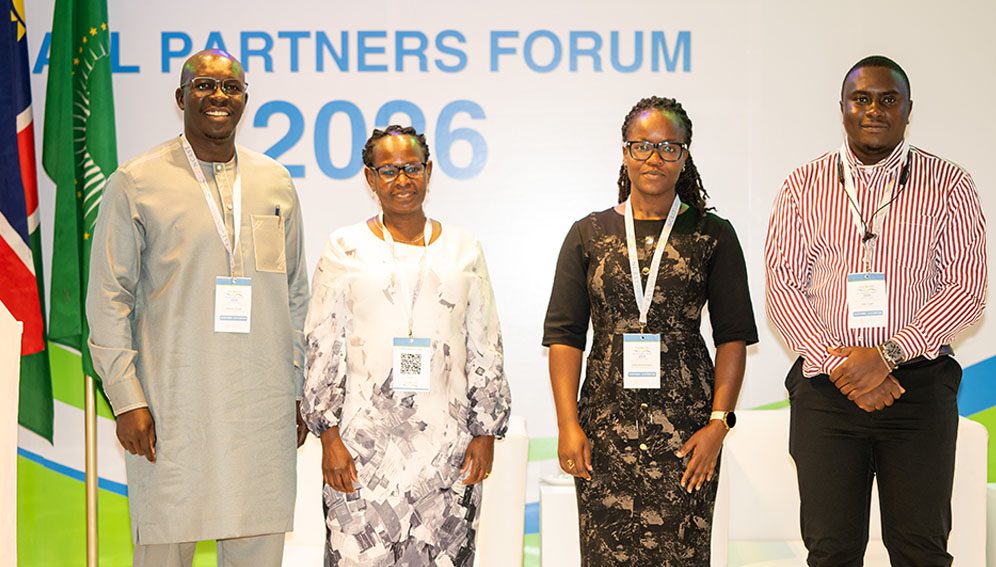
Voices from the SGCI Forum: Building an African-led science system
From calls for African-led research funding to stronger engagement with communities and governments, participants at the 2026 Science Granting Councils Initiative (SGCI) All Partners Forum left Windhoek with a shared sense that Africa’s science and innovation systems are entering a new phase. Held from 28…
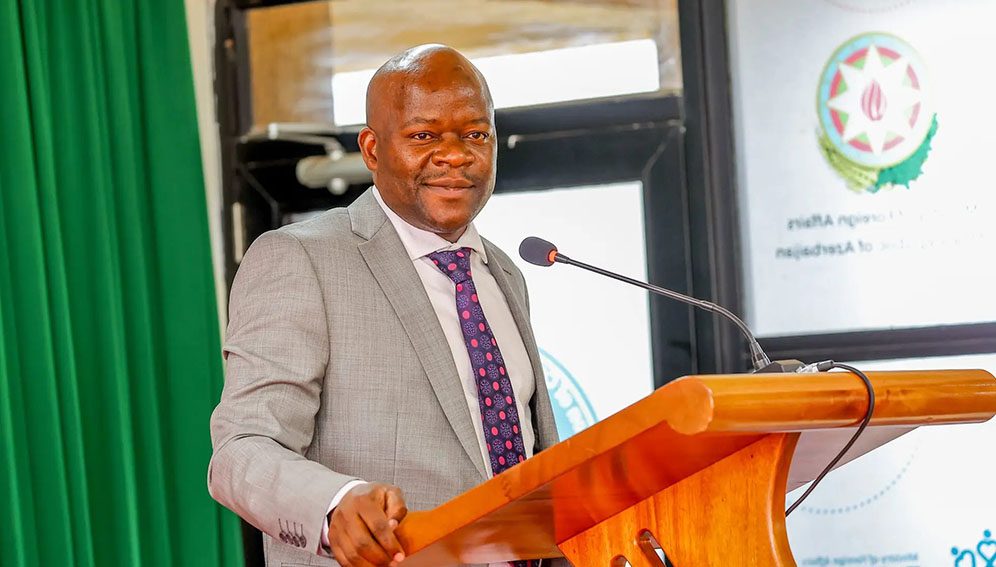
NRF champions science, climate action and youth empowerment
Kenya’s National Research Fund (NRF) is strengthening efforts to connect scientific research, innovation and youth participation with practical responses to climate and environmental challenges. NRF chief executive officer Dickson Andala represented the fund at the launch of the Climate Policy and Advocacy Training – Cohort…
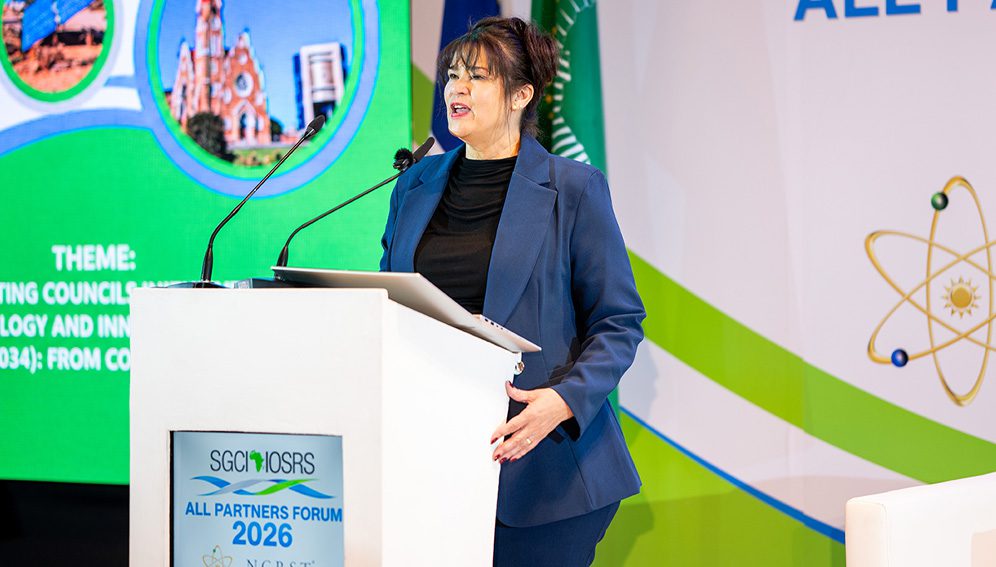
Windhoek Declaration: African science funders pledge to act as one
Science granting councils say Africa’s research systems need African ownership, steadier funding and less fragmentation. Here is what they agreed in Windhoek. African science granting councils adopted a collective declaration in Windhoek, Namibia, on 1 October 2026, as part of the Science Granting Councils Initiative…


SGCI funded projects

Rwanda’s integrated approach to sustainable agriculture and nutrition
Project Titles & Institution Areas of Research Number of Projects being funded Project Duration Grant Amount In-Kind Distribution Council Collaboration with other councils