SGCI News
When a cage aquaculture project was launched on Likoma Island, it promised more fish and better incomes. A year on, the people it was designed to help share what actually…
When a cage aquaculture project was launched on Likoma Island, it promised more fish and better incomes. A year on, the people it was designed to help share what actually changed.
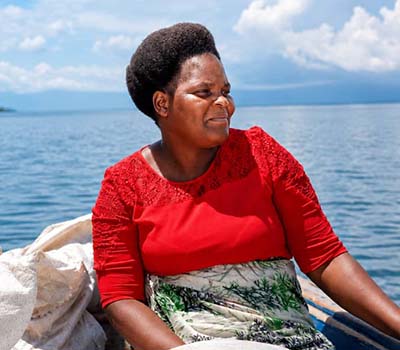
Winnie Chizuwi did not think of herself as a fish farmer.
As a single mother on Likoma Island, life was a daily struggle. She relied on small businesses and occasional pieces of work to support her child, often worrying about how she would pay school fees or meet basic household needs.
“Life was very challenging,” Chizuwi recalls. “The income was often insufficient, making it difficult to provide for my family’s basic needs and school expenses.”
Today, she stands among a growing group of women, young people, and fishers whose lives have been transformed through the Promoting Small-Scale Cage Aquaculture in Likoma (PROSCAL) project, supported through the Science Granting Councils Initiative (SGCI) and implemented by the National Commission for Science and Technology, Malawi.
The project, led by researchers from Mzuzu University, introduced cage aquaculture as a sustainable alternative to traditional fishing, helping communities adapt to declining fish stocks while creating new economic opportunities. A study by WorldFish says that a declining availability of wild-caught fish and a growing population have created an urgent need for greater investment in aquaculture value chains.
“The project gave young women like me a chance to acquire valuable skills and participate in economic activities,” Chizuwi says. “I can now contribute more consistently to my child’s education, food, and clothing. It has also boosted my confidence and independence as a woman and a parent.”
She hopes, one day, to establish her own fish farming enterprise and inspire other women and single mothers to do the same.
Chizuwi’s story is part of a follow-up to our earlier reporting on PROSCAL, which became one of the most widely read stories ever published on this website. That first story focused on the science behind cage aquaculture and the project’s early results. This one is about the people whose lives have been changed by it.
A response to a growing crisis
Likoma Island sits in the middle of Lake Malawi, reachable only by water or air. For generations, residents have depended on wild fish catches for food and income. But those catches have become less predictable, and the stocks are thinner.
According to Fanuel Kapute, lead researcher on the project, cage aquaculture offered a practical solution to a challenge that threatened both food security and household incomes.
In an earlier interview, Kapute explained that conventional pond aquaculture was not viable on Likoma Island because of the lack of perennial water sources. The lake itself, however, presented an opportunity.
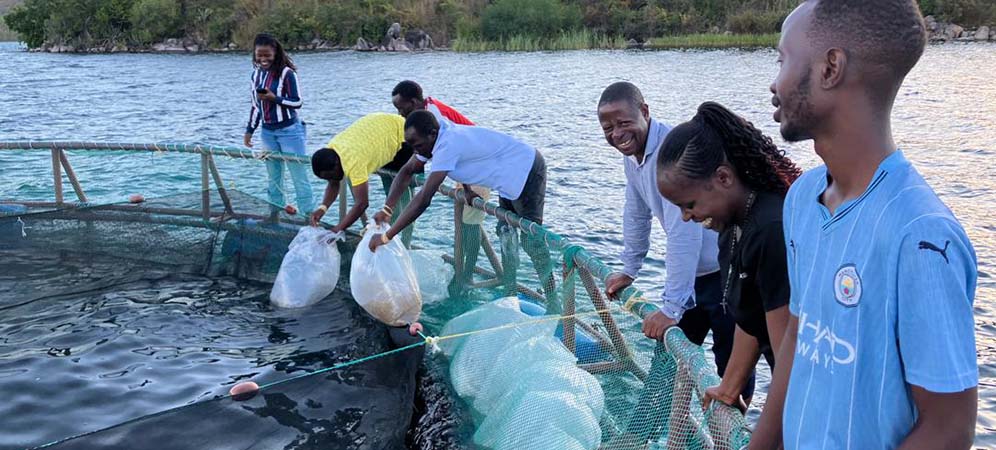
The project established floating cages stocked with fish in Lake Malawi, allowing communities to produce fish sustainably while reducing pressure on dwindling wild stocks.
Richard Banda, the project manager and co-principal investigator, says cage aquaculture was chosen precisely because it worked with the island’s geography rather than against it.
“With declining wild fish stocks in Lake Malawi, households were struggling to secure reliable sources of protein, leading to growing food insecurity and reduced livelihood opportunities,” Banda said.
Traditional aquaculture methods, such as pond farming, were not feasible on the island because of the absence of perennial water sources and dambo areas. Cage aquaculture, he explained, provided a practical lake-based solution that could restore fish supplies, improve nutrition, and generate income for local families.
The project also adopted a cooperative ownership model through the Likoma Youth Agri-Enterprise cooperative, enabling members to share responsibilities, profits, and technical knowledge.
Kapute says this combination of science, community, and ownership is what makes the model worth replicating.
“By integrating modern aquaculture technology with strong community participation, the project reduces reliance on the declining capture fisheries while ensuring responsible resource use and environmental stewardship,” he said in an earlier interview.
“This model strengthens livelihoods, secures a consistent fish supply, and promotes shared ownership through effective knowledge transfer.”
A more reliable livelihood
Alick Chiwaya had spent years fishing Lake Malawi the traditional way, putting in long hours on the water for returns that were growing smaller and less reliable.

For Chiwaya, the project offered a way out of the uncertainty that had come to define small-scale fishing.
Before joining the initiative, he depended entirely on fishing in Lake Malawi.
“Fish catches became less predictable, and I often struggled to earn enough income to support my family,” he says. “There were days when I spent many hours on the lake but returned home with very little to sell.”
The promise of learning a new production method and reducing dependence on increasingly strained fish stocks convinced him to participate.
Today, he says the biggest change has been income stability.
“Through cage aquaculture, I can earn more consistently and plan better for my family’s needs, including food, education, and healthcare.”
Like many participants, Chiwaya initially had little experience with fish farming. Training in cage management, feeding practices, and fish husbandry helped him develop the skills needed to succeed.
He now hopes to expand his involvement in aquaculture and encourages other community members to embrace the opportunity.
Creating opportunities for young people
The project has also opened doors for young people such as Ian Mtawali.

Before joining the initiative, Mtawali relied on temporary jobs and struggled to find stable employment.
“It was difficult to generate a steady income, and I often worried about my future,” he says.
Cage aquaculture presented an opportunity to gain practical skills in an emerging sector.
“I saw it as a chance to build a better future for myself.”
The experience has given him both technical expertise and confidence.
“The project has provided me with valuable technical knowledge and a source of income. I am now more financially independent and optimistic about my future.”
Mtawali believes aquaculture can play an important role in addressing youth unemployment.
“I hope to become a successful aquaculture entrepreneur and create opportunities for other young people in my community.”
Numbers behind the stories
The SGCI grant of K32.5 million, disbursed between January 2024 and December 2025, supported four full stocking cycles. The final harvest, in February 2026, brought in 2,760 kilograms of fish. Sold at K14,000 per kilogram, the cooperative generated K38 million in revenue from that cycle alone.
Reflecting on the results in an earlier interview, Kapute said the project demonstrated how research could move beyond theory to create tangible benefits for communities.
“The cage aquaculture initiative has demonstrated that science-led innovation can simultaneously improve livelihoods, strengthen food security and promote sustainable fisheries management,” he said.
Women’s participation was a defining feature of the project. Female-led cooperatives stepped into leadership roles from the outset, Banda said, which not only ensured inclusivity but also empowered women to become key drivers of the project’s success, strengthening both household welfare and community cohesion.

In May 2026, the cooperative stocked Oreochromis shiranus again, a sign that the project’s gains are being actively sustained even beyond the initial grant period.
For Banda, the success of the Likoma cage aquaculture project shows how applied science can directly solve local challenges.
“By tailoring research and innovation to community needs, we can strengthen food security, create jobs and build more resilient livelihoods,” he said.
A blueprint beyond Likoma
Banda draws several lessons from the experience that he believes travel beyond the island. Community participation, local ownership, and cooperative structures are what allowed the project to be embraced and sustained.
Research-driven innovation can overcome geography. And the model is scalable, Banda says.
“It can be extended to other lakeshore districts across Malawi and potentially beyond, providing communities with new pathways to food security, income generation, and resilience.”
Kapute agrees.
“Its success provides a scalable blueprint for expanding cage aquaculture across Malawi’s lakeshore districts, enhancing national food security, creating employment opportunities, and laying the foundation for a resilient aquaculture industry that will benefit generations to come.”
As fish cages continue to dot the waters around Likoma Island, beneficiaries like Chizuwi, Mtawali, and Chiwaya are proving that the impact of research extends far beyond laboratories and academic papers.
For Chizuwi, the transformation is measured in simpler terms: school fees paid, food on the table, and the confidence that she can build a future for herself and her child.
“I hope to continue growing in aquaculture and eventually establish my own fish farming enterprise,” she says. “I also hope to inspire other women and single mothers to take advantage of similar opportunities to improve their lives.”
Please check out the stories and let us know what you think. We would love to hear from you!
Let’s continue the conversation on our social media
Published on 23 June 2026
By Jackie Opara-Fatoye
Related News
Windhoek Declaration: African science funders pledge to act as one
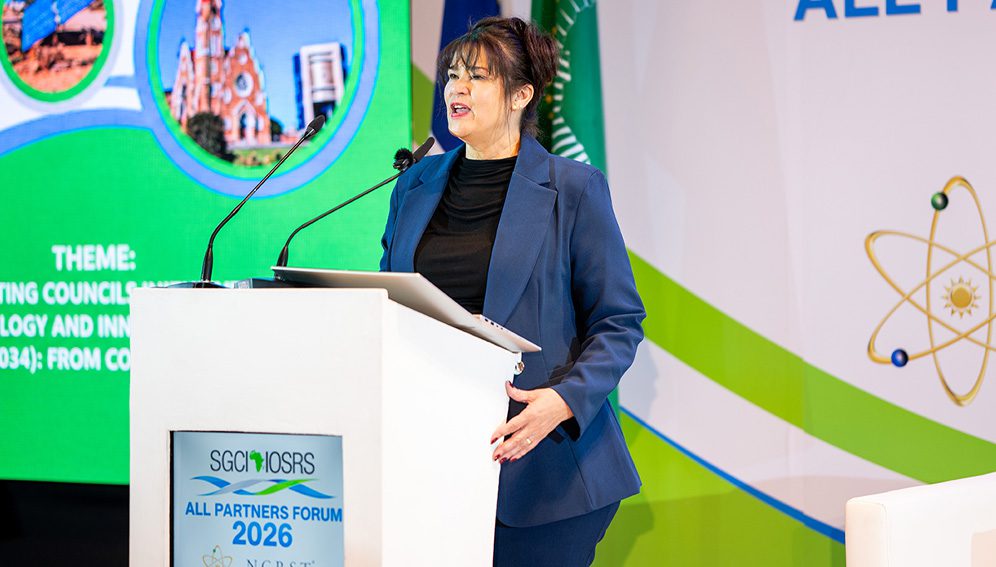
Science granting councils say Africa’s research systems need African ownership, steadier funding and less fragmentation. Here is what they agreed in Windhoek. African science granting councils adopted a collective declaration in Windhoek, Namibia, on 1 October 2026, as part of the Science Granting Councils Initiative…
Africa’s science councils urged to turn pledges into real impact
[NAMIBIA] African countries must strengthen collaboration, invest in research and scientists, and take greater ownership of science, technology and innovation if research is to deliver lasting development impact, participants at the 2026 Science Granting Councils Initiative (SGCI) All Partners Forum have said. The call came…
Councils urged to take ownership of SGCI-3 as forum turns to systems
[NAMIBIA]Science Granting Councils have been urged to take greater ownership of the third phase of the Science Granting Councils Initiative (SGCI-3), as partners turned their attention to the institutional systems and partnerships needed to translate the initiative’s ambitions into results. The call came during Day…
Research and Resources

SGCI funded projects
Rwanda’s integrated approach to sustainable agriculture and nutrition
Project Titles & Institution Areas of Research Number of Projects being funded Project Duration Grant Amount In-Kind Distribution Council Collaboration with other councils