
SGCI News
A Science Granting Councils Initiative (SGCI) funded research has earned national recognition in Côte d’Ivoire. The winner, Rodrigue Adjoumani Kouakou, is the assistant professor of chemistry, physics, and process engineering…
A Science Granting Councils Initiative (SGCI) funded research has earned national recognition in Côte d’Ivoire.
The winner, Rodrigue Adjoumani Kouakou, is the assistant professor of chemistry, physics, and process engineering at the Training and Research Unit for Fundamental and Applied Sciences (UFR SFA) of Nangui Abrogoua University (Abidjan).
He received the SGCI funding through The Fund for Science, Technology and Innovation (FONSTI), Côte d’Ivoire.
The winning innovation is a biogas system that converts chicken poo into clean, renewable energy.
The research focuses on helping rural and peri-urban communities harness agricultural waste for energy needs, reducing reliance on firewood and fossil fuels, while simultaneously tackling waste management.
He was awarded the first incentive prize at the2025 Academy of Sciences, Arts, Cultures of Africa and African Diasporas (ASCAD) awards.
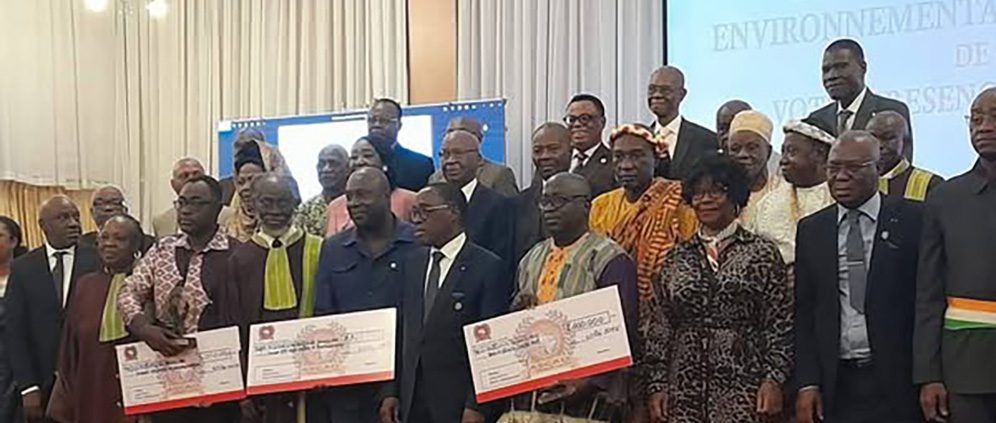
The ASCAD award ceremony was held on 30 May 2025, in Abidjan-Cocody, under the theme, “Contributing technological innovations to population development.”
In addition to the national recognition, Kouakou receives a three-million CFA franc (US$5,366) grant to develop further and scale his biogas system.
How the system works
Kouakou said he developed a system for heating brooders using biogas obtained from chicken droppings to replace the traditional method using charcoal.
This system, called a methaniser, is the result of research work entitled “Design and construction of a system for heating chicks using biogas from chicken droppings”.
Kouakou said the methaniser has a capacity of 20 m3, continuously fed by poultry droppings.
“It is mainly composed of three compartments. The first compartment receives the raw material, chicken droppings.
The waste and water are mixed in the methaniser’s feed basin to obtain a homogeneous mixture,” he said.
The mixture is then taken to the biodigester chamber, the second compartment, until it is completely decomposed.
The decomposition will lead to the formation of biogas.
“Through a filtration and purification system using iron salt filters, silica gel, and activated carbon, the biogas will be recovered and piped to the storage facility.
The stored biogas is used as needed, either in a biogas stove or in radiant heaters to heat the chicks”.
The methanisation digestate, composed of the solid fraction or methacompost and the liquid fraction or process juice, is transported from the digester to the third compartment, which is the expansion pit. From this pit, the two fractions (solid & liquid) of the digestate will be recovered by two open basins.
“The biogas is produced from a fixed-dome digester. The biogas is collected under a fixed concrete dome, displacing the effluent sludge as the gas pressure increases.”
Visibility
Kouakou credited a recent feature in SciDev.Net’s Francophone Africa edition with increasing visibility for his work.
The article, published in partnership with SGCI, highlighted the relevance and potential of his innovation.
He noted that the coverage contributed to his being nominated for the ASCAD award.
The SGCI continues to support impactful research across Sub-Saharan Africa by strengthening national research systems and funding mechanisms.
SGCI congratulates Kouakou on this well-deserved recognition and remains committed to enabling African researchers to lead in innovation for development.
Please check out the stories and let us know what you think. We would love to hear from you.
Let’s continue the conversation on our social media
Written by Jackie Opara
Related News
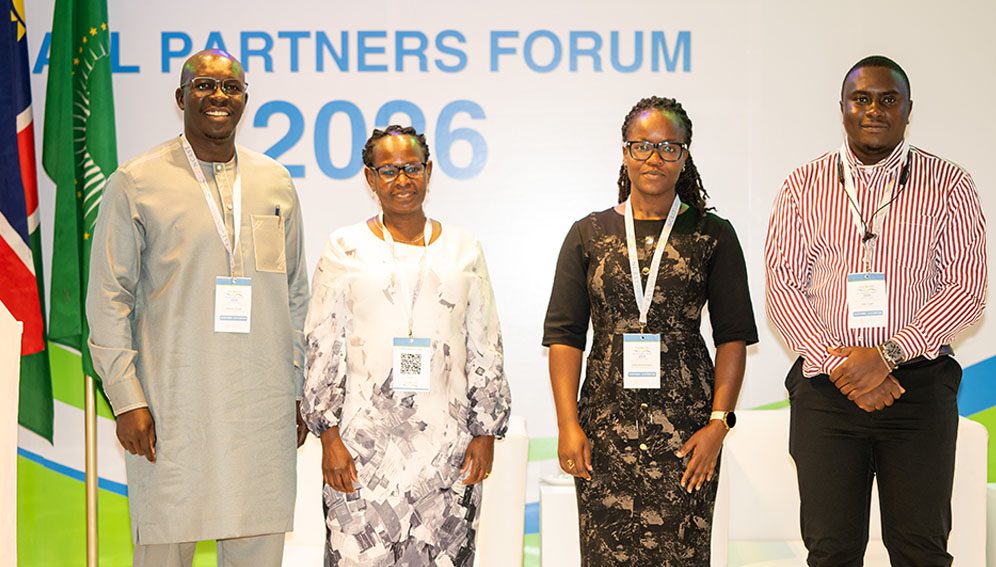
Voices from the SGCI Forum: Building an African-led science system
From calls for African-led research funding to stronger engagement with communities and governments, participants at the 2026 Science Granting Councils Initiative (SGCI) All Partners Forum left Windhoek with a shared sense that Africa’s science and innovation systems are entering a new phase. Held from 28…
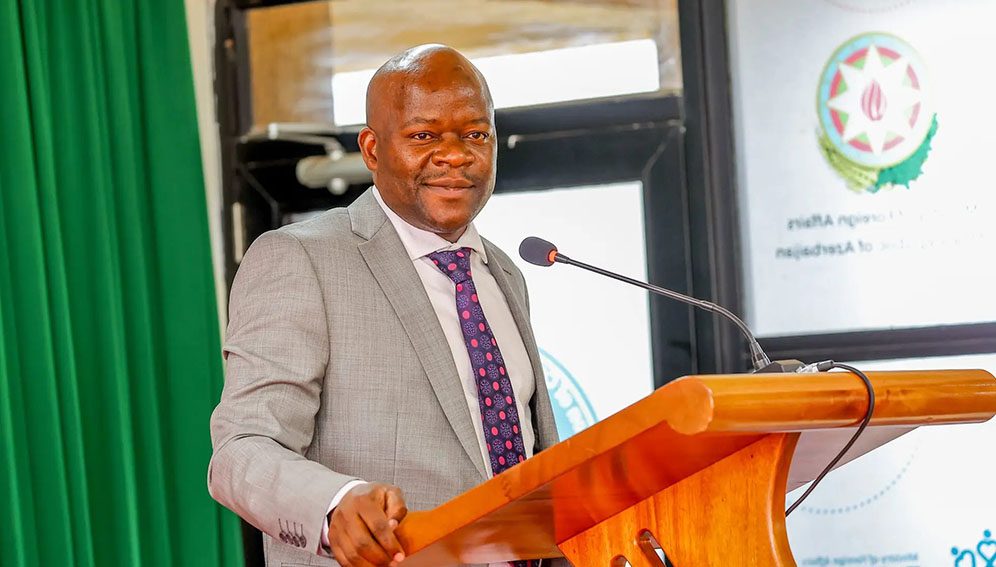
NRF champions science, climate action and youth empowerment
Kenya’s National Research Fund (NRF) is strengthening efforts to connect scientific research, innovation and youth participation with practical responses to climate and environmental challenges. NRF chief executive officer Dickson Andala represented the fund at the launch of the Climate Policy and Advocacy Training – Cohort…
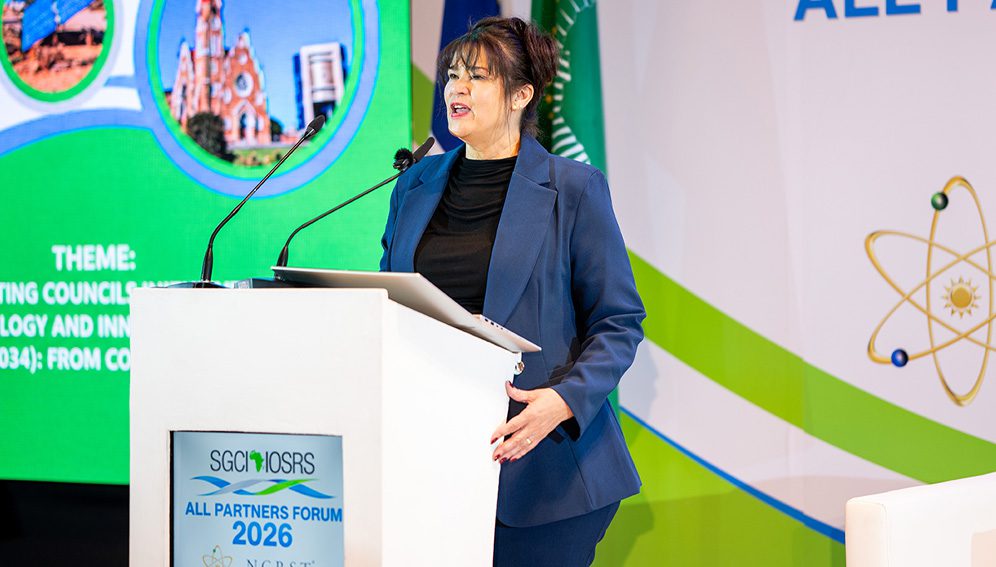
Windhoek Declaration: African science funders pledge to act as one
Science granting councils say Africa’s research systems need African ownership, steadier funding and less fragmentation. Here is what they agreed in Windhoek. African science granting councils adopted a collective declaration in Windhoek, Namibia, on 1 October 2026, as part of the Science Granting Councils Initiative…


SGCI funded projects
Rwanda’s integrated approach to sustainable agriculture and nutrition
Project Titles & Institution Areas of Research Number of Projects being funded Project Duration Grant Amount In-Kind Distribution Council Collaboration with other councils