
SGCI News
In Namibia’s dry and unpredictable climate, where farmers contend with poor soils and short rainfall seasons, researchers are working to reshape how crops are grown across the country. At the University…
In Namibia’s dry and unpredictable climate, where farmers contend with poor soils and short rainfall seasons, researchers are working to reshape how crops are grown across the country.
At the University of Namibia, Moola Nyambe is leading this research with support from the Science Granting Councils Initiative (SGCI) through Namibia’s national commission on research, science, and technology. Her team is exploring how naturally occurring soil microbes can be harnessed to create a locally produced biofertiliser that could restore soil health, improve crop productivity, and strengthen resilience to climate stress.
Understanding Namibia’s soils
When the project began in September 2024, the team made a fundamental discovery that set the direction for their work. “We didn’t even know the structure of our soil,” Nyambe explained.
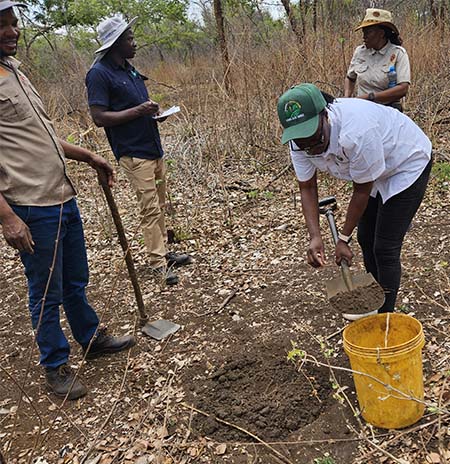
“Now we know that the samples we collected lack nitrogen and phosphorus.” Rather than presenting a setback, this finding provided clarity.
By identifying these deficiencies, the researchers could focus on isolating microorganisms capable of naturally replenishing these nutrients, particularly nitrogen-fixing bacteria that can enrich soils without the need for chemical inputs.
These insights are efforts to reduce Namibia’s dependence on imported inorganic fertilisers.
Unlocking microbial potential
As the research progressed, the team uncovered a rich diversity of microbial life. Instead of identifying a single ideal organism, they found multiple strains from different classes that share similar plant growth-promoting properties.
Nyambe said that the team has already recorded several microbial groups with comparable beneficial traits and is now working to determine which perform best, both individually and in combination.
Some of these strains have demonstrated the ability to stimulate root growth, a crucial factor when crops are transplanted or grown in fragile soils. Others have shown antimicrobial activity, inhibiting the growth of harmful bacteria, while certain isolates have revealed antibiotic resistance, offering insights into microbial survival.
In an unexpected development, two strains were also found to produce L-asparaginase, an enzyme associated with leukemia treatment, pointing to potential applications beyond agriculture.
For Nyambe, such findings mirror the exploratory nature of science. “These were discoveries we didn’t initially set out to find,” she said, “but they open new directions for us.”
From laboratory to farmland
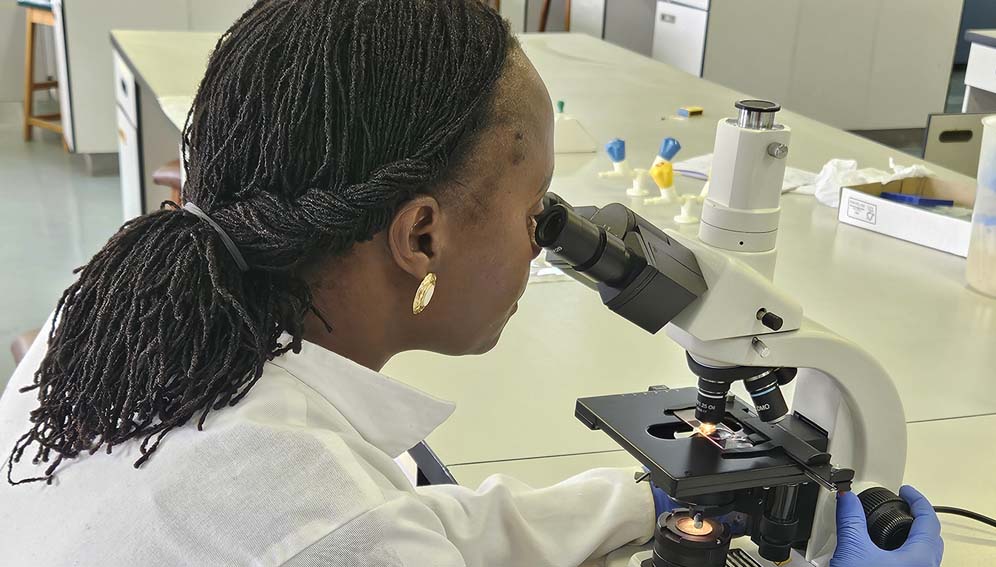
The research has now reached a critical stage, with the team working to formulate a biofertiliser at the laboratory level.
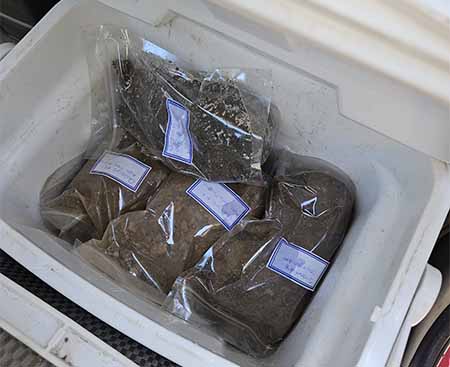
Using a liquid solution of microbes, they are testing multiple strains to determine the most effective formulation before combining them into a final product.
Early trials on crops such as maize and pearl millet have shown promising results, but moving from laboratory success to practical application presents its own challenges. Because most farmers rely on rainfall, field testing must align with the agricultural calendar.
“Even when the lab work is ready, we still have to wait for the ploughing season,” Nyambe explained, highlighting the realities of translating science into practice. To address this, the team is exploring partnerships with irrigation-based farms and ongoing agricultural initiatives.
Why policy support matters
For Nyambe, the importance of the project extends beyond the laboratory and into national policy.

She believes policymakers have strong reason to pay attention, particularly given Namibia’s reliance on imported inorganic fertilisers, which are costly and can degrade soil health over time.
In contrast, biofertilisers offer a more sustainable alternative. While inorganic fertilisers may deliver rapid results, their long-term environmental impacts are significant, whereas biofertilisers, though slower in action, provide lasting benefits by improving soil structure and biodiversity.
Local production would also reduce costs, making fertilisers more accessible to farmers while strengthening the country’s agricultural independence, she adds.
Building climate resilience
The project’s relevance is especially clear in the context of climate change. In Namibia’s semi-arid environment, where rainfall is limited and often unpredictable, soil quality plays a decisive role in agricultural success.
Microbial biofertilisers help improve soil structure, enabling it to retain water for longer periods, ensuring that rainfall is not quickly lost through evaporation. At the same time, the microorganisms enhance plants’ ability to tolerate environmental stress by producing growth hormones and protective compounds.

This allows crops to withstand drought, temperature fluctuations, and other harsh conditions, while also supporting faster growth cycles, an important advantage in regions with short growing seasons.
As Nyambe put it, “The shorter the harvest time, the better,” particularly in environments where every rainfall window counts.
Scaling impact beyond Namibia
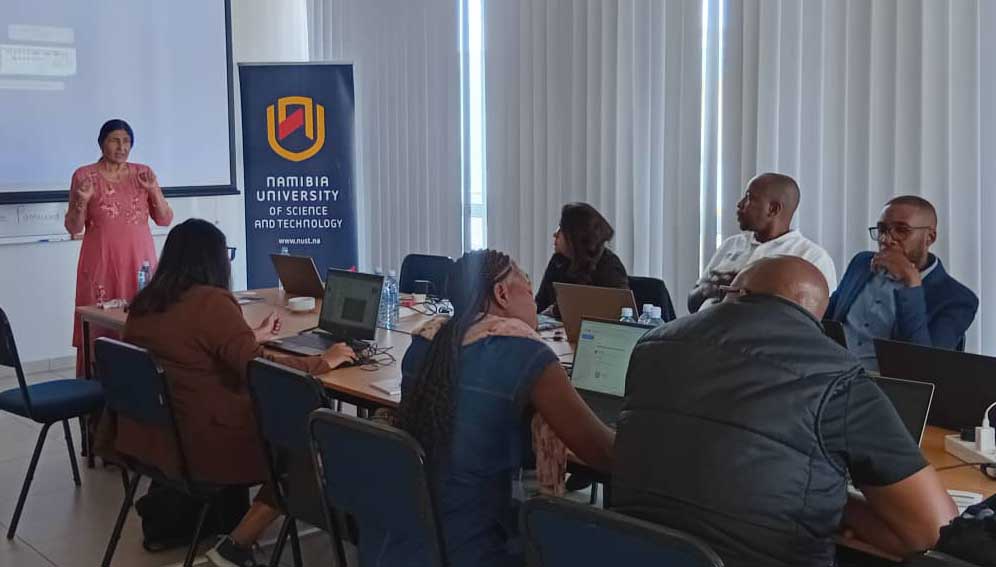
Beyond its scientific contributions, the project is also building research capacity and fostering collaboration. SGCI funding has enabled the acquisition of essential laboratory materials, supported cross-border partnerships with Zambian researchers, and provided training opportunities for postgraduate and undergraduate students.
Looking ahead, the potential impact extends beyond Namibia. The approach is highly adaptable to similar agro-ecological zones across Southern Africa, offering a scalable model for improving food security and promoting sustainable agriculture in the region.
For now, however, the focus remains on proving that the solution works where it matters most. “If we can demonstrate this in real farming conditions,” Nyambe said, “then we have a solution that is practical, affordable, and truly ours.”
Please check out the stories and let us know what you think. We would love to hear from you!
Let’s continue the conversation on our social media
Published on 30 March 2026
Written by Jackie Opara-Fatoye
Related News
Microbes offer path to climate-smart farming
In Namibia’s dry and unpredictable climate, where farmers contend with poor soils and short rainfall seasons, researchers are working to reshape how crops are grown across the country. At the University of Namibia, Moola Nyambe is leading this research with support from the Science Granting Councils Initiative (SGCI) through Namibia’s…
Tiny satellites help warn communities of deadly floods
Flash floods have become a recurring threat in parts of Namibia, cutting off communities, trapping school children, and, in some cases, leading to fatalities. But a locally led space-tech initiative is working to change that by bringing faster, more precise disaster warnings closer to home….
How storytelling is amplifying SGCI-funded innovations
For many researchers, publishing scientific findings in academic journals has long been the primary way to share knowledge. But increasingly, there is recognition that research must also be communicated in ways that reach broader audiences, policymakers, industry partners, communities, and fellow innovators who can translate…

SGCI funded projects
Rwanda’s integrated approach to sustainable agriculture and nutrition
Project Titles & Institution Areas of Research Number of Projects being funded Project Duration Grant Amount In-Kind Distribution Council Collaboration with other councils