
SGCI News
African countries are working to strengthen research quality, ethical practice, and grant management through the Research Excellence and Good Financial Grant Practices Workshop. The Science Granting Councils Initiative (SGCI), together…
African countries are working to strengthen research quality, ethical practice, and grant management through the Research Excellence and Good Financial Grant Practices Workshop.
The Science Granting Councils Initiative (SGCI), together with the Association of African Universities and Senegal’s Ministry of Higher Education, Research and Innovation, organised the workshop from November 26-28, in Dakar, Senegal.
Representatives from Burkina Faso, Ethiopia, Ghana, Kenya, Malawi, Mozambique, Senegal, Sierra Leone, Tanzania, Togo, Uganda, and Zimbabwe participated in sessions covering research ethics, grant management, and impact planning.
Hamidou Duff, the director general of Research at Senegal’s Ministry of Higher Education, Research and Innovation, identified ongoing research financing problems as a key obstacle to advancing Africa’s development priorities during the workshop’s opening.
He described initiatives like SGCI as vital platforms for strengthening national systems and promoting ethical practice.
The workshop is focused on practical institutional assessments, with participants examining what constitutes an “impact-healthy research institution” and identifying steps to address weak impact culture within their organisations.
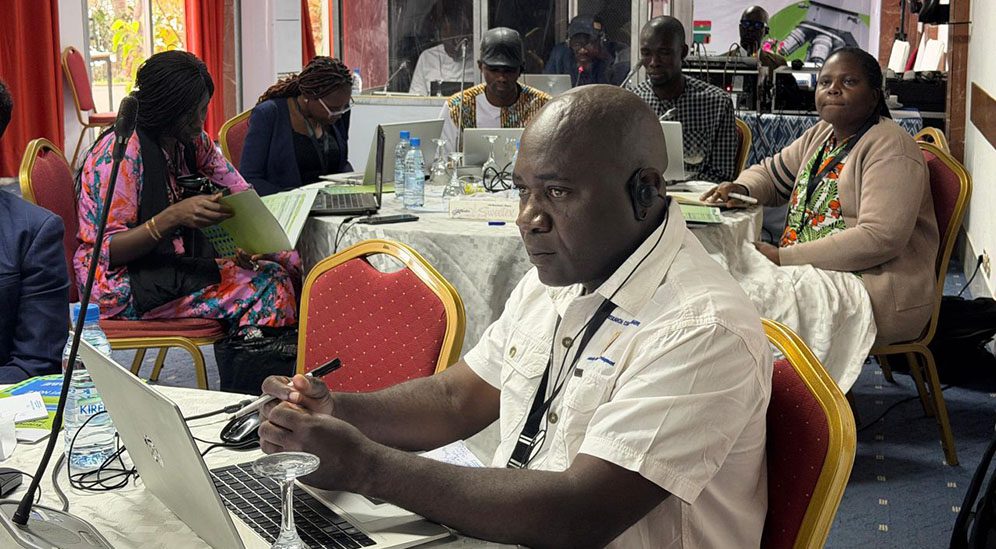
Discussions also highlighted how research institutions can create measurable change in policies, systems, and communities rather than producing findings that go unapplied.
Ruth Issambo Nyarko, project coordinator for SGCI at the Association of African Universities, highlighted the strategic partnerships and shared purpose that continue to shape the councils’ collective journey.
She said the workshop serves as a platform for shared learning and strengthening research impact across Africa, extending beyond technical training to include relationship-building among councils.
The workshop emphasises that research impact must be intentional and planned from early stages, with stakeholders involved to ensure findings address gaps and create tangible change.
Please check out the stories and let us know what you think. We would love to hear from you!
Let’s continue the conversation on our social media
Published on 25 November 2025
Related News
Tiny satellites help warn communities of deadly floods
Flash floods have become a recurring threat in parts of Namibia, cutting off communities, trapping school children, and, in some cases, leading to fatalities. But a locally led space-tech initiative is working to change that by bringing faster, more precise disaster warnings closer to home….
How storytelling is amplifying SGCI-funded innovations
For many researchers, publishing scientific findings in academic journals has long been the primary way to share knowledge. But increasingly, there is recognition that research must also be communicated in ways that reach broader audiences, policymakers, industry partners, communities, and fellow innovators who can translate…
Namibia hosts SGCI meeting as Anicia Peters leads alliance
Namibia is set to take on a prominent leadership role in Africa’s science, technology, and innovation landscape as Anicia Peters, chief executive officer of the National Commission on Research, Science and Technology (NCRST), prepares to assume the Presidency of the Science Granting Councils Initiative (SGCI)…

SGCI funded projects

Rwanda’s integrated approach to sustainable agriculture and nutrition
Project Titles & Institution Areas of Research Number of Projects being funded Project Duration Grant Amount In-Kind Distribution Council Collaboration with other councils