
SGCI News
[KAMPALA] Ugandan researchers have developed a method to transform the waste generated by leather production into a nutrient-rich agricultural solution for coffee farming. The innovation addresses critical challenges in Uganda’s…
- Ugandan researchers develop smart, organic fertiliser from leather processing waste
- The collagen-based fertiliser releases nutrients into the soil when needed
- Researchers plan to scale up production and expand beyond Uganda
[KAMPALA] Ugandan researchers have developed a method to transform the waste generated by leather production into a nutrient-rich agricultural solution for coffee farming.
The innovation addresses critical challenges in Uganda’s agricultural sector, by targeting waste management and soil fertility through a scientifically advanced approach to organic fertiliser production.
By turning the waste from leather processing into a smart, organic fertiliser, scientists hope to improve economic growth, environmental sustainability and social welfare, said Simon Peter Musinguzi, lead researcher and senior lecturer at Uganda Martyrs University.
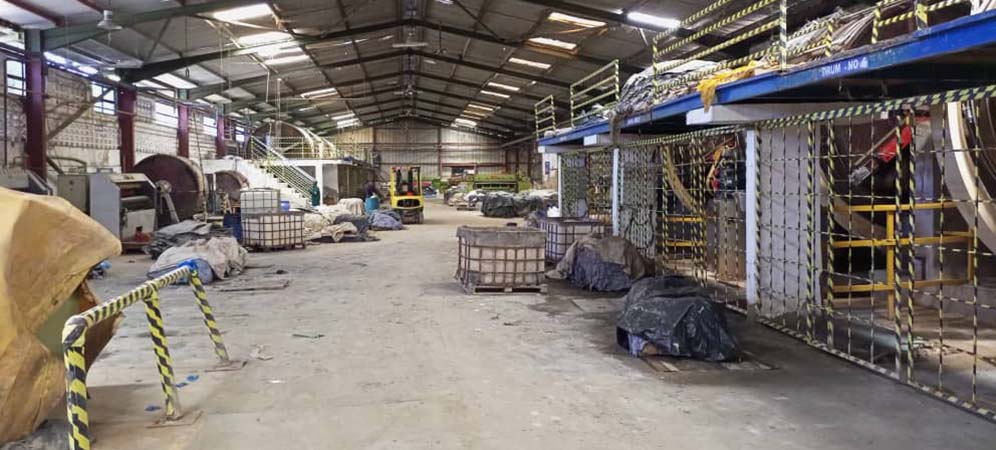
Leather production, known as tannery, generates a large amount of industrial waste, which typically goes unused and poses environmental challenges, according to Musinguzi.
“The tanning process only uses 20 per cent of the leather skin, leaving 80 per cent as waste, which contributes to pollution and is hazardous to communities near tanneries,” he said.
“We saw an opportunity to turn this waste into something beneficial—an organic fertiliser that supports agriculture, the environment, and farmers’ incomes.”
The team started their research last year with funding of 125 million Ugandan shillings (US$34,000) from the Uganda National Council for Science and Technology under the Science Granting Councils Initiative (SGCI).
They focused on coffee—Uganda’s main cash crop, which is grown by 1.8 million households—but say their fertiliser could be used on other crops too.
Uganda produces 393,900 tonnes of coffee a year, making it the second largest producer in Africa and sixth globally. However, it risks losing its competitive position due to poor farming methods, ineffective fertilisers, and challenging environmental conditions.
Collagen extraction
The fertiliser’s key ingredient is collagen, a protein extracted from animal skin. This is used to make a hydrogel enriched with nutrients such as nitrogen, phosphorus, and potassium, essential for plant growth.
The “smart” fertiliser feeds these nutrients into the soil as required, says Musinguzi.
“The smart aspect of this fertiliser is its ability to detect and release nutrients based on what the soil needs,” he explained.
“If a particular nutrient is lacking, the fertiliser responds accordingly, reducing the need for repeated applications.”
The fertiliser also helps soil retain moisture, potentially reducing the impact of droughts on coffee plantations, he says.
A win for farmers
Frank Matovu, a coffee farmer in Masaka whose farm was used to test the fertiliser, says he has seen remarkable results.
He says other fertilisers need to be applied more than twice a season.
“For coffee, we are required to spray at least eight times a year, and the biggest problem is most these fertilisers are not organic,” said Matovu, adding that this reduces market prices, because buyers prefer organic produce.
Chemical fertilisers weaken soil over time, forcing farmers into long-term dependence, says Matovu: “Once you start using them, the soil can never sustain itself, and that means you’ll always need fertiliser. It becomes an economic burden and a threat to future farming.”
The European Union, Uganda’s biggest coffee market, wants to see farmers adopt more sustainable practises, including organic fertilisers.
But Matovu says these can be hard to come by: “They are expensive and most of them are fake, they do not work, so this [new fertiliser] is a big win for us as farmers.”
Scaling up
Geoffrey Seruwu from the National Agricultural Research Organisation (NARO) believes the innovation could be a significant gain for Uganda’s agricultural sector.
“Many fertilisers on the market create a dependency cycle—farmers have to keep using them, or their yields drop,” Seruwu said.
“If this research delivers what it promises, Uganda could not only strengthen its coffee sector but also improve production of high-value crops like Hass avocado, which is in high demand in Europe.”
He says NARO is open to collaborating with local researchers like Musinguzi to ensure the fertiliser reaches farmers at scale.
The researchers are currently evaluating the fertiliser’s longevity in soil and aim to have a market-ready product by November this year. They hope to supply markets in Ethiopia, Kenya, and the Democratic Republic of Congo, as well as Uganda.
“When everything is done, we will seek partnership with government and other agricultural stakeholders and this will determine the price and how to scale up,” added Musinguzi.
This piece was written by John Musenze.
Related News
STISA-2034: One month left: Is your consortium ready?
With less than one month until the deadline, African researchers interested in the SGCI–STISA 2034 Multilateral Research Call should be moving from partnership-building to proposal preparation. The countdown has begun. Researchers and institutions have until 25 September 2026 at 23:59 EDT to submit expressions of…
Ethiopia joins global AI body as national science systems expand
Ethiopia has joined 28 other countries in establishing a new international body to promote cooperation and governance in artificial intelligence (AI), highlighting the country’s growing focus on using science, technology and innovation to drive development. Ethiopia’s Minister of Innovation and Technology, Belete Mola, signed the…
Understanding STISA-2034 call eligibility
The Science Granting Councils Initiative (SGCI) opened its multilateral research call to advance Africa’s Science, Technology and Innovation Strategy for Africa (STISA 2034), and interest from applicants is building across the continent’s research community. Before diving into a proposal, here’s what determines whether your institution…
Research and Resources

SGCI funded projects
Rwanda’s integrated approach to sustainable agriculture and nutrition
Project Titles & Institution Areas of Research Number of Projects being funded Project Duration Grant Amount In-Kind Distribution Council Collaboration with other councils