
SGCI News
As Phase 3 of the Science Granting Councils Initiative launches on the margins of the African Union Summit in Addis Ababa last week, the SGCI Alliance Chair explains why this…
As Phase 3 of the Science Granting Councils Initiative launches on the margins of the African Union Summit in Addis Ababa last week, the SGCI Alliance Chair explains why this moment marks a decisive turning point for African science.
Cephas Adjei Mensah describes what is being set in motion with the SGCI Alliance as a bold platform designed to place African Science Granting Councils (SGCs) firmly in the driver’s seat of the continent’s research and innovation agenda.
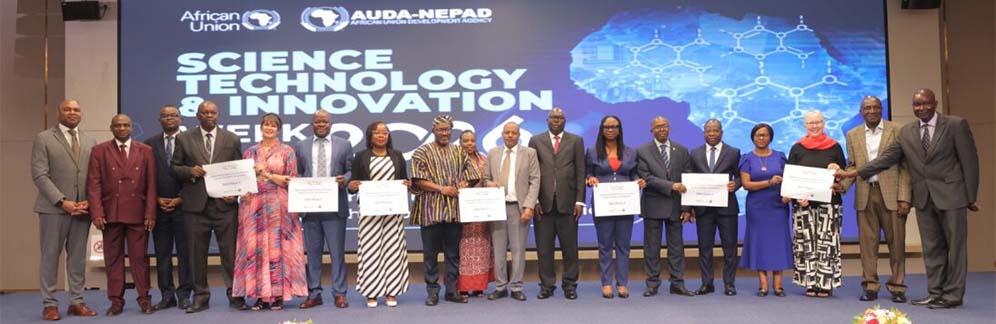
“What we are launching is a governance and coordination platform that belongs to the councils themselves. SGCI Phase III is what we call the SGCI Alliance. It is a new way of structuring how this initiative is governed and how it moves forward over the next five years.”
A new architecture for African ownership
The SGCI Alliance, as set out in its founding governance framework, is purpose-built to respond to an increasingly complex African science, technology, and innovation landscape. With multiple funders, regional initiatives, and rising continental ambitions, informal coordination is no longer sufficient.
The Alliance addresses this challenge through a formal two-tier leadership structure: a Councils Leadership Forum (CLF) at the strategic level, and a Councils Coordination Group (CCG) responsible for day-to-day operational coherence.
The CLF brings together Heads of Research Councils (HORCs) from all participating SGCs, meeting at least once a year – typically at the flagship All-Partners Forum. It serves as the highest governance authority, endorsing strategy, approving membership of Alliance mechanisms, and nominating the CCG.
The CCG, in turn, meets monthly and acts as the operational engine between those annual gatherings, coordinating implementation and reporting back to the CLF.
“We have the forum, which is the heads of councils that drives the agenda and direction of the SGCI Alliance,” Mensah explains. “Then we have the coordination group, which is more or less the operational body. It looks at how the entire alliance works day to day. They work in tandem with the core funders and the programme management team.”
Running alongside these leadership bodies are four coordination mechanisms- the practical machinery through which SGCI Phase 3 will deliver results.
The most expansive of these are the Thematic Working Groups (TWGs).
“The thematic working groups are aligned to the aspirations of STISA-2034,” Mensah says, referring to the African Union’s Science, Technology and Innovation Strategy for Africa.
“We have five thematic groups: agriculture, energy, health, ICT, and environment. The idea is that once they are linked to those continental aspirations, we will be able to design competitive multilateral research calls that are genuinely owned and shaped by African councils.”
Each thematic area maps directly onto critical development priorities: food and nutritional security under agriculture, stronger health systems and emergency preparedness, digital connectivity under ICT, affordable clean energy and a just energy transition, and climate resilience, biodiversity, and water security under the environment pillar.
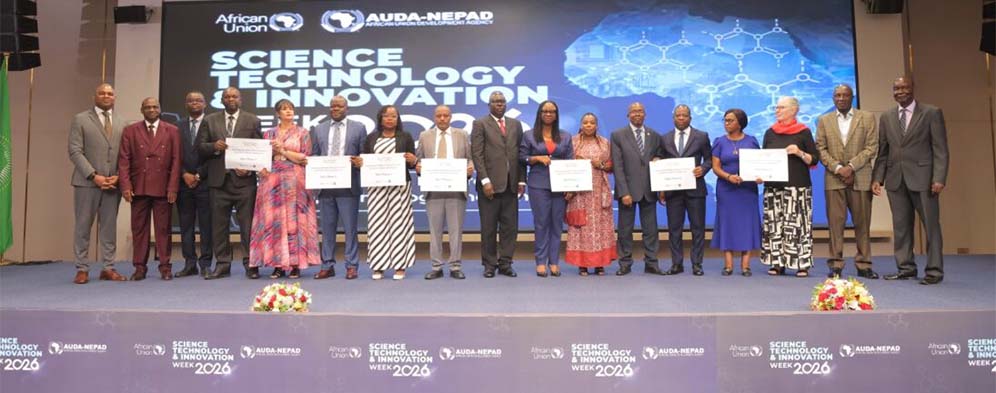
Councils will select TWGs based on national priorities, contributing to a matching-funds model with estimated commitments ranging from US$100,000 to US$1.4 million, depending on participation.
The ambition is significant, large-scale, cross-border research networks, co-designed funding calls, and flagship projects capable of delivering genuine continental impact.
Grants will flow directly to councils, which will in turn administer funding to institutions within their countries, a structural choice that reinforces local ownership at every level.
A funders’ collaborative: ending fragmentation
The second coordination mechanism, the Funders’ Collaborative, addresses a long-standing structural challenge.
Over the past decade, SGCI has enabled African councils to participate in bilateral and multilateral funding initiatives, including collaborations involving the South African National Research Foundation (NRF), the German Research Foundation (DFG), United Kingdom Research and Innovation (UKRI), and the Japan Science and Technology Agency (JST). However, these efforts have remained largely fragmented, limiting their cumulative impact.
The Funders’ Collaborative is designed to change that.
It will provide a formal platform to align funding strategies among African and international partners, strengthen councils’ ability to access and influence global funding opportunities, and promote both South–South and North–South learning.
Expected outcomes include stronger engagement with global research frameworks such as Horizon Europe, as well as new joint funding opportunities that position SGCI as a visible and credible continental partnership platform.
The policy hub: from funding to influence
Mensah describes the Policy Hub as one of the most consequential innovations of Phase 3.
“In Phase I and Phase 2, there were policy initiatives, but it was not a standalone pillar,” he says. “In this phase, we are asking: how do we make these councils visible as policy actors? It should go beyond funding and training researchers. It should be about sustaining financing and positioning councils as policy influencers.”
The SGCI Policy Hub will support the development and reform of national STI policies aligned with STISA-2034, strengthen evidence-based policymaking through improved STI data and foresight, and foster inclusive engagement across government, academia, industry, and civil society.
The expected outcomes are concrete: policy reforms, increased national research budgets, council representation on high-level government committees, and stronger visibility in global STI dialogues.
The timing of the Alliance’s launch in Addis Ababa, alongside the AU Summit, highlights this ambition.
“We are linking this to the African Union’s Agenda 2063 and the continental system,” Mensah adds.
Capacity for the long term
The fourth coordination mechanism is the Capacity Strengthening Committee.
Where earlier phases focused on short-term training, SGCI Phase 3 institutionalises long-term capacity strengthening.
A committee of seven councils will oversee a Capacity Support Hub, managed by a technical agency, which will develop toolkits and guidelines, coordinate strengthening efforts, and implement a monitoring, evaluation, and learning framework.
The long-term vision is ambitious. Councils adopting robust institutional policies and frameworks, some achieving international accreditation, a self-sustaining African research ecosystem, and councils positioned as resource hubs for researchers and institutions across the continent.
Beyond the programme cycle
At the heart of the SGCI Alliance is a defining question: what happens when the programme ends?
Its governance architecture, built on African ownership, inclusivity, flexibility, and a deliberately light-touch design, is intended to ensure sustainability beyond any funding cycle.
“Overall, the outcome is that we have an initiative driven and owned by the councils themselves, capable of guaranteeing sustainability as it progresses,” Mensah says. “So that when the initiative comes to a close, the councils can continue to shape and lead the agenda.”
A virtual Councils Leadership Forum in February 2026 will confirm the next host of the annual forum and formally endorse the Alliance Chair, marking the point at which the SGCI Alliance becomes fully operational.
The governance framework will be periodically reviewed and refined based on council feedback, implementation lessons, and the evolving STI landscape across Africa.
As the SGCI Alliance moves into full operation, it signals the start of a new era in which Africa’s science systems are more connected, more strategic, and increasingly self-determined.
Please check out the stories and let us know what you think. We would love to hear from you!
Let’s continue the conversation on our social media
Published on 18 February 2026
Written by Jackie Opara-Fatoye, with contributions from Elizabeth Muriithi
Related News
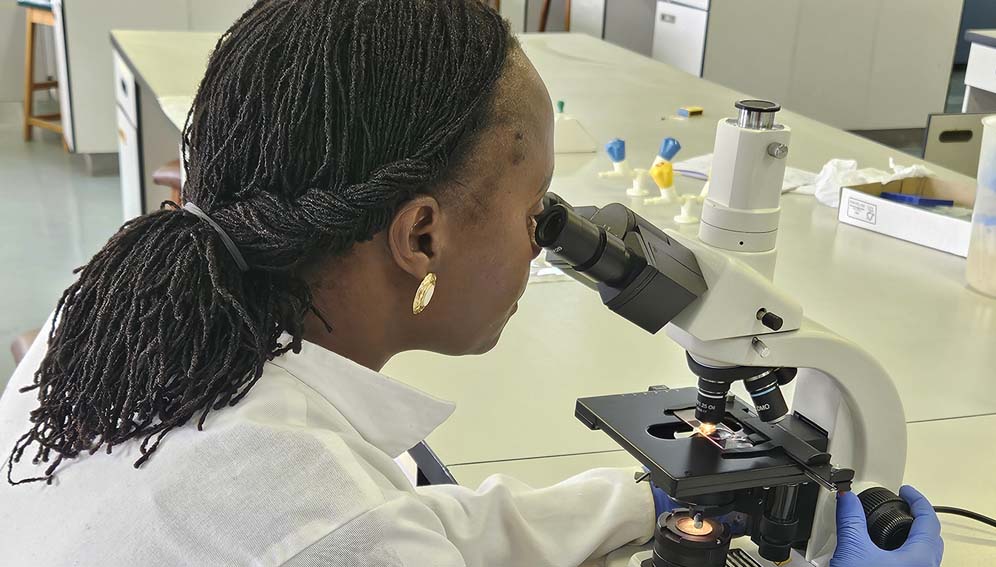
Microbes offer path to climate-smart farming
In Namibia’s dry and unpredictable climate, where farmers contend with poor soils and short rainfall seasons, researchers are working to reshape how crops are grown across the country. At the University of Namibia, Moola Nyambe is leading this research with support from the Science Granting Councils Initiative (SGCI) through Namibia’s…
Tiny satellites help warn communities of deadly floods
Flash floods have become a recurring threat in parts of Namibia, cutting off communities, trapping school children, and, in some cases, leading to fatalities. But a locally led space-tech initiative is working to change that by bringing faster, more precise disaster warnings closer to home….
How storytelling is amplifying SGCI-funded innovations
For many researchers, publishing scientific findings in academic journals has long been the primary way to share knowledge. But increasingly, there is recognition that research must also be communicated in ways that reach broader audiences, policymakers, industry partners, communities, and fellow innovators who can translate…

SGCI funded projects
Rwanda’s integrated approach to sustainable agriculture and nutrition
Project Titles & Institution Areas of Research Number of Projects being funded Project Duration Grant Amount In-Kind Distribution Council Collaboration with other councils