SGCI News
Ghana has taken a major step toward strengthening its research and innovation ecosystem with the launch of the Ghana National Research Fund (GNRF), a landmark initiative designed to provide sustainable…
Ghana has taken a major step toward strengthening its research and innovation ecosystem with the launch of the Ghana National Research Fund (GNRF), a landmark initiative designed to provide sustainable domestic funding for research, innovation, and knowledge creation.
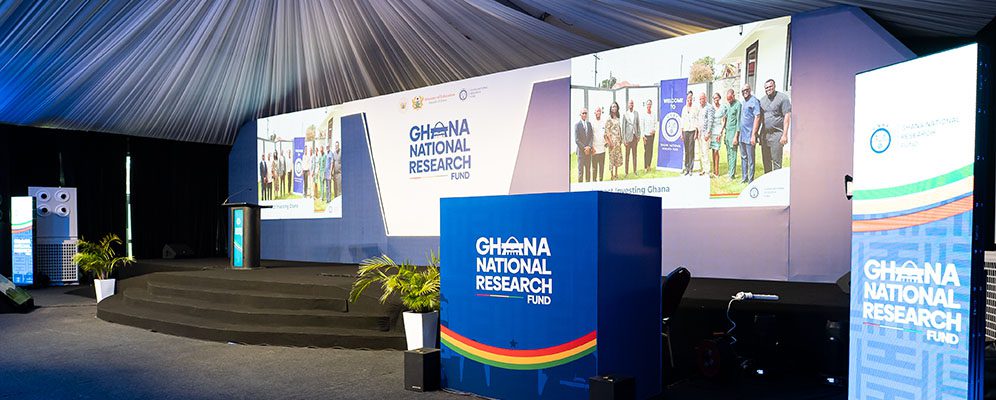
President John Dramani Mahama launched the Fund on 16 June, providing GHS 100 million in addition to an earlier 50 million seed capital for the 2026 grant cycle. The fund is expected to support research aligned with Ghana’s national development priorities while reducing reliance on external funding sources.
Speaking at a ceremony attended by scientists, researchers, institutional heads, and academic stakeholders, President Mahama framed the Fund as a turning point for how Ghana finances knowledge creation.

“This establishes a national framework for financing knowledge creation, strengthening scientific capability, and aligning research more closely with our national development priorities,” he said.
He adds that research “must become one of the engines that drive our economic growth, our social progress, and our national competitiveness.”
The President traced the Fund’s roots back through Ghana’s post-independence development history, crediting Kwame Nkrumah’s vision that the country “must not only consume knowledge” but produce locally relevant knowledge, and linking it to the late President John Evans Atta Mills’ policies.
He also acknowledged that the legal foundation for the Fund, Act 1056, was passed by Parliament under the previous Akufo-Addo administration in 2020.
Mahama set out priority areas for the Fund’s research calls which are food security, climate-smart agriculture technologies, tropical disease research, and artificial intelligence applications for governance and public service delivery. “The establishment of this Fund must not merely increase grant applications; it must increase ambition,” he said.
What happens next
On accountability, the President charged the Ministry of Education, the GETFund, and the Funds Governing Board with ensuring transparent and results-oriented deployment of the funds.
The acting administrator of the GNRF, Abigail Opoku Mensah, said a pilot research call is already running in partnership with Canada’s International Development Research Centre (IDRC), targeting technologies that support Sustainable Development Goal-linked programmes. A Research and Innovation Strategy document covering 2026 to 2030 has also been developed, setting out the Fund’s medium-term direction.
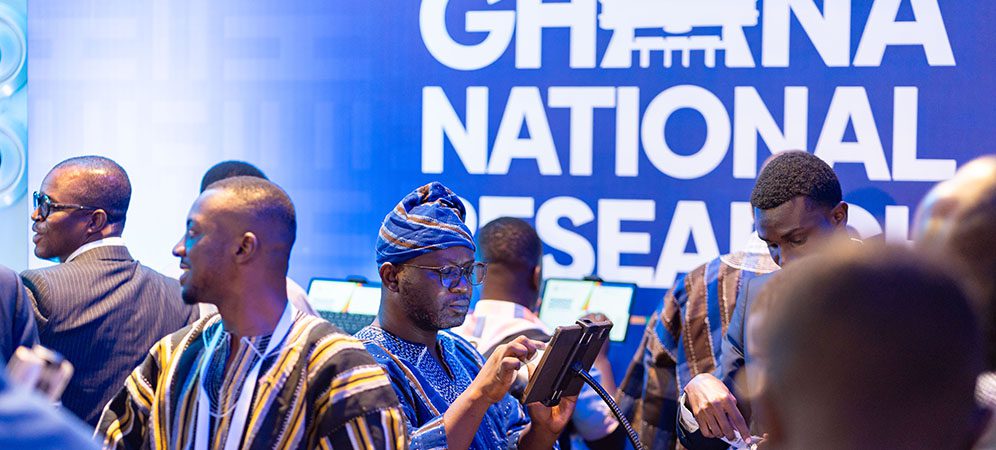
Ghana’s minister of education, Haruna Iddrisu, who described the launch as a major step toward sustainable research financing, used the same platform to announce the resolution of a long-running dispute over book and research allowances for university lecturers, a development he said should help ease periodic labour unrest in the tertiary education sector.
Focusing on Ghana’s research agenda
For many researchers at the launch, the Fund’s significance lies less in the GHS 100 million figure than in what it signals about who sets Ghana’s research agenda.
Paul Danquah, director of CSIR-INSTI, said the current reliance on donor funding shapes what gets studied: “Funding usually comes from donor agencies, and donor agencies usually have their priorities and interests… But then, if as a nation, we strategically decide on what we want to add value to, the funding could go in that direction.”
He named agriculture and post-harvest food losses as the priority he would want the Fund to address.
The University of Ghana’s director of research and innovation, Doodoo Arhin, made a similar point with a sharper statistic.
He said over 70 per cent of research conducted in the country is currently externally funded.
“The question is whose agenda are you actually propagating?” he said, arguing that a domestic fund allows researchers to “do research for Ghana and by Ghanaians” without excluding external partnerships. He also called for private-sector co-investment, noting that “the government alone cannot do it.”
Professor Augustine Ocloo, deputy director-general of the Ghana Tertiary Education Commission, drew a direct line between funding source and research focus, arguing that foreign grants have historically steered Ghanaian science toward donor priorities at the expense of pressing local concerns. “It’s better late than never,” he said of the Fund’s arrival.
Beyond the universities
The Fund’s reach was a recurring theme among non-academic voices. Charles Barton, founder of the trade and investment firm Barinam Group, welcomed the inclusion of businesses and SMEs alongside universities, arguing that small enterprises are typically shut out of national research financing despite their role in job creation.
He also pointed to a broader gap the Fund could help close, which is Ghana’s continued reliance on research and solutions developed elsewhere. “Most of the time, the solutions that they profess may not be tailor-made for our kind of environment,” he said.
Younger researchers were more cautious in their optimism but welcomed the access the Fund promises. Abdul Rahim, an incoming research student at the University of Professional Studies, Accra (UPSA), pointed to inconsistent funding allocation as one of the biggest barriers young researchers have faced, and said he hoped the Fund would change that.
A wider funding architecture
The GNRF’s launch also drew attention from international partners. The Science Granting Councils Initiative (SGCI), supported by IDRC and other partners including the UK government, has positioned its backing of the Fund as part of a broader push for predictable, competitive research financing across Africa.
Christian Rogg, the UK high commissioner to Ghana representing the Foreign, Commonwealth and Development Office (FCDO), said: “The success of the Ghana National Research Fund will not be measured by publications and citations alone, but by the innovations it enables, the jobs it creates, and the difference it makes in people’s lives.
Please check out the stories and let us know what you think. We would love to hear from you!
Let’s continue the conversation on our social media
Published on 18 June 2026
By Jackie Opara-Fatoye
Additional reporting by Nashiru Salifu, deputy director, research and innovation, Ghana National Research Fund
Related News
Africa’s science councils urged to turn pledges into real impact
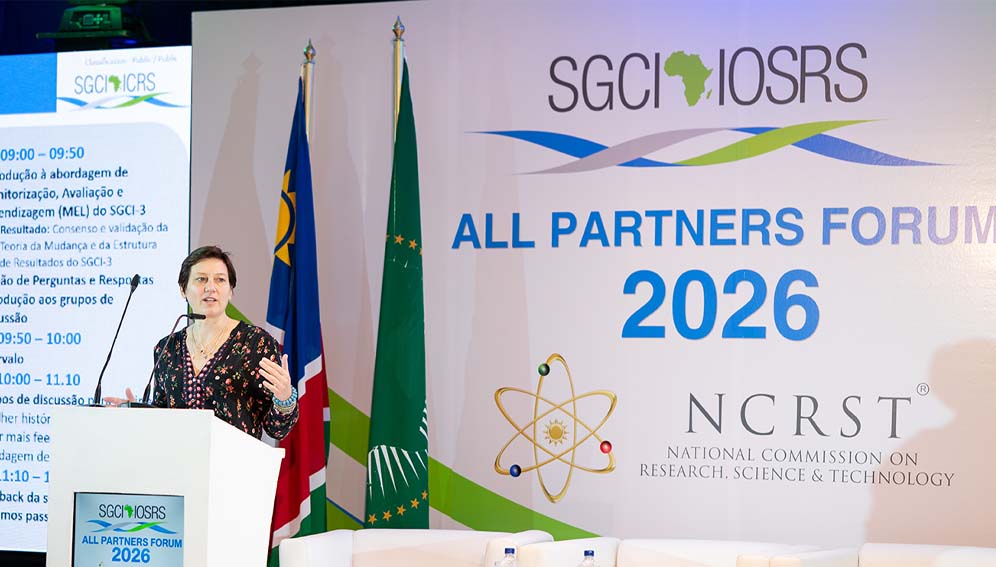
[NAMIBIA] African countries must strengthen collaboration, invest in research and scientists, and take greater ownership of science, technology and innovation if research is to deliver lasting development impact, participants at the 2026 Science Granting Councils Initiative (SGCI) All Partners Forum have said. The call came…
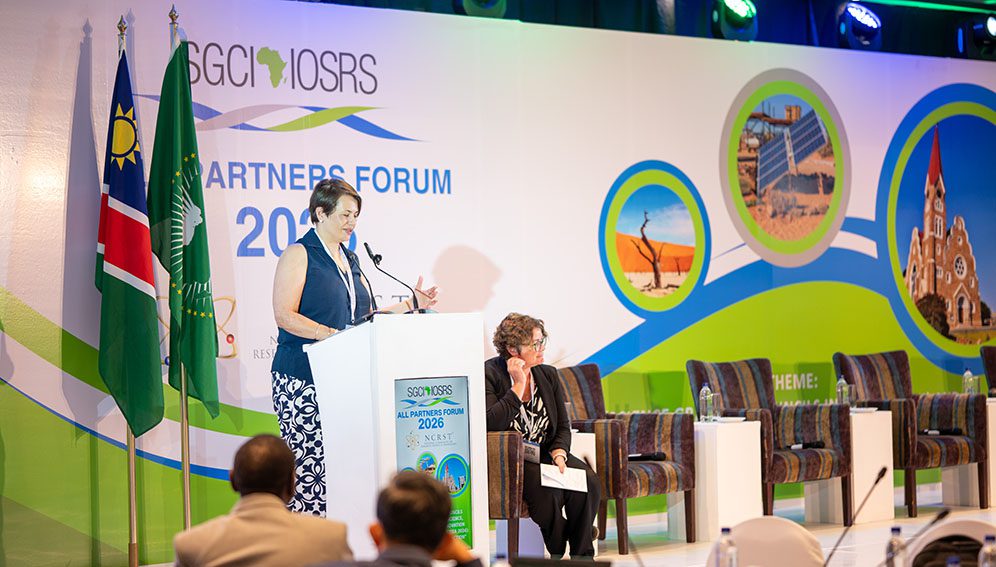
Councils urged to take ownership of SGCI-3 as forum turns to systems
[NAMIBIA]Science Granting Councils have been urged to take greater ownership of the third phase of the Science Granting Councils Initiative (SGCI-3), as partners turned their attention to the institutional systems and partnerships needed to translate the initiative’s ambitions into results. The call came during Day…
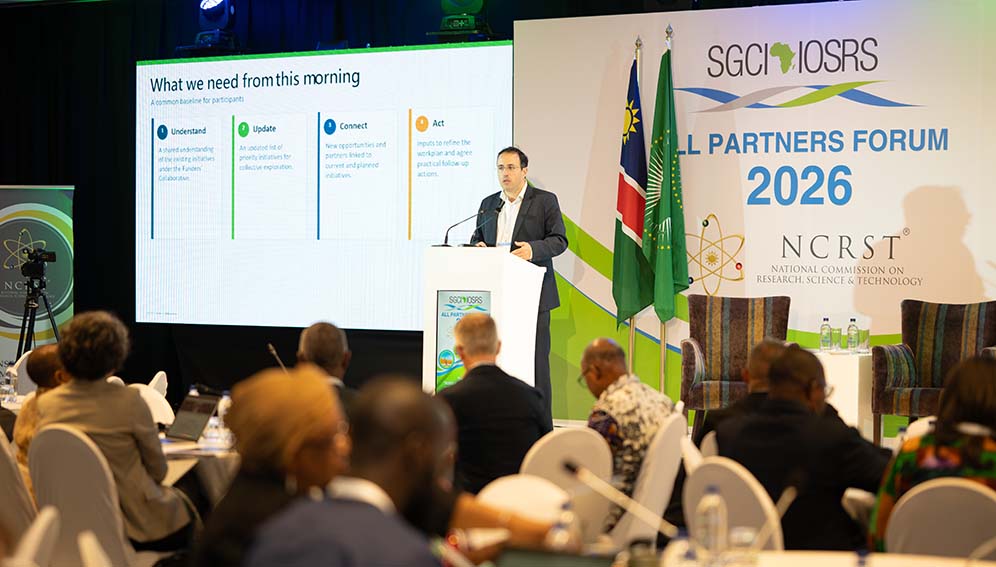
SGCI All Partners Forum highlights Africa’s research funding needs
[NAMIBIA] African science granting councils are examining their reliance on international research funding as a new dashboard reveals the flow of science, technology and innovation (STI) funding into Africa. More than 170 delegates from across the world are attending the 2026 Science Granting Councils Initiative…
Research and Resources

SGCI funded projects

Rwanda’s integrated approach to sustainable agriculture and nutrition
Project Titles & Institution Areas of Research Number of Projects being funded Project Duration Grant Amount In-Kind Distribution Council Collaboration with other councils