SGCI News
Flash floods have become a recurring threat in parts of Namibia, cutting off communities, trapping school children, and, in some cases, leading to fatalities. But a locally led space-tech initiative…
Flash floods have become a recurring threat in parts of Namibia, cutting off communities, trapping school children, and, in some cases, leading to fatalities. But a locally led space-tech initiative is working to change that by bringing faster, more precise disaster warnings closer to home.
Smita Francis, a senior lecturer at Namibia University of Science and Technology, who is leading the project to explore how nanosatellites (small, low-cost satellites) can strengthen disaster monitoring systems in Namibia, says: “We are addressing a gap in timely, localised disaster monitoring.”
“We believe that if information is delayed, communities are the ones that suffer.”
The project, supported by funding from the Science Granting Councils Initiative (SGCI), through the National Commission on Research, Science and Technology in Namibia,began in early 2025 and builds on several years of Francis’s work in satellite systems, ground stations, and space technology development in Namibia.
A small satellite with big potential
Nanosatellites, often no larger than a cube measuring 10 centimetres on each side, are increasingly being used for Earth observation and environmental monitoring.
Despite their size, they can perform many of the same functions as larger, more expensive satellites.
For countries like Namibia, they offer a more accessible entry point into space technology.
“Nanosatellites give us control,” says Francis.

“It’s like asking why you would own a house instead of renting one. With our own systems, we have data sovereignty, and we can tailor solutions to our specific challenges.”
Her work focuses primarily on monitoring floods and droughts, which are two of Namibia’s most pressing climate-related risks. Still, the system could also be extended to track wildfires, coastal activity, and environmental changes.
Building capacity on the ground
The project has already made significant strides in building local capacity, thanks to SGCI funding support.
Francis, who also serves on the National Space Science Bill Drafting Committee, says that SGCI funding was instrumental to the project. “It supported research activities and capacity building, enabling us to move from concept to implementation much faster.”
Francis and her team have established ground station capabilities, demonstrated satellite signal reception using low-cost software-defined radio (SDR) systems, and developed early prototypes for disaster monitoring.
Using her SGCI funding, she brought regional disaster management officers, government officials, and researchers together for structured training on small satellite technology and its applications to flood and drought monitoring.
She brought in internationally recognised experts. And crucially, she made the training entirely free of charge.
“In Africa and Namibia, when you train people free of charge, that means a lot,” she says.
The results moved faster than she expected. Trained officials returned to their districts and began applying what they had learned, using satellite-derived data to track rainfall and river levels.
They started sending early flood warnings to communities, advising families to move before the water arrived.
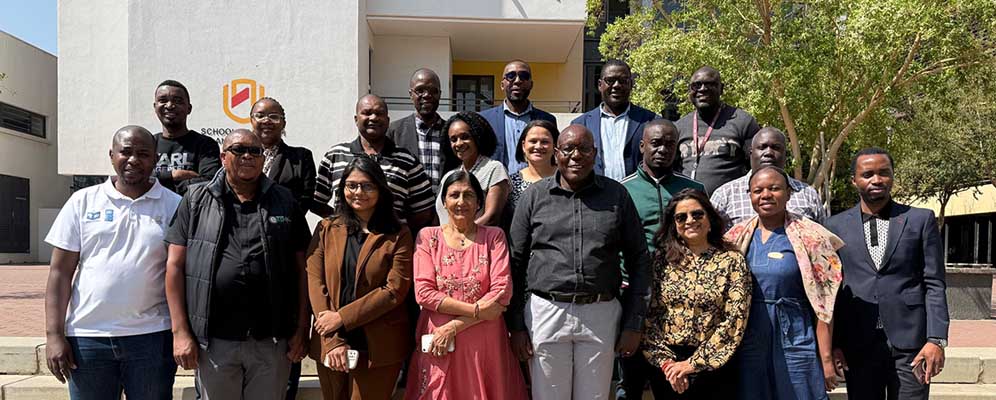
“I get emails from my participants saying, ‘I got this data, and I informed the regional director,'” Francis says.
The impact is already visible, she says.
The workshops have also sparked wider regional interest, with requests from neighbouring countries to replicate the training.
The challenges
Despite these gains, the project has faced a major setback.
A key component of the initiative was the procurement of specialised equipment, including a nanosatellite for hands-on training and coastal monitoring devices. However, sourcing this equipment proved difficult.
“Namibia does not have local suppliers for this kind of technology,” Francis explains. “We had to identify and negotiate with companies overseas, from Germany, China, and the UK. That process takes time.”
By the time suppliers were identified and orders were being finalised, the project timeline had run out.
“We had the intention, we had identified suppliers, but the time was just not enough. For space technology, you cannot work within such short timelines.”
The constraints, she adds, limited what the project could ultimately demonstrate within the funding period.
What the project built
Despite the equipment setback, Francis says the project achieved things that cannot easily be undone. Disaster management officers across Namibia’s regions are now actively using space-derived data to protect their communities.
One of its most important achievements, she says, is awareness.
“People are no longer ignorant about nanosatellites,” she notes. “They now understand that these small systems can do what large satellites do at a fraction of the cost.”
Her next phase involves extending the training to bushfire monitoring.
She said that fires in Namibia regularly destroy vegetation, trap and kill wildlife, and damage the tourism sector that underpins much of the national economy.
Francis says the same satellite-based approach she applied to flood monitoring can be adapted to track fire spread and give communities a warning.
She is also working toward a constellation model, multiple small satellites providing continuous coverage over Namibia, and exploring regional data-sharing arrangements with neighbouring countries.
“With our satellite-receiving ground station, we are in a position to start data sharing,” she says
A model for Africa
Francis believes the model can be replicated across Africa, where many countries face similar challenges with disaster preparedness and access to real-time data.
But she cautions that success will depend on more than just technology.
“We need supportive policies, infrastructure investment, and flexibility in funding systems,” she says. “Each project has its own challenges, and these must be considered.”
For her, the ultimate goal is to see locally driven space technology become an operational tool for protecting lives and livelihoods.
“What excites me most is seeing this system working in real time, because when communities get information early, they can act, and that can make all the difference.”
Please check out the stories and let us know what you think. We would love to hear from you!
Let’s continue the conversation on our social media
Published on 24 March 2026
Written by Jackie Opara-Fatoye
Related News
](https://sgciafrica.org/wp-content/uploads/2026/09/Windhoek.jpg)
Namibia’s role in advancing Africa’s science, technology, and innovation agenda
From commitment to action – Namibia and the SGCI All Partners Forum 2026 Namibia is an important player in African research, and from 28 September to 2 October 2026, the country will host the Science Granting Councils Initiative’s (SGCI) All Partners Forum in Windhoek. With…
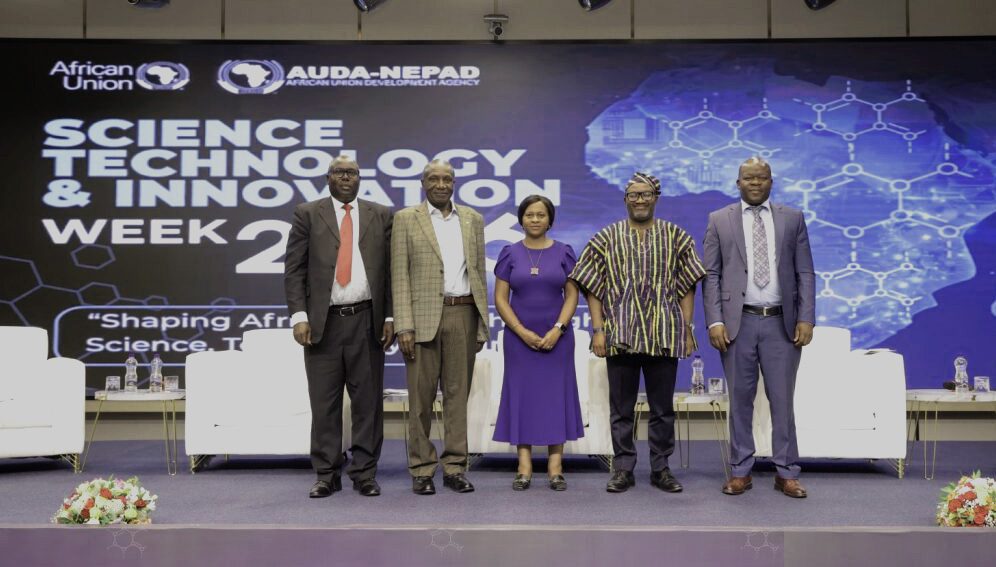
As STISA-2034 call closes, Africa’s research councils look ahead
With the deadline for the SGCI/STISA-2034 Multilateral Call approaching on 25 September, research institutions and consortia that have not yet submitted their expressions of interest have until the end of the day to do so. The Call seeks collaborative research approaches to some of Africa’s…
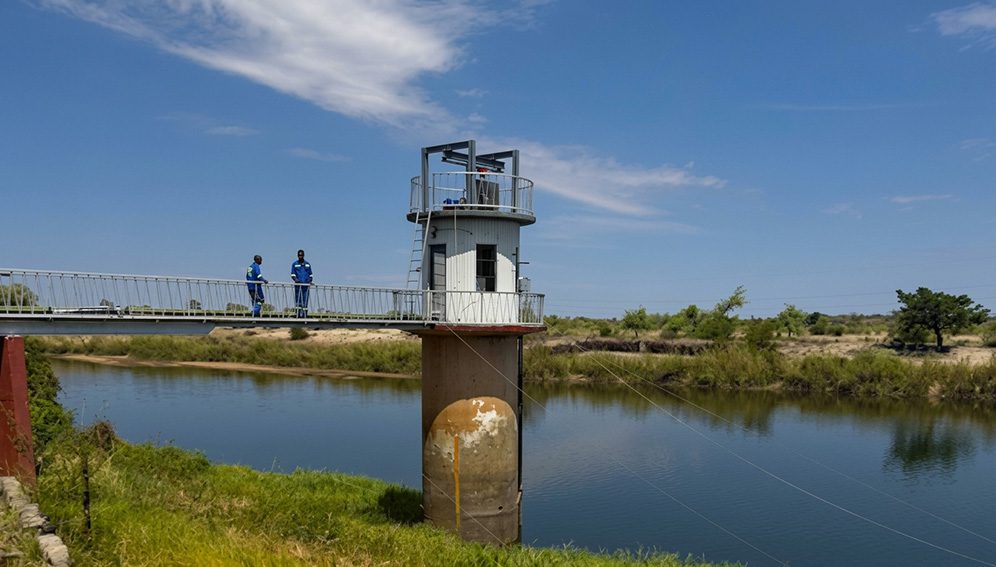
Namibia project uses household data, smart meters to rethink water
In Namibia, having water nearby does not always mean having reliable water at home. In Rundu, a growing urban centre on the perennial Okavango River, households reported the highest level of water insecurity among three towns studied by researchers. The finding illustrates a wider challenge…
Research and Resources

SGCI funded projects
Rwanda’s integrated approach to sustainable agriculture and nutrition
Project Titles & Institution Areas of Research Number of Projects being funded Project Duration Grant Amount In-Kind Distribution Council Collaboration with other councils